




Myalgic encephalomyelitis, also called chronic fatigue syndrome (ME/CFS), is a long-term condition that affects around 250,000 people in the UK. It is far more than feeling tired. People with ME/CFS have fatigue that rest does not fix and a worsening of symptoms after even small amounts of activity. It is a real physical illness, and understanding it is the first step to managing it well.
This guide explains what ME/CFS is, the symptoms, how it is diagnosed, whether there is a test, and how it is managed in line with NICE guidance.
Quick answer
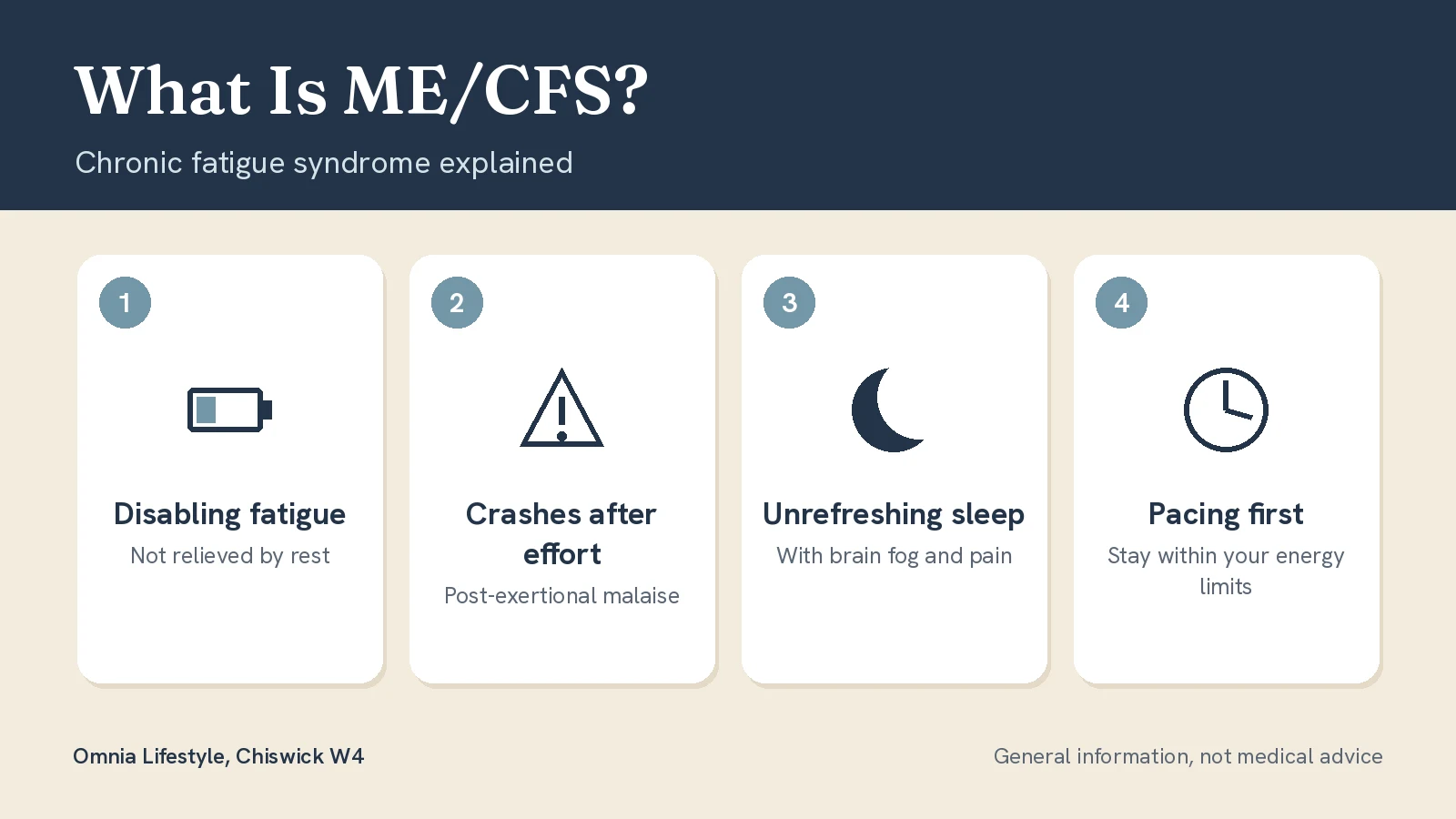
ME/CFS is a long-term condition causing debilitating fatigue that is not relieved by rest, post-exertional malaise (a worsening of symptoms after physical, mental or emotional effort, often delayed by a day or more), unrefreshing sleep and problems with memory and concentration. There is no single test; it is diagnosed from symptoms after other causes have been ruled out with blood tests. NICE guidance recommends energy management, also called pacing, and advises against graded exercise therapy with fixed increases. There is no cure yet, but many people improve over time.
What is ME/CFS?
ME/CFS affects many systems in the body, including the nervous and immune systems. It often starts after a viral infection, although the exact cause is not known. It can affect people of any age, including children, and is more common in women. Severity ranges from mild, where people can work with adjustments, to very severe, where people are bed-bound.
Symptoms of ME/CFS
- Debilitating fatigue that is worsened by activity and not relieved by rest
- Post-exertional malaise (PEM), a crash in symptoms after activity, often starting hours or days later and lasting days or longer
- Unrefreshing sleep, waking up feeling as tired as when you went to bed
- Cognitive difficulties, often called brain fog, including problems with memory, concentration and finding words
- Muscle and joint pain and headaches
- Dizziness or feeling faint when standing up
- Sensitivity to light, noise or temperature
- A sore throat or tender glands
What causes ME/CFS?
The cause is not fully understood. Many people develop ME/CFS after a viral infection, such as glandular fever or COVID. Genetic factors and problems with the immune system and energy production are being researched. It is not caused by a lack of fitness, low mood or lack of motivation.
Is there a test for chronic fatigue syndrome?
There is no single blood test or scan that diagnoses ME/CFS. Your GP will arrange tests to rule out other causes of fatigue, such as anaemia, thyroid problems, diabetes, coeliac disease and vitamin deficiencies. See which blood tests help explain tiredness.
How is ME/CFS diagnosed?
NICE advises that ME/CFS should be suspected when debilitating fatigue, post-exertional malaise, unrefreshing sleep and cognitive difficulties have lasted for at least six weeks in adults, or four weeks in children and young people. A diagnosis is confirmed if symptoms continue for three months and no other cause is found. Your GP may refer you to a specialist ME/CFS service.
How is ME/CFS treated and managed?
- Energy management (pacing). Learning your energy limits and staying within them to avoid crashes. This is the foundation of managing ME/CFS.
- No fixed increases in exercise. NICE advises that graded exercise therapy with fixed increases in activity should not be offered. Any physical activity plan should be flexible and led by your symptoms.
- Symptom management. Help with sleep, pain, dizziness on standing and nausea.
- Psychological support. Cognitive behavioural therapy can be offered to help people cope with the impact of ME/CFS. It is not a cure and does not mean the illness is psychological.
- Practical support with work, school and daily life, including aids and adjustments.
Can you beat chronic fatigue syndrome?
There is no cure yet, and recovery varies. Some people, particularly children and young people, recover fully. Many others improve over time and learn to manage their energy so that they have fewer crashes. Some remain severely affected. Avoiding repeated crashes through careful pacing gives the best chance of stability and improvement.
When to seek medical help
Call 999 if you have:
- Chest pain, sudden breathlessness or collapse
- Thoughts of ending your life and feel you may act on them. You can also go to A&E
Get same-day medical advice, from your GP or NHS 111, if:
- You have new or rapidly worsening symptoms, such as a high temperature, severe weakness or fainting
- You feel very low or have thoughts of harming yourself. Choose the NHS 111 mental health option, or call Samaritans free on 116 123
See your GP if:
- You have had unexplained fatigue for more than a few weeks
- Fatigue gets worse after activity and rest does not help
- You have weight loss, night sweats or swollen glands
Frequently asked questions
Is ME the same as chronic fatigue syndrome?
Yes. The terms are used together as ME/CFS for the same condition.
What kind of doctor diagnoses chronic fatigue syndrome?
Your GP usually makes the initial diagnosis and may refer you to a specialist ME/CFS service for confirmation and support.
Is ME/CFS the same as long COVID?
They are different conditions, but some people with long COVID develop symptoms very similar to ME/CFS, and the same pacing principles apply.
How is ME/CFS different from feeling tired all the time?
Ordinary tiredness improves with rest. ME/CFS fatigue does not, and activity causes a delayed crash. See why you may be tired all the time.
ME/CFS support in Chiswick
ME/CFS is supported at Omnia Lifestyle in Chiswick, W4, close to Turnham Green station, on bus routes 94, E3 and 272. Limited parking is available on request when booking, and home visits are available if travel is difficult. Appointments are paced to your energy. We can arrange blood tests to help rule out other causes with your GP, and offer gentle, symptom-led support such as acupuncture, manual lymphatic drainage and physiotherapy that respects your limits, never fixed increases in activity.
Read more about ME/CFS and fatigue, see whether tiredness can cause dizziness and what insomnia is, explore blood tests, acupuncture and home visits, or book an appointment.
This article is general information, not medical advice. If you have any of the warning signs listed above, seek medical attention.


.jpg)
.jpg)