


Book at our Chiswick clinic
Blood Test
Ferritin is one of the most useful and most misunderstood numbers on a blood test. It shows how much iron your body has in storage, and it often drops long before you become anaemic. It can also rise for reasons that have nothing to do with iron, which is why a ferritin result needs to be read in context.
This guide explains what ferritin is, typical ranges, what low and high ferritin mean, the symptoms and common causes, how low ferritin is treated, and when a result needs prompt review.
Quick answer
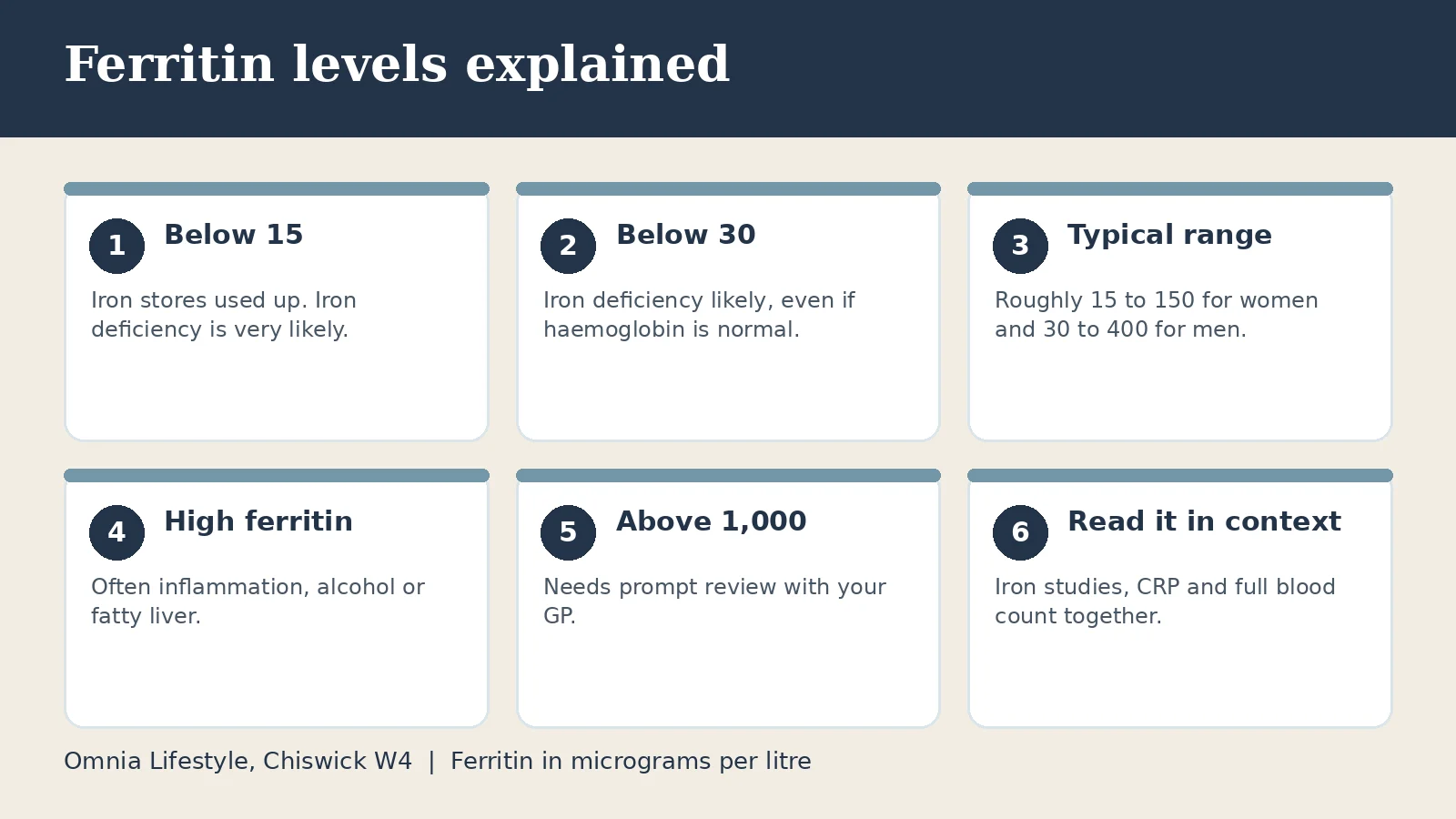
Ferritin is a protein that stores iron, measured in micrograms per litre. Typical adult ranges are roughly 15 to 150 for women and 30 to 400 for men, though laboratories vary. A ferritin below 15 means iron stores are used up, and below 30 makes iron deficiency likely even if haemoglobin is normal. High ferritin is most often caused by inflammation, alcohol, excess weight or fatty liver, and less commonly by iron overload. Ferritin above 1,000 needs prompt review with your GP.
What ferritin is
Your body stores iron inside a protein called ferritin, mainly in the liver, spleen and bone marrow, and releases it when it is needed to make red blood cells. A small amount of ferritin circulates in the blood, and that level reflects the size of your iron stores. Because stores run down before haemoglobin falls, ferritin can show iron deficiency months before anaemia develops.
What your result means
- Below 15 micrograms per litre: iron stores are depleted and iron deficiency is very likely.
- 15 to 30: iron deficiency is still likely, especially if you have symptoms, heavy periods or a low haemoglobin.
- Within the typical range: iron stores are generally adequate, although ferritin can look normal in someone who is iron deficient if inflammation is present.
- Above the range: usually reflects inflammation or liver stress rather than too much iron, but iron overload needs to be ruled out.
- Above 1,000: needs prompt review with your GP.
Always read your result against the range printed on your report, and alongside your full blood count, iron studies and CRP, a marker of inflammation.
Low ferritin
Symptoms
- Tiredness and lack of energy
- Shortness of breath on exertion and a racing heartbeat
- Pale skin
- Hair shedding and brittle nails
- Restless legs, especially at night
- Headaches and poor concentration
Common causes
- Heavy periods, the most common cause in women of childbearing age
- Pregnancy, when iron needs rise sharply
- Diet, particularly vegetarian and vegan diets without careful planning
- Endurance sport and frequent blood donation
- Poor absorption, for example from coeliac disease or some medicines that reduce stomach acid
- Blood loss from the gut, such as from ulcers, regular anti-inflammatory painkillers or, less commonly, bowel cancer
Iron deficiency without an obvious cause, especially in men and in women after the menopause, should always be investigated by a GP, because blood loss from the gut needs to be ruled out. For more on what a low result means, see what low ferritin means.
Treatment
Low ferritin is usually treated with iron tablets, often for around three months after levels recover, to rebuild stores. Recent research suggests taking iron on alternate days, or once a day rather than several times, may improve absorption and reduce side effects such as stomach upset and constipation. Taking iron with vitamin C, such as a glass of orange juice, and away from tea, coffee and calcium helps absorption. Haemoglobin is usually rechecked after a few weeks and ferritin after a few months. Always follow your GP's advice on dose and duration.
Do not take iron supplements long term without a test. Excess iron can be harmful, and it can hide the cause of a deficiency.
High ferritin
A raised ferritin is common and usually not caused by too much iron. Ferritin also behaves as an acute phase protein, which means it rises with inflammation. Common causes include:
- Infection or inflammation, including inflammatory arthritis
- Regular alcohol intake
- Excess weight, type 2 diabetes and fatty liver disease
- Liver conditions
- Iron overload, including haemochromatosis, an inherited condition that is relatively common in people of Northern European descent
To tell these apart, doctors look at transferrin saturation: a raised transferrin saturation alongside high ferritin suggests iron overload and usually prompts genetic testing for haemochromatosis. Liver tests and CRP help identify the other causes. Ferritin above 1,000, or a high ferritin with a raised transferrin saturation, should be reviewed by your GP promptly.
Do I need to fast for a ferritin test?
Ferritin itself does not usually need fasting, but a morning, fasted sample is often recommended for full iron studies, because serum iron varies through the day and after meals. Avoid iron supplements for 24 hours before the test unless told otherwise, and tell your practitioner if you have had a recent infection.
Frequently asked questions
Can you have low ferritin without anaemia?
Yes. Ferritin falls first, and haemoglobin only drops once stores are exhausted. Many people with tiredness, hair shedding or restless legs have low ferritin and a normal haemoglobin.
Is a ferritin of 20 low?
For most adults, a ferritin of 20 suggests low iron stores, especially with symptoms. Discuss treatment and the likely cause with your GP.
Can low ferritin cause hair loss?
Low iron stores are a recognised contributor to hair shedding, particularly in women. Hair growth can take several months to recover after stores are restored.
How quickly does ferritin rise with iron tablets?
Haemoglobin often starts to rise within two to four weeks, but rebuilding ferritin stores usually takes around three months of treatment.
Can exercise affect ferritin?
Regular endurance training can lower iron stores through sweat, gut losses and the breakdown of red blood cells. Athletes, especially women runners, are often advised to check ferritin regularly. See our Sports Performance blood test.
Ferritin and iron testing in Chiswick
Omnia Lifestyle offers private ferritin and iron testing at 8 to 9 Bedford Corner, The Avenue, Chiswick W4 1LZ, close to Turnham Green station, on bus routes 94, E3 and 272. Limited parking is available on request when booking. Samples are analysed by the Randox accredited laboratory, no GP referral is needed, and a practitioner goes through your result with you.
Book an iron and ferritin blood test, check the common causes of fatigue together with the Tired All The Time blood test, add a full blood count, or compare every blood test and price.
This article is general information, not medical advice. Discuss your results and any treatment with your GP or practitioner.
Ready to book?
Blood Test



.jpg)
.jpg)