

Book at our Chiswick clinic
Acupuncture
Good sleep is one of the most powerful things you can do for your health. It supports energy, mood, concentration, immunity and physical recovery. Yet many people spend enough time in bed and still wake up feeling unrefreshed. The good news is that a handful of daily habits make a real difference to how well you sleep, and most of them cost nothing.
This guide explains how to sleep better with five evidence-based daily habits, what to eat and drink, how naps fit in, and when poor sleep needs more than new habits.
Quick answer
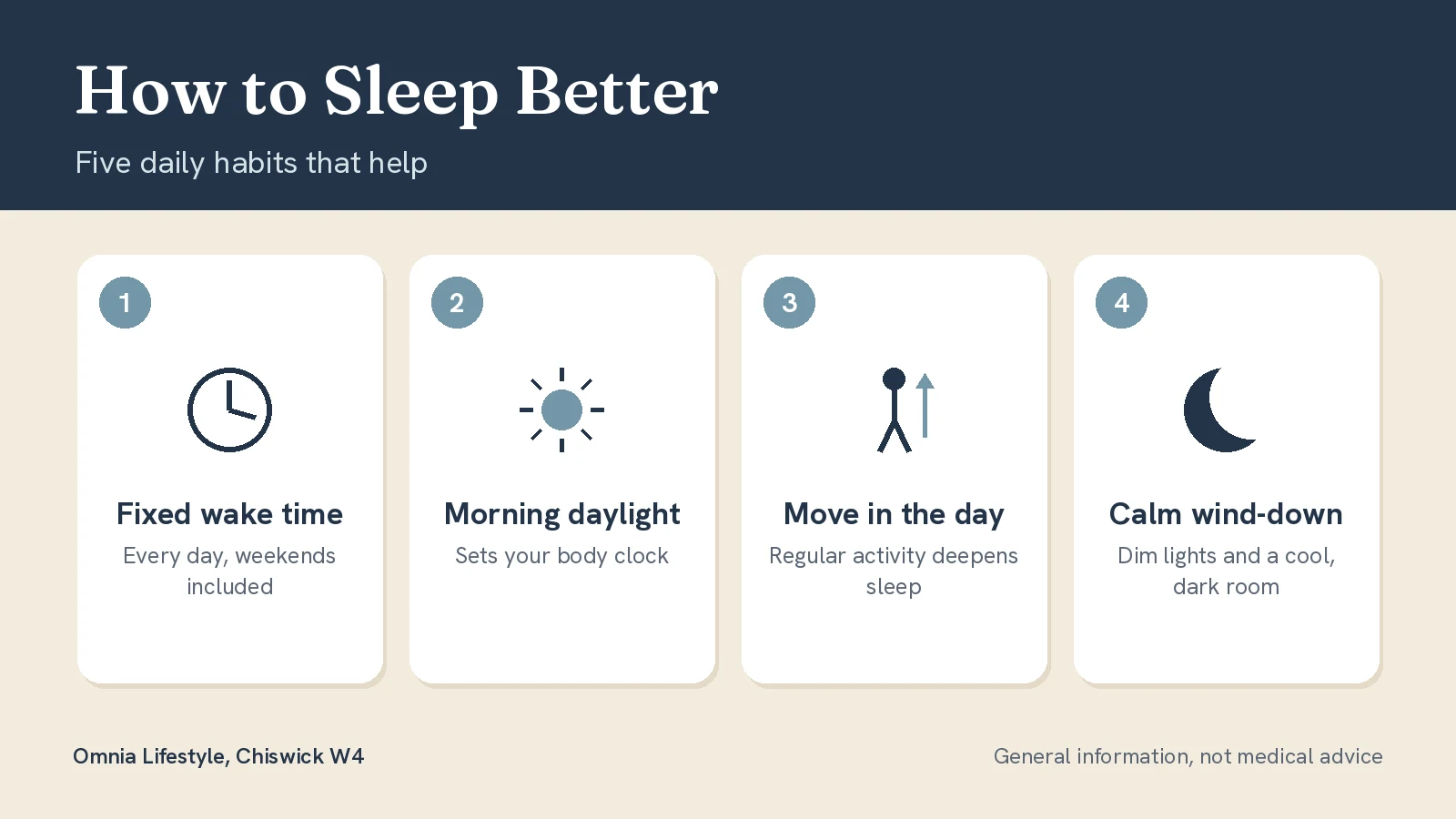
To sleep better, keep the same wake-up time every day, get daylight in the morning and keep evenings dim, be active during the day, limit caffeine, alcohol and late heavy meals, and build a calm wind-down routine in a cool, dark, quiet bedroom. Most people notice a difference within two to four weeks of sticking to these habits. If you still struggle to sleep on three or more nights a week for three months, speak to your GP, as insomnia has an effective treatment called CBT-I.
How much sleep do you need?
Most adults need between seven and nine hours a night, although needs vary. Quality matters as much as quantity: waking refreshed and feeling alert during the day are the best signs you are getting enough.
Habit 1: keep a fixed wake-up time
Your body clock runs best on a regular rhythm. Getting up at the same time every day, including weekends, is the single most effective habit for better sleep. Try to keep any variation within about an hour. Go to bed when you feel sleepy rather than forcing an early night, and the timing of sleep will settle around your wake time.
Habit 2: get daylight in the morning and keep evenings dim
Light is the main signal that sets your body clock. Spend some time outside in daylight in the morning, even on a cloudy day. In the evening, dim the lights and keep screens to a minimum in the last hour before bed, as bright light, including from phones and laptops, delays the release of melatonin, the hormone that helps you feel sleepy.
Habit 3: move during the day
Regular physical activity helps you fall asleep faster and sleep more deeply. Aim for at least 150 minutes of moderate activity a week, such as brisk walking or cycling. Gentle evening practices such as yoga, tai chi or stretching can help you unwind, but finish vigorous exercise a few hours before bed.
Habit 4: watch caffeine, alcohol and late meals
- Caffeine stays in your system for many hours, so keep coffee, tea, cola and energy drinks to the morning or early afternoon
- Alcohol may help you fall asleep but breaks up sleep later in the night and makes you more likely to wake early
- Heavy or spicy meals close to bedtime can disturb sleep, so aim to finish your main meal two to three hours before bed
- Nicotine is a stimulant and also disrupts sleep
Habit 5: wind down and set up your bedroom
- Give yourself 30 to 60 minutes to wind down with something calm, such as reading, a warm bath or gentle stretching
- Keep the bedroom cool, dark and quiet. Blackout curtains, an eye mask or earplugs can help
- Use your bed for sleep and intimacy, not for work or scrolling
- If worries keep you awake, write them down earlier in the evening with a plan for the next day
- Try slow breathing in bed, breathing out for longer than you breathe in
Should you nap?
A short nap of 20 to 30 minutes before mid-afternoon can boost alertness without affecting night-time sleep. Long or late naps make it harder to fall asleep at night, so avoid them if you have trouble sleeping.
Sleep and recovery
Deep sleep is when much of the body's repair work happens, including muscle recovery and the release of growth hormone. Poor sleep is linked with slower recovery from exercise and injury, higher injury risk, lower mood and a weaker immune response. If you train hard or are recovering from an injury, sleep is one of your most important recovery tools.
When habits are not enough
If you struggle to sleep on at least three nights a week for three months, you may have chronic insomnia. NICE recommends cognitive behavioural therapy for insomnia (CBT-I) as the first treatment. See what insomnia is and how it is treated.
See your GP if:
- Poor sleep has lasted three months or more, or is affecting your daily life
- You snore loudly and someone has noticed pauses in your breathing
- You feel very sleepy during the day or have fallen asleep while driving
- You have an uncomfortable urge to move your legs in the evening
- Low mood or anxiety is part of the picture
If poor sleep comes with very low mood or thoughts of harming yourself, please speak to someone straight away: contact your GP or NHS 111, call Samaritans free on 116 123, or call 999 if you are in immediate danger.
Frequently asked questions
How can I get a better sleep tonight?
Dim the lights, put your phone away an hour before bed, keep the room cool and dark, and get up if you are still awake after about 20 minutes. See why you cannot sleep for more.
What should I eat for better sleep?
A balanced diet with regular meals supports good sleep. Avoid large meals, caffeine and alcohol late in the evening. A small snack is fine if hunger keeps you awake.
Do weekend lie-ins help me catch up?
A long lie-in shifts your body clock and can make it harder to sleep on Sunday night. A fixed wake time works better.
Are sleep trackers useful?
They can help you spot patterns, but they are not always accurate, and worrying about the numbers can make sleep worse. How you feel during the day is a better guide.
Sleep support in Chiswick
Support for poor sleep is available at Omnia Lifestyle in Chiswick, W4, close to Turnham Green station, on bus routes 94, E3 and 272. Limited parking is available on request when booking. We look at your routine, stress and health, may ask you to keep a sleep diary, and can combine clinical psychology, acupuncture, Ayurvedic evening routines and Shirodhara, and yoga, referring to your GP where needed.
Read more about poor sleep and insomnia, see what insomnia is, why you cannot sleep, why you may be tired all the time and what Shirodhara is, explore clinical psychology, acupuncture, Ayurveda and yoga, or book an appointment.
Book acupuncture in Chiswick: £80 for a 60-minute session. Book online or call 020 4515 0000. Our clinic is at 8 to 9 Bedford Corner, The Avenue, Chiswick W4 1LZ, close to Turnham Green station, on bus routes 94, E3 and 272. Limited parking is available on request when booking.
This article is general information, not medical advice. If you have any of the warning signs listed above, seek medical attention.
Ready to book?
Acupuncture