



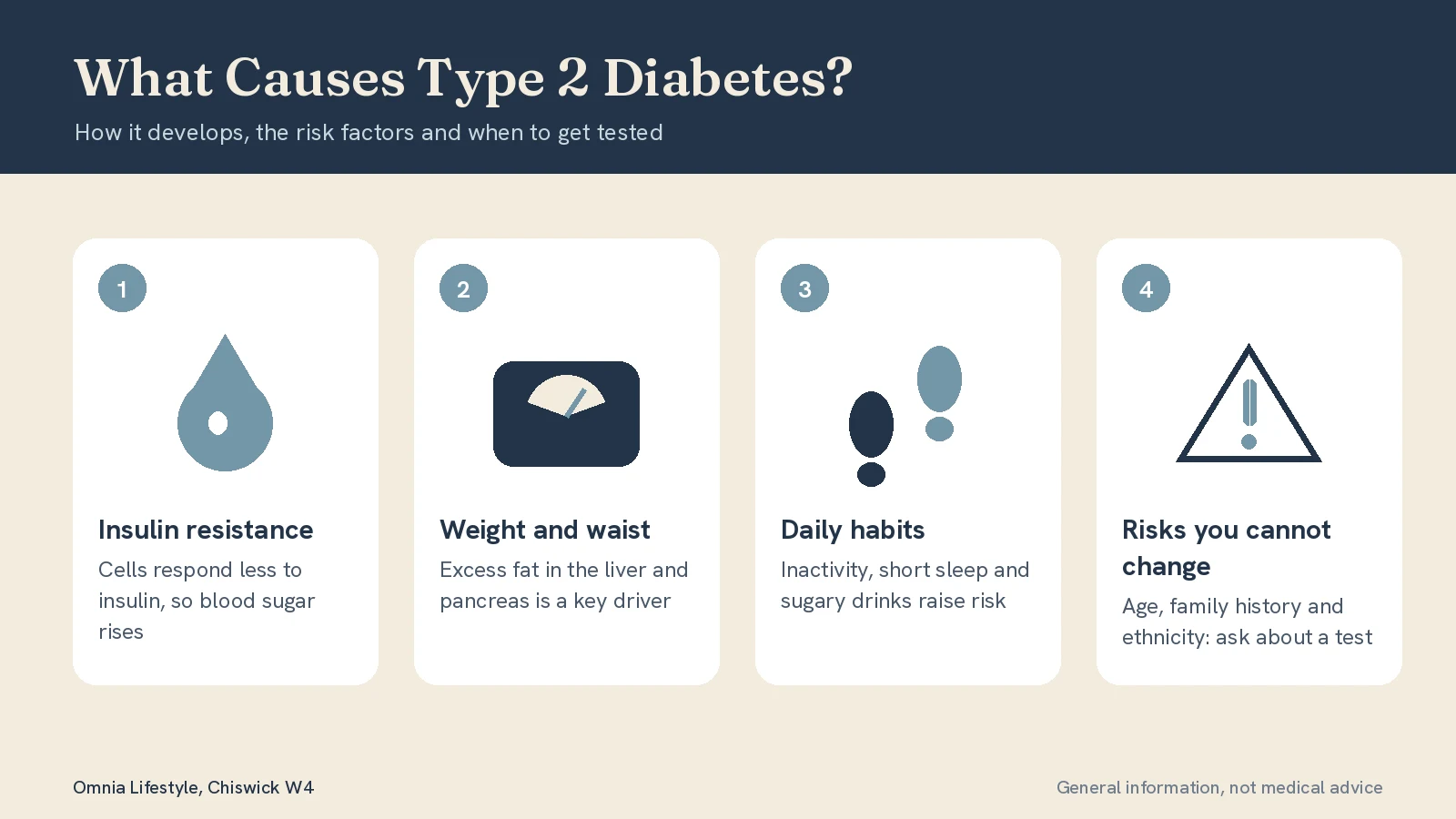


Type 2 diabetes develops when the body stops responding properly to insulin, the hormone that moves sugar from the blood into the cells, and the pancreas can no longer make enough extra insulin to compensate. Blood sugar then stays too high. It accounts for around nine in ten cases of diabetes in UK adults, and many people have it for years before it is diagnosed.
This guide explains what causes type 2 diabetes, the risk factors you can and cannot change, the symptoms to watch for and how to lower your risk.
Quick answer
Type 2 diabetes is caused by a combination of insulin resistance and a pancreas that gradually struggles to keep up. The biggest drivers are carrying excess weight, especially around the waist, and being inactive, on top of risk factors you cannot change such as age, family history and ethnicity. Eating sugar does not directly cause it, but a diet high in sugary drinks and refined foods raises the risk.
How type 2 diabetes develops
After you eat, blood sugar rises and the pancreas releases insulin. In insulin resistance, the muscles, liver and fat respond less to insulin, so the pancreas has to produce more. For years this can keep blood sugar normal, but over time the insulin-producing cells cannot keep up and blood sugar climbs, first into the prediabetes range and then into diabetes.
Research suggests excess fat stored in and around the liver and pancreas plays a central role. This helps explain why weight around the waist matters so much, and why losing weight can improve blood sugar and, for some people, put type 2 diabetes into remission.
Risk factors you can change
- Excess weight, especially around the waist. A waist of 80 cm (31.5 inches) or more in women, 94 cm (37 inches) or more in men, or 90 cm (35 inches) or more in South Asian men increases risk.
- Being inactive. Muscles that work regularly take up more sugar from the blood and respond better to insulin.
- Diet. Sugary drinks, refined carbohydrates, processed meat and low fibre intake are linked with higher risk.
- Short or poor sleep, and long-term night shift work
- Smoking
- Drinking too much alcohol
Risk factors you cannot change
- Age. Risk rises over 40, or over 25 for people of South Asian heritage.
- Family history. Having a parent, brother or sister with type 2 diabetes increases risk.
- Ethnicity. People of South Asian, Black African and African Caribbean heritage have a higher risk, often from a younger age and at a lower weight.
- Gestational diabetes in a previous pregnancy
- Polycystic ovary syndrome (PCOS)
- High blood pressure, and some medicines, such as long-term steroids
Does eating sugar cause diabetes?
Not directly. Type 2 diabetes is driven by insulin resistance, which is mainly linked to excess body fat and inactivity. However, sugary drinks are consistently linked with a higher risk, partly because they add a lot of calories without filling you up. Cutting them out is one of the simplest changes with the clearest benefit.
How type 2 differs from type 1
Type 1 diabetes is an autoimmune condition in which the immune system destroys the insulin-producing cells. It usually starts in childhood or early adulthood, comes on quickly and is not caused by lifestyle. Type 2 develops gradually and is strongly linked to weight and activity.
Symptoms to watch for
- Feeling very thirsty and passing urine more often, especially at night
- Feeling very tired
- Blurred vision
- Cuts and wounds that heal slowly
- Itching around the genitals or repeated thrush
- Losing weight without trying
Many people have no symptoms at first, which is why testing matters if you are at higher risk.
How it is diagnosed
Type 2 diabetes is usually diagnosed with an HbA1c blood test, which reflects average blood sugar over the previous two to three months. A result of 48 mmol/mol or above indicates diabetes, and 42 to 47 indicates prediabetes. Your GP can arrange this, and adults aged 40 to 74 in England are offered a free NHS Health Check every five years. Diabetes UK has a free online tool to check your risk.
How to lower your risk
Losing even a modest amount of weight, being active for at least 150 minutes a week, cutting sugary drinks, eating more fibre and sleeping well all lower the risk of developing type 2 diabetes. People with prediabetes may be eligible for the free NHS Diabetes Prevention Programme. For a step-by-step plan, see how to reverse insulin resistance, and if you already have a diagnosis, whether type 2 diabetes can be reversed.
When to seek medical help
Call 999 or go to A&E if you have symptoms of diabetes together with vomiting, stomach pain, fast breathing, confusion, drowsiness or breath that smells fruity. These can be signs of a dangerous rise in blood sugar.
Get same-day medical advice if a child or young adult has new extreme thirst, is passing urine much more often, is very tired or is losing weight, as type 1 diabetes can develop quickly.
See your GP if:
- You have any of the symptoms listed above
- You are at higher risk and have not had a blood sugar test recently
- You have had gestational diabetes and have not had a yearly check
Frequently asked questions
Can slim people get type 2 diabetes?
Yes. Some people store fat in the liver and pancreas without looking overweight, and genes and ethnicity also play a part. People of South Asian heritage, for example, can develop type 2 diabetes at a lower weight.
Is type 2 diabetes genetic?
Genes play a significant part, and having a close relative with type 2 diabetes increases your risk. Lifestyle still has a large influence on whether it develops and when.
Can stress cause type 2 diabetes?
Stress alone does not cause it, but long-term stress can raise blood sugar and affect sleep, eating and activity, which all influence risk.
How quickly does type 2 diabetes develop?
Usually slowly, over years. Many people pass through a long period of prediabetes first, which is the best time to act.
Metabolic health support in Chiswick
Lifestyle support for blood sugar and metabolic health is available at Omnia Lifestyle in Chiswick, W4, close to Turnham Green station, on bus routes 94, E3 and 272. Limited parking is available on request when booking. We work alongside your GP or diabetes team and never adjust diabetes medicine.
Read more about type 2 diabetes and metabolic health, see how to lose weight with PCOS and what causes high blood pressure, explore fitness and nutrition coaching, an InBody scan and blood tests, or book an appointment.
This article is general information, not medical advice. If you have any of the warning signs listed above, seek medical attention.


.jpg)
.jpg)