


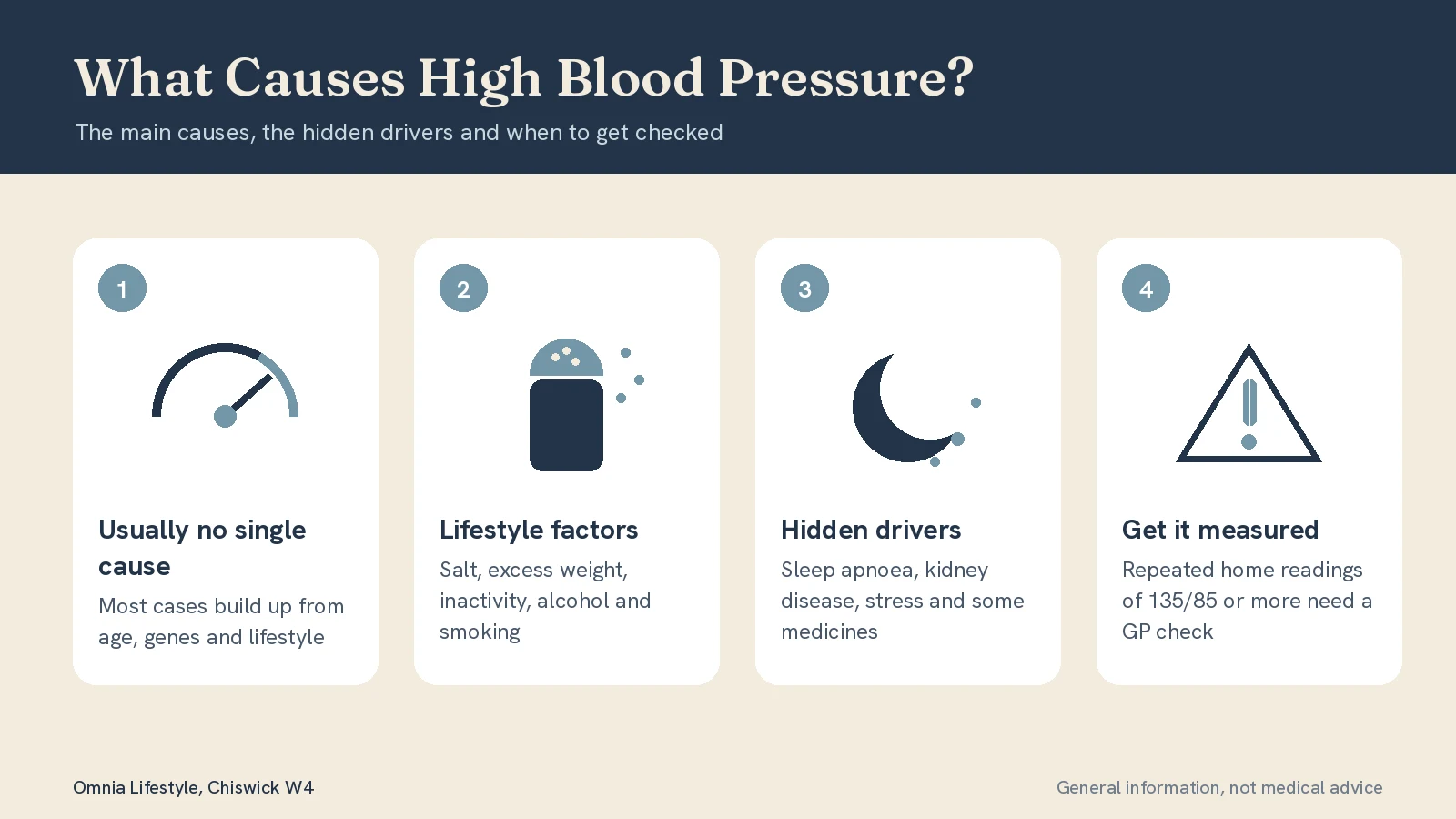


High blood pressure, also called hypertension, affects around one in three adults in the UK, and many do not know they have it because it rarely causes symptoms. In most adults there is no single cause. It builds up gradually from a combination of age, genes and everyday habits. In a smaller number of people, another condition or a medicine is the main driver.
This guide explains what causes high blood pressure, the hidden causes that are easy to miss, why it matters and when to get your blood pressure checked.
Quick answer
Most high blood pressure is caused by a mix of factors rather than one problem: eating too much salt, carrying excess weight, not being active, drinking too much alcohol, smoking, getting older and family history. In around one in ten people, there is an underlying cause such as kidney disease, sleep apnoea, a hormone problem or a medicine. Because it is usually silent, the only way to know is to have it measured.
How blood pressure works
Blood pressure is the force of blood pushing against the walls of your arteries. It is recorded as two numbers: the higher number is the pressure when the heart beats, and the lower number is the pressure when the heart rests between beats. A clinic reading of 140/90 mmHg or higher, confirmed by home readings of 135/85 or higher, usually means high blood pressure. Ideal blood pressure is generally below 120/80.
Lifestyle causes
- Too much salt. Salt makes the body hold on to water, which raises pressure in the blood vessels. Adults are advised to eat no more than 6 grams a day, and most UK adults eat more, much of it hidden in bread, ready meals and processed food.
- Excess weight. Carrying extra weight, especially around the waist, makes the heart work harder and is one of the strongest drivers of high blood pressure.
- Not being active. Regular activity keeps blood vessels flexible and helps control weight.
- Alcohol. Regularly drinking more than 14 units a week raises blood pressure over time.
- Smoking. Each cigarette raises blood pressure for a while, and smoking damages the arteries.
- Low fruit and vegetable intake. Potassium from fruit, vegetables and pulses helps balance the effect of salt.
- Caffeine. Coffee causes a short rise in blood pressure, although moderate amounts are not thought to cause long-term hypertension in most people.
Risk factors you cannot change
- Age. Arteries become stiffer with age, so blood pressure tends to rise, particularly after 65.
- Family history. High blood pressure often runs in families.
- Ethnicity. People of Black African or Black Caribbean heritage have a higher risk, often from a younger age.
Hidden causes that are easy to miss
When another condition or a medicine drives high blood pressure, it is called secondary hypertension. Possible causes include:
- Obstructive sleep apnoea, where breathing repeatedly stops and starts during sleep. Loud snoring, gasping at night and daytime sleepiness are clues.
- Kidney disease, or narrowing of the arteries to the kidneys
- Hormone problems, including an overactive or underactive thyroid and, more rarely, conditions of the adrenal glands
- Pregnancy, including pre-eclampsia
- Medicines, such as anti-inflammatory painkillers like ibuprofen, decongestants, the combined contraceptive pill, steroids and some antidepressants
- Other substances, including liquorice in large amounts and recreational drugs such as cocaine and amphetamines
Your GP is more likely to look for a hidden cause if high blood pressure is found before the age of 40, if it comes on suddenly, or if it stays high despite several medicines. Do not stop any prescribed medicine without speaking to your GP or pharmacist first.
Can stress and poor sleep cause high blood pressure?
Stress causes short-term rises in blood pressure, and long-term stress can contribute indirectly through poor sleep, comfort eating, drinking more alcohol and being less active. Regularly sleeping less than six hours a night is also linked to higher blood pressure. Managing stress and protecting sleep are worthwhile parts of any plan to lower it.
Why high blood pressure matters
Over years, raised pressure strains the heart and damages blood vessels. It increases the risk of heart attack, stroke, heart failure, kidney disease and vascular dementia. The good news is that lowering blood pressure, through lifestyle change and medicine where needed, reduces these risks substantially.
How to find out your blood pressure
Because high blood pressure usually causes no symptoms, the only way to know is to measure it. Adults aged 40 to 74 in England are offered a free NHS Health Check every five years, many pharmacies offer free checks, and validated upper-arm home monitors are widely available. If a reading is high, your GP will usually confirm it with home or 24-hour readings before making a diagnosis.
For the changes with the best evidence, see our guide to how to lower blood pressure naturally.
When to seek medical help
Call 999 if a very high reading comes with chest pain, a severe headache, breathlessness, confusion, changes in your vision, or weakness, numbness or drooping on one side of the face or body. These can be signs of a heart attack, stroke or a hypertensive emergency.
If you are pregnant and have a severe headache, problems with your vision, pain just below the ribs or sudden swelling of the face, hands or feet, contact your maternity unit or NHS 111 straight away, as these can be signs of pre-eclampsia.
See your GP if:
- Your home readings are repeatedly 135/85 or higher
- You have high readings and are under 40
- You snore loudly, stop breathing at night or feel very sleepy during the day
- Your blood pressure stays high despite treatment
Frequently asked questions
Is high blood pressure hereditary?
It often runs in families, partly through genes and partly through shared habits. A family history means regular checks are especially worthwhile, but lifestyle still has a large effect.
Does coffee cause high blood pressure?
Coffee raises blood pressure for a few hours, especially in people who rarely drink it. Moderate intake is not thought to cause long-term high blood pressure in most people, but avoid caffeine for 30 minutes before taking a reading.
Can young people get high blood pressure?
Yes. It is less common under 40, and when it does occur your GP may look for an underlying cause such as kidney disease or a hormone problem.
Can high blood pressure be cured?
When there is a treatable underlying cause, fixing it can bring blood pressure back to normal. For most people, high blood pressure is a long-term condition that can be well controlled with lifestyle changes and, where needed, medicine.
Blood pressure support in Chiswick
Lifestyle support for healthy blood pressure is available at Omnia Lifestyle in Chiswick, W4, close to Turnham Green station, on bus routes 94, E3 and 272. Limited parking is available on request when booking. We work alongside your GP's care and never change or advise stopping prescribed medicine.
Read more about high blood pressure, see how to reverse insulin resistance and private blood tests explained, explore fitness and nutrition coaching, an InBody scan and blood tests, or book an appointment.
This article is general information, not medical advice. If you have any of the warning signs listed above, seek medical attention.


.jpg)
.jpg)