




Gout is one of the most painful types of arthritis. It often starts suddenly, overnight, with a hot, red, swollen joint, most commonly the big toe. Understanding what causes gout, and what triggers attacks, is the key to preventing them.
This guide explains the cause of gout, who is most at risk, the common triggers, what an attack feels like, and how gout is treated and prevented.
What causes gout
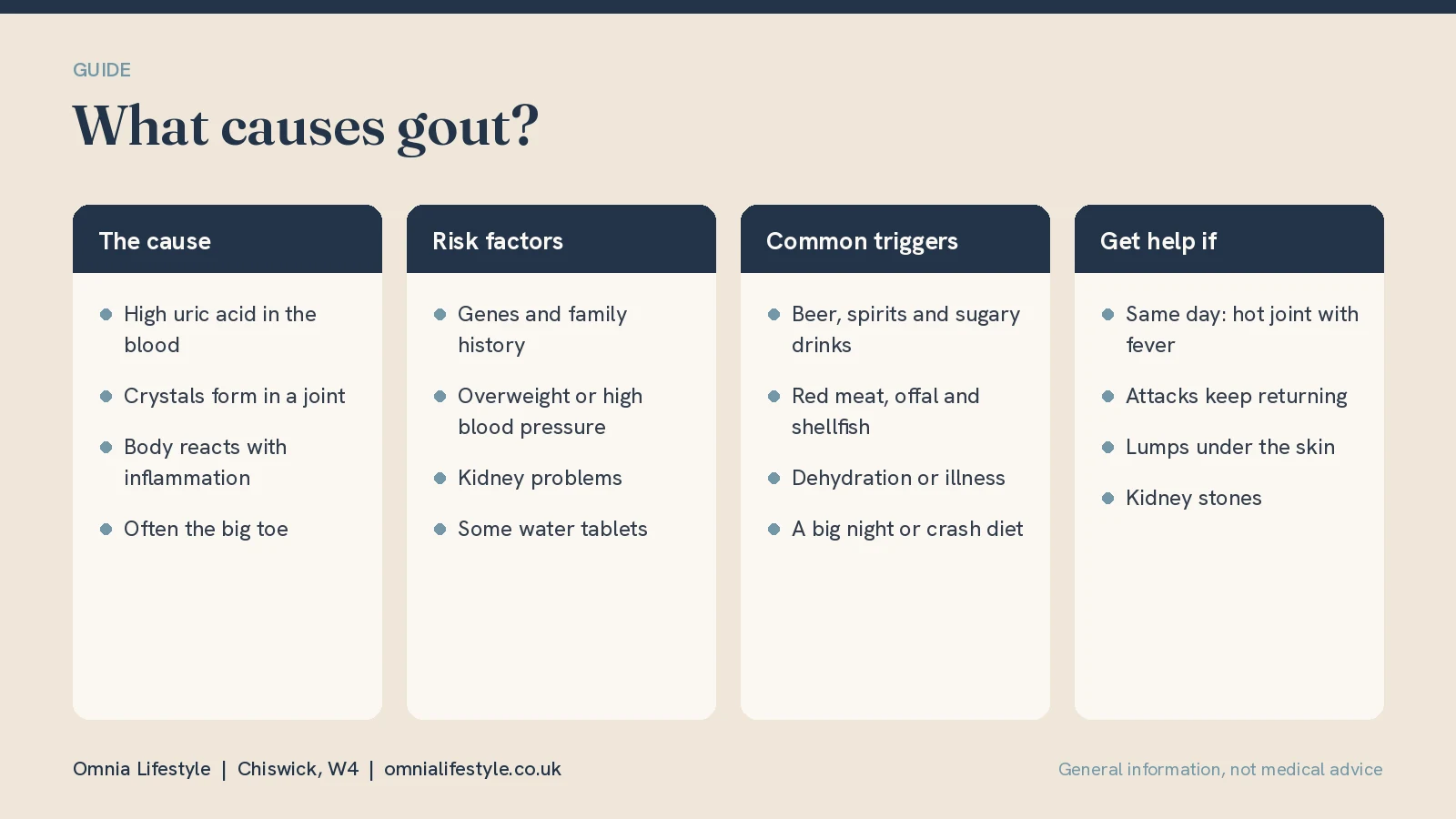
Gout is caused by too much uric acid in the blood. Uric acid is a normal waste product made when the body breaks down substances called purines, found in our own cells and in some foods and drinks. It is normally removed by the kidneys. When levels stay high, uric acid can form sharp, needle-like crystals in and around a joint. The immune system reacts to the crystals, causing sudden, intense inflammation.
Most people with gout have high uric acid because their kidneys do not remove enough of it, rather than because they eat too much of the wrong foods.
Who is most at risk
- Men, and women after the menopause
- A family history of gout
- Being overweight
- High blood pressure, heart disease or diabetes
- Kidney disease
- Some medicines, including water tablets (diuretics) and low-dose aspirin
- Psoriasis
Common triggers for a gout attack
- Alcohol, especially beer and spirits
- Sugary drinks sweetened with fructose
- Foods high in purines, such as red meat, offal, game, shellfish and some oily fish
- Dehydration
- Illness, surgery or a joint injury
- Crash dieting or fasting
- Starting or changing some medicines
What does gout feel like
- Sudden, severe pain, often starting at night or early in the morning
- A hot, red, swollen joint with shiny skin
- Extreme tenderness, so that even a bedsheet is painful
- Most often the big toe, but also the ankle, knee, wrist, fingers or elbow
- Pain peaks within about 24 hours and usually settles over one to two weeks
How gout is diagnosed
A GP can usually diagnose gout from your symptoms and an examination. A blood test for uric acid helps, but levels can be normal during an attack, so the test is best done around two weeks after an attack has settled. Sometimes fluid is taken from the joint to look for crystals.
How gout is treated
During an attack
- Anti-inflammatory painkillers, colchicine or a short course of steroids from your GP
- Rest and raise the joint
- Use an ice pack wrapped in a towel for up to 20 minutes
- Drink plenty of water
Preventing future attacks
UK guidance recommends discussing a daily medicine to lower uric acid, such as allopurinol, for people with gout, particularly if attacks keep returning. The aim is to keep uric acid below a target level, which gradually dissolves crystals. Lifestyle changes help alongside medication:
- Cut down on alcohol, especially beer and spirits
- Swap sugary drinks for water
- Eat less red meat, offal and shellfish
- Lose weight gradually if you are overweight, avoiding crash diets
- Stay well hydrated
When to get help
- Same day: a hot, swollen joint with fever or feeling unwell, which can be a joint infection
- Gout attacks keep returning
- You notice hard lumps under the skin, called tophi, often on the ears, fingers or elbows
- You have had kidney stones
Frequently asked questions
Is gout caused by diet?
Diet plays a part, but genes, kidney function, weight and medicines matter more for most people. Diet changes help, but medication is often needed to prevent attacks.
Can women get gout?
Yes. It is less common before the menopause, when oestrogen helps the kidneys remove uric acid, but becomes more common afterwards.
Does gout go away?
Each attack usually settles within one to two weeks, but without treatment to lower uric acid, attacks tend to return and can damage the joint over time.
Is gout a type of arthritis?
Yes. Gout is an inflammatory type of arthritis caused by uric acid crystals.
Gout support in Chiswick
Omnia Lifestyle offers uric acid blood tests and joint pain support at our clinic in Chiswick, W4, close to Turnham Green station, on bus routes 94, E3 and 272. Limited parking is available on request when booking. Results can be shared with your GP.
Read more about gout, arthritis and high blood pressure, see what arthritis feels like, explore blood tests, or book an appointment.
This article is general information, not medical advice. If you have any of the warning signs listed above, seek medical attention.


.jpg)
.jpg)