




An underactive thyroid, or hypothyroidism, means your thyroid gland is not making enough thyroid hormone. Because these hormones control how fast the body uses energy, a shortage slows many things down. The symptoms come on gradually and are easy to put down to stress, age or a busy life, which is why many people live with it for months or years before it is diagnosed.
This guide explains the symptoms of an underactive thyroid in women and men, what causes it, how it is tested and how it is treated.
Quick answer
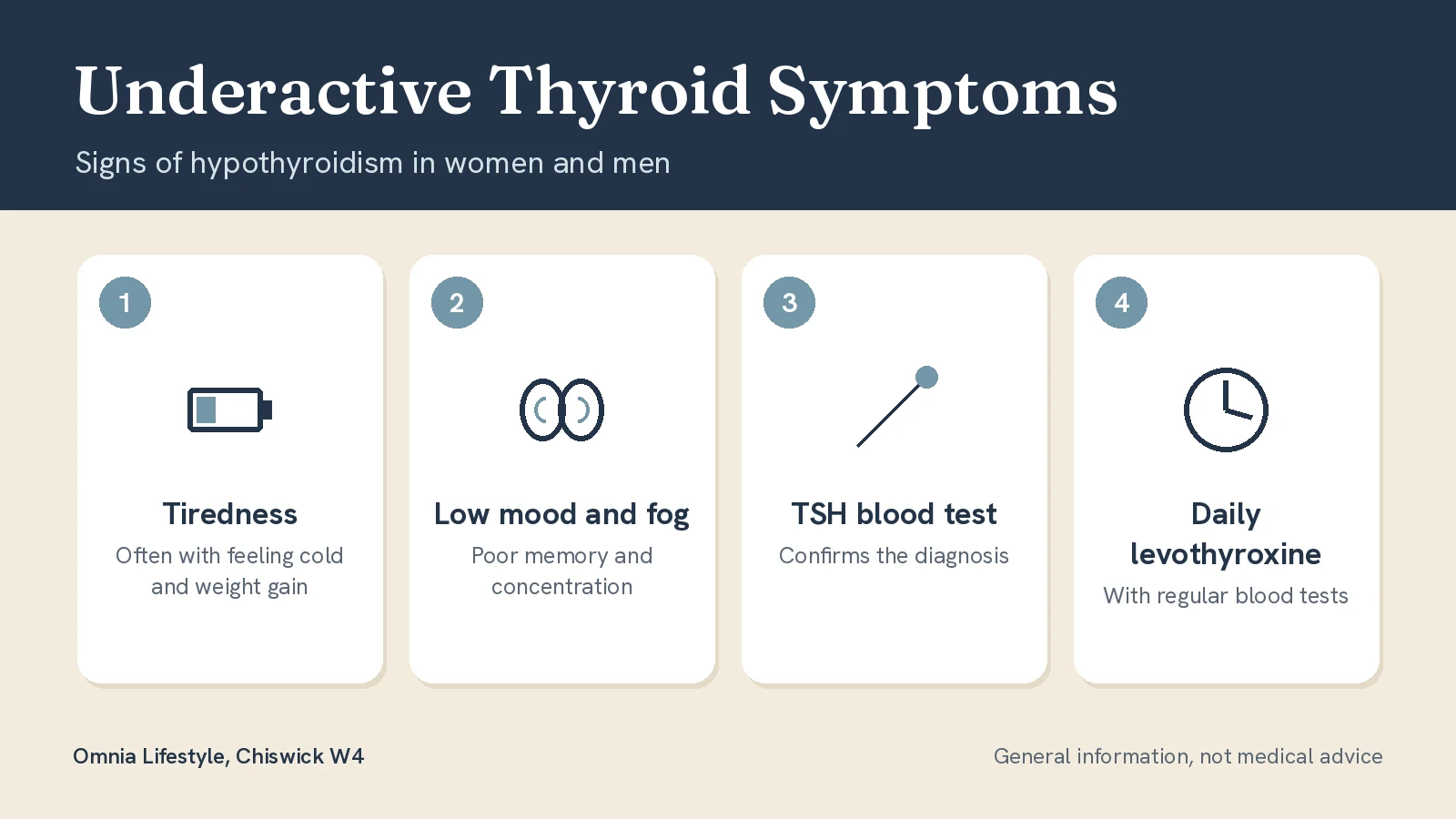
Common symptoms of an underactive thyroid are tiredness, feeling cold, weight gain, constipation, dry skin, thinning hair, muscle aches, low mood and poor memory or concentration. Women may also notice heavier or irregular periods. Symptoms develop slowly and many are vague, so the only way to know is a blood test that measures thyroid stimulating hormone (TSH) and free thyroxine (T4). Hypothyroidism is very treatable with a daily tablet called levothyroxine.
What is an underactive thyroid?
The thyroid is a butterfly-shaped gland at the front of the neck. It makes hormones, mainly thyroxine (T4), that set the pace of your metabolism, heart rate and body temperature. In hypothyroidism, the gland makes too little hormone. It is much more common in women than men and becomes more common with age.
Symptoms of an underactive thyroid
- Tiredness and lack of energy
- Feeling cold when others do not
- Weight gain, often modest and partly fluid
- Constipation
- Dry, rough skin and brittle nails
- Thinning or coarse hair, including the outer eyebrows
- Muscle aches, cramps and weakness
- Low mood or depression
- Poor memory, slow thinking or brain fog
- A puffy face, a hoarse voice or a slow heart rate
- Tingling in the hands from carpal tunnel syndrome
Underactive thyroid symptoms in women
Women are several times more likely than men to develop an underactive thyroid. As well as the symptoms above, women may notice heavier, longer or irregular periods, difficulty getting pregnant, or a drop in mood and energy after having a baby, which can be a sign of postpartum thyroiditis. Because tiredness, weight change and low mood also happen in the perimenopause, thyroid problems can be missed in women in their 40s and 50s, so a blood test is worthwhile if symptoms are new.
Underactive thyroid symptoms in men
Men have the same general symptoms, and may also notice a lower sex drive or erection problems. Because hypothyroidism is less common in men, symptoms are sometimes put down to stress or age, so it is worth asking for a test if several symptoms appear together.
What causes an underactive thyroid?
- Hashimoto's thyroiditis. The most common cause in the UK, where the immune system gradually damages the thyroid. It often runs in families.
- Previous treatment for an overactive thyroid, such as radioactive iodine or surgery
- Some medicines, including lithium and amiodarone
- Thyroiditis after pregnancy or a viral infection, which is often temporary
- Problems with the pituitary gland, which is rare
- Being born with an underactive thyroid, which is picked up by the newborn heel prick test
How an underactive thyroid is tested
A simple blood test measures TSH, the hormone the pituitary gland uses to tell the thyroid to work harder, and free T4. A raised TSH with a low free T4 confirms an underactive thyroid. Thyroid peroxidase (TPO) antibodies can show whether Hashimoto's is the cause. Your GP can arrange these tests, and private thyroid panels are also available.
What is subclinical hypothyroidism?
Sometimes TSH is slightly raised but T4 is still normal. This is called subclinical hypothyroidism, and many people have few or no symptoms. It is usually monitored with repeat blood tests rather than treated straight away. Treatment may be offered if TSH is clearly raised on repeat tests, if you have symptoms, or if you are pregnant or planning a pregnancy.
How an underactive thyroid is treated
Hypothyroidism is treated with levothyroxine, a daily tablet that replaces the missing hormone. The dose is adjusted using blood tests every few months until your levels are stable, then usually checked once a year. Most people feel much better within a few weeks to months. Take levothyroxine at the same time each day on an empty stomach, and keep it apart from calcium, iron and coffee, which reduce absorption.
When to seek medical help
Call 999 if someone with a thyroid condition:
- Becomes very drowsy, confused or hard to wake, especially if they feel very cold
- Has a racing or irregular heartbeat with chest pain or breathlessness
Get same-day medical advice, from your GP or NHS 111, if:
- You have a neck swelling that is growing quickly, or difficulty swallowing or breathing
- You have a thyroid condition and have just found out you are pregnant, as your dose usually needs increasing
See your GP if:
- You have several of the symptoms above, especially tiredness, feeling cold and weight gain
- You notice a lump or swelling in your neck
- Your periods have become heavier or irregular, or you are struggling to conceive
- You are on levothyroxine and still feel unwell. Do not change your dose without advice
Frequently asked questions
Can hypothyroidism be cured?
Most underactive thyroid is lifelong, but it is very well controlled with levothyroxine. Some types, such as thyroiditis after pregnancy, are temporary.
Can an underactive thyroid cause weight gain?
Yes, usually a few kilograms, much of it fluid. Weight often settles once treatment brings levels back to normal.
Can you have an underactive thyroid without symptoms?
Yes. Mild or subclinical hypothyroidism often causes few or no symptoms and may only be found on a routine blood test.
Is an underactive thyroid linked to tiredness?
Tiredness is one of the most common symptoms. See why you may be tired all the time for other causes worth checking.
Thyroid support in Chiswick
Thyroid health is supported at Omnia Lifestyle in Chiswick, W4, close to Turnham Green station, on bus routes 94, E3 and 272. Limited parking is available on request when booking. We can arrange a thyroid blood panel with antibodies and related markers such as vitamin D, B12 and ferritin, explain the results in plain language and share anything that needs attention with your GP. Support with energy, weight, stress and sleep can run alongside your medical treatment, never instead of it.
Read more about thyroid disorders and fatigue, see private blood tests explained and which blood tests help explain tiredness, explore blood tests, fitness and nutrition and Ayurveda, or book an appointment.
This article is general information, not medical advice. If you have any of the warning signs listed above, seek medical attention.


.jpg)
.jpg)