




An overactive thyroid, or hyperthyroidism, means your thyroid gland is making too much thyroid hormone. Because these hormones control how fast your body works, an excess speeds many things up, from your heart rate to your metabolism. It is much more common in women and is usually very treatable once diagnosed.
This guide explains the symptoms of an overactive thyroid, including in women, what causes it, how it is diagnosed and treated, and whether it is dangerous.
Quick answer
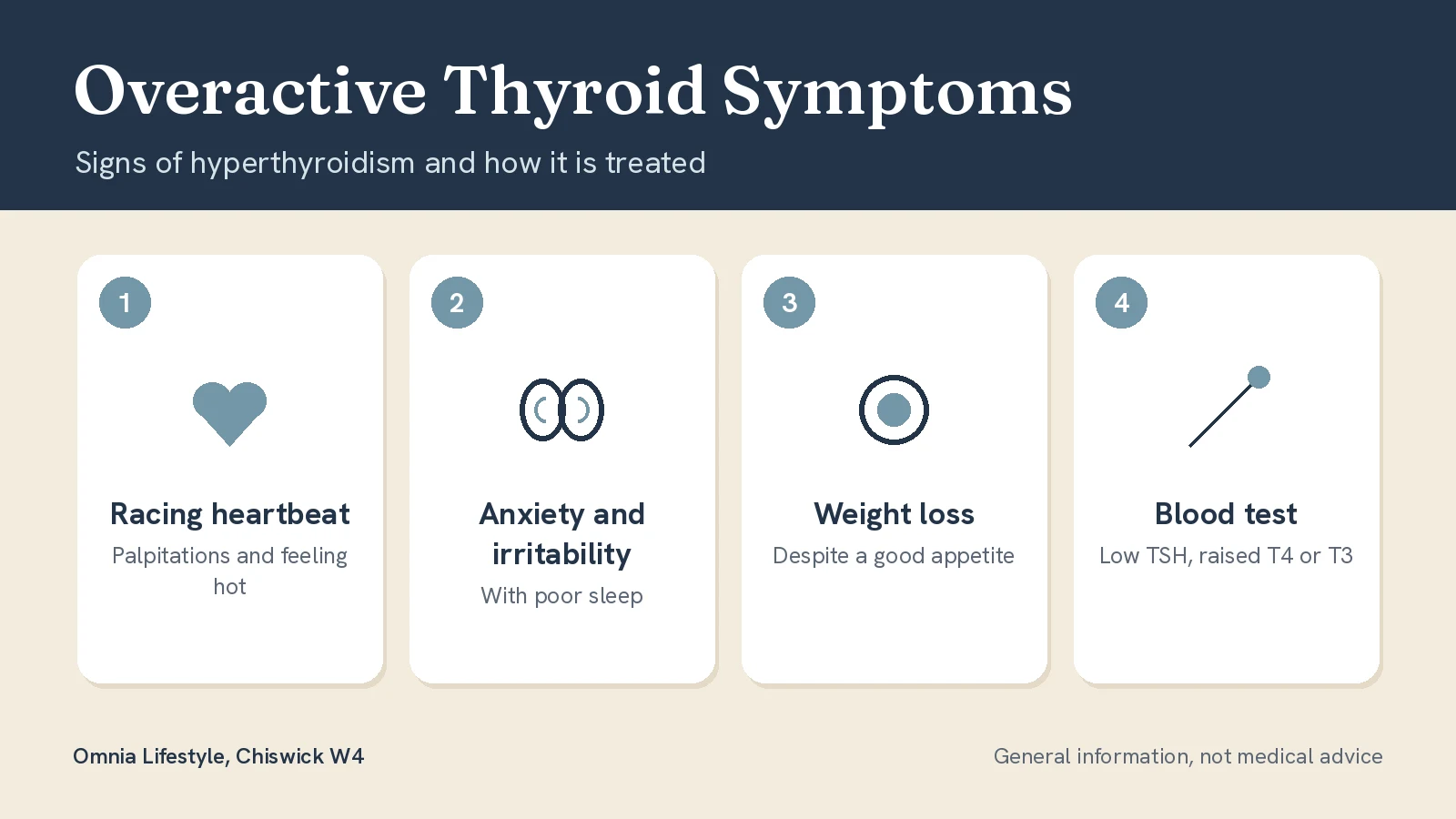
Common symptoms of an overactive thyroid are a fast or irregular heartbeat, feeling anxious, irritable or restless, weight loss despite a good appetite, feeling hot and sweaty, a tremor, poor sleep, tiredness and frequent bowel movements. Women may notice lighter or less frequent periods. The most common cause is Graves' disease. It is diagnosed with a blood test showing low TSH and raised thyroid hormones, and treated with medicines such as carbimazole, radioactive iodine or surgery. Untreated, it can affect the heart and bones, so it should be checked.
Symptoms of an overactive thyroid
- A fast, pounding or irregular heartbeat (palpitations)
- Feeling anxious, nervous, irritable or restless
- Weight loss despite eating normally or more
- Feeling hot, sweating more and disliking heat
- A shaky hand tremor
- Difficulty sleeping, yet feeling tired and weak
- Frequent bowel movements or diarrhoea
- Muscle weakness, especially in the thighs and upper arms
- A swelling in the neck, called a goitre
- Thinning hair
Overactive thyroid symptoms in women
Women are around ten times more likely than men to develop an overactive thyroid. As well as the symptoms above, women may notice lighter, shorter or less frequent periods, difficulty getting pregnant, and symptoms that can be mistaken for anxiety or the perimenopause. Thyroid problems can also start in the months after having a baby.
What causes an overactive thyroid?
- Graves' disease. The most common cause, in which the immune system makes antibodies that stimulate the thyroid. It often runs in families and is more likely in smokers.
- Thyroid nodules, lumps that make too much hormone, more common in older adults
- Thyroiditis, inflammation of the thyroid after a viral infection or pregnancy, which is often temporary
- Too much thyroid medicine, such as a levothyroxine dose that is too high
- Some medicines, such as amiodarone
Graves' disease and the eyes
Some people with Graves' disease develop thyroid eye disease, causing gritty, red or watery eyes, eyes that look more prominent, double vision or pain behind the eyes. Smoking makes it worse. Any change in vision should be checked promptly.
How an overactive thyroid is diagnosed
A blood test shows a low thyroid stimulating hormone (TSH) and raised free thyroxine (T4) or free T3. Antibody tests can confirm Graves' disease, and a scan may be used to look at nodules. Your GP will usually refer you to an endocrinologist to plan treatment.
How an overactive thyroid is treated
- Thionamide medicines, usually carbimazole, which reduce thyroid hormone production. Propylthiouracil may be used in early pregnancy.
- Beta blockers, such as propranolol, which ease a fast heartbeat, tremor and anxiety while other treatment takes effect.
- Radioactive iodine, a capsule or drink that gradually reduces thyroid activity. It often leads to an underactive thyroid later, which is treated with daily levothyroxine.
- Surgery to remove all or part of the thyroid, sometimes recommended for a large goitre or eye disease.
If you take carbimazole or propylthiouracil and develop a sore throat, mouth ulcers or a high temperature, stop the tablets and get an urgent blood test, as these medicines can rarely lower your white blood cells.
Is an overactive thyroid dangerous?
An overactive thyroid is very treatable, but if left untreated it can cause an irregular heart rhythm called atrial fibrillation, heart failure, thinning of the bones and pregnancy complications. A rare, severe flare called a thyroid storm is a medical emergency. With treatment and regular blood tests, most people live a normal life.
When to seek medical help
Call 999 if you have:
- A very fast or irregular heartbeat with chest pain, breathlessness or fainting
- A high temperature, agitation or confusion, with a very fast heart rate, especially if you have a thyroid condition
Get same-day medical advice, from your GP or NHS 111, if:
- You take carbimazole or propylthiouracil and develop a sore throat, mouth ulcers or a high temperature
- You have eye pain, sudden changes in vision or double vision
- A swelling in your neck is growing quickly, or you have difficulty swallowing or breathing
See your GP if:
- You have several of the symptoms above, such as palpitations, weight loss and feeling hot
- You notice a swelling or lump in your neck
- Your periods have become lighter or less frequent without a clear reason
- You have a thyroid condition and are planning a pregnancy
Frequently asked questions
Can an overactive thyroid cause anxiety?
Yes. Anxiety, restlessness and irritability are common symptoms and usually improve once thyroid levels are controlled. See anxiety symptoms.
Can an overactive thyroid go away?
Graves' disease sometimes goes into remission after a course of medicine, and thyroiditis often settles on its own. Other causes usually need longer-term treatment.
Does an overactive thyroid cause weight loss?
Often, yes, despite a normal or increased appetite. Some people, particularly younger people, gain weight because their appetite increases.
What is the difference between an overactive and underactive thyroid?
An overactive thyroid speeds the body up, while an underactive thyroid slows it down. See underactive thyroid symptoms.
Thyroid support in Chiswick
Thyroid health is supported at Omnia Lifestyle in Chiswick, W4, close to Turnham Green station, on bus routes 94, E3 and 272. Limited parking is available on request when booking. We can arrange a thyroid blood panel with antibodies, explain the results in plain language and share anything that needs attention with your GP. Support with sleep, stress and wellbeing can run alongside your medical treatment, never instead of it.
Read more about thyroid disorders, see underactive thyroid symptoms and private blood tests explained, explore blood tests, yoga and acupuncture, or book an appointment.
This article is general information, not medical advice. If you have any of the warning signs listed above, seek medical attention.


.jpg)
.jpg)