




Fibromyalgia causes widespread pain, fatigue and poor sleep, and it often comes in flares. Because autoimmune conditions such as lupus and rheumatoid arthritis can cause similar symptoms, many people wonder whether fibromyalgia is autoimmune too.
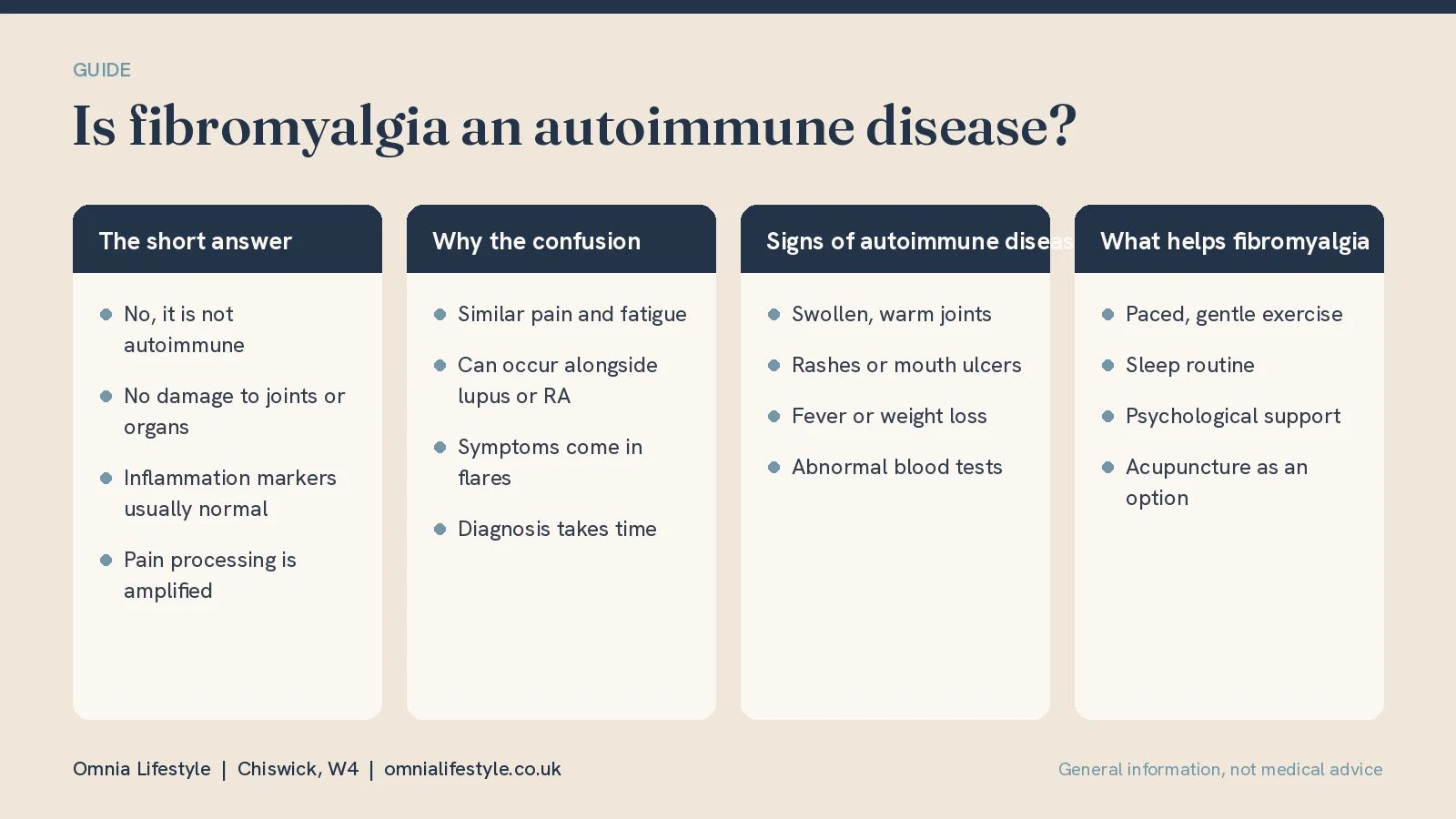
The short answer is no. Fibromyalgia is not classed as an autoimmune disease. This guide explains why, what is thought to cause it instead, and how to tell the difference.
What makes a disease autoimmune
In autoimmune diseases, the immune system mistakenly attacks the body's own tissues. In rheumatoid arthritis it attacks the joint lining, and in lupus it can affect the skin, joints, kidneys and other organs. This causes inflammation, which shows up on blood tests, and it can damage tissues over time. That is why autoimmune diseases need medicines that calm the immune system.
Why fibromyalgia is different
- No tissue damage: fibromyalgia does not damage the joints, muscles or organs.
- Normal inflammation markers: blood tests for inflammation are usually normal.
- A problem of pain processing: current research points to central sensitisation, where the brain and spinal cord amplify pain signals, making the body more sensitive to pain, pressure, temperature and noise.
Some early research is exploring whether the immune system plays a part in some people with fibromyalgia. This is an active area of study, but it does not change the current understanding that fibromyalgia is not an autoimmune disease or its treatment.
Why the confusion is understandable
- Pain, fatigue and brain fog occur in both fibromyalgia and autoimmune conditions.
- Both tend to come in flares triggered by stress, illness or overdoing it.
- A significant minority of people with rheumatoid arthritis, lupus or Sjögren's syndrome also have fibromyalgia.
- Diagnosis can take a long time, so people search for explanations.
Signs that point to an autoimmune condition
- Swollen, warm joints rather than aching alone
- Morning stiffness lasting more than an hour
- Rashes, especially on the face after sun exposure
- Mouth ulcers, dry eyes and dry mouth
- Fever, unexplained weight loss or feeling generally unwell
- Abnormal blood tests, such as raised inflammation markers or positive antibodies
If you have any of these, ask your GP about further tests. Fibromyalgia can occur alongside an autoimmune condition, so both may need treating.
Why the distinction matters
Autoimmune diseases need early treatment with medicines that protect tissues from damage. Fibromyalgia does not respond to those medicines. Instead, the approaches with the best evidence are paced exercise, sleep support, psychological therapies and, as an option in UK guidance, a course of acupuncture.
What helps fibromyalgia
- Paced, gentle exercise such as walking, swimming or tai chi, built up very gradually
- A regular sleep routine
- Psychological support to manage the stress and low mood that often accompany pain
- Acupuncture, which UK guidance says can be considered for chronic primary pain
- Pacing, planning rest before you need it to avoid boom-and-bust flares
Frequently asked questions
Can fibromyalgia turn into lupus or rheumatoid arthritis?
No. Fibromyalgia does not turn into an autoimmune disease, although the two can occur together.
Is fibromyalgia an inflammatory condition?
Not in the way that arthritis is. Inflammation markers are usually normal, and fibromyalgia does not cause joint damage.
Do I need a rheumatologist for fibromyalgia?
Not always. Many GPs diagnose and manage it. A rheumatologist is helpful when an autoimmune or inflammatory condition needs ruling out.
Why does fibromyalgia flare?
Common triggers include overdoing activity, stress, poor sleep, illness and changes in routine. Keeping a diary helps spot patterns.
Fibromyalgia support in Chiswick
Omnia Lifestyle supports people living with fibromyalgia alongside their GP or rheumatologist, at our clinic in Chiswick, W4, close to Turnham Green station, on bus routes 94, E3 and 272. Limited parking is available on request when booking.
Read more about fibromyalgia, arthritis and rheumatism, see how fibromyalgia is diagnosed, explore acupuncture, tai chi and blood tests, or book an appointment.
This article is general information, not medical advice. If you have any of the warning signs listed above, seek medical attention.


.jpg)
.jpg)