




Gout is very treatable. Treatment has two parts: easing an attack quickly when it happens, and lowering uric acid over the long term so that crystals dissolve and attacks stop coming back. Many people only ever treat the attacks, which is why gout so often keeps returning.
This guide explains how gout attacks are treated, how long-term treatment prevents them, what lifestyle changes help and the side effects to watch for.
Quick answer
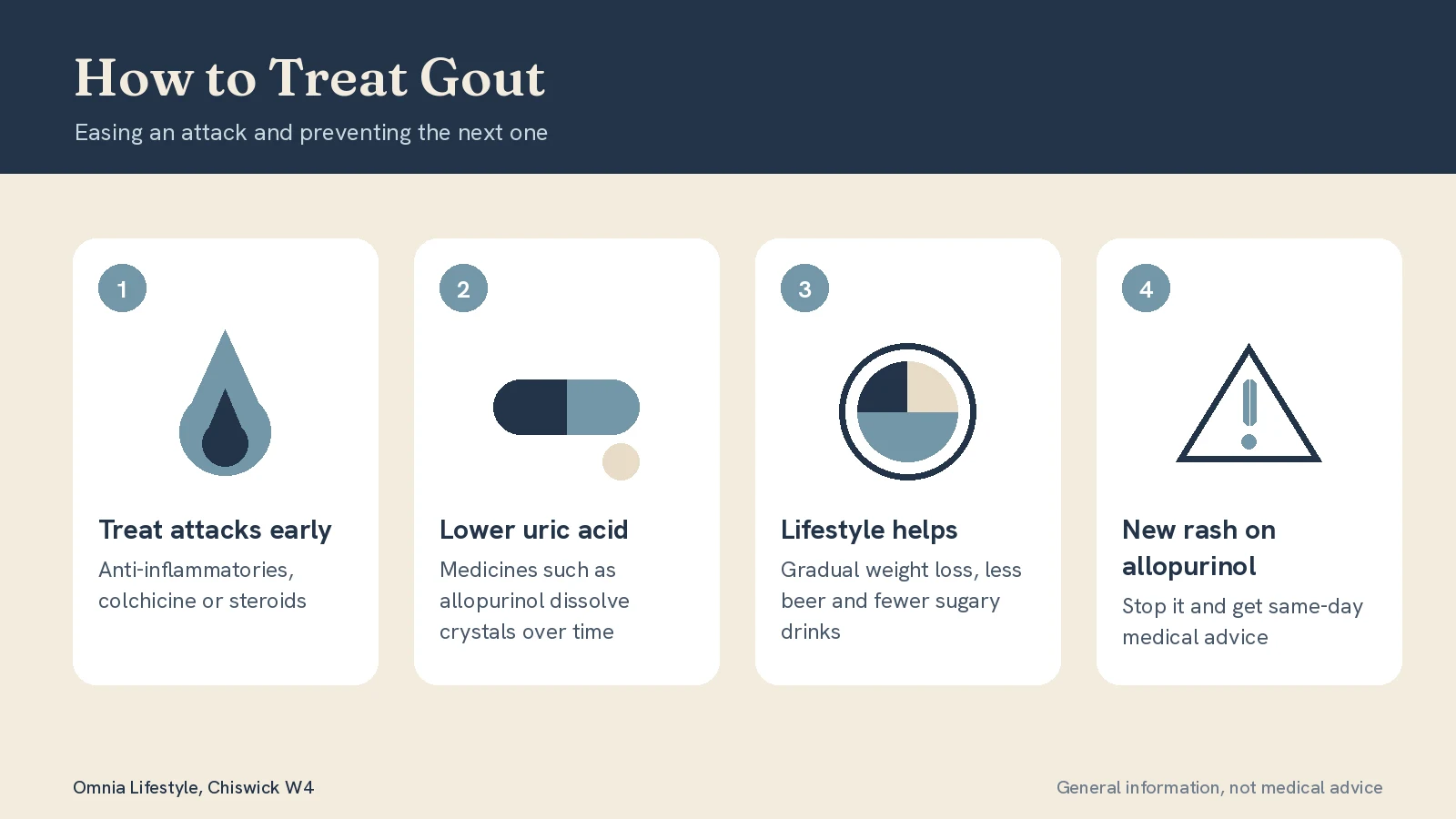
A gout attack is treated with an anti-inflammatory medicine, colchicine or a steroid, started as early as possible, together with rest, raising the joint and an ice pack. If attacks keep happening, or you have kidney disease, lumps called tophi or joint damage, long-term urate-lowering medicine such as allopurinol is recommended to bring uric acid down and prevent future attacks. Lifestyle changes help, but on their own they are rarely enough once gout is established.
Treating a gout attack
The sooner treatment starts, ideally within 24 hours, the faster an attack settles. Your GP or pharmacist will advise which option suits you.
- Anti-inflammatory painkillers (NSAIDs), such as naproxen, often with a medicine to protect the stomach. They may not be suitable if you have kidney disease, a stomach ulcer, heart failure or take blood thinners.
- Colchicine, taken at a low dose exactly as prescribed. Higher doses commonly cause diarrhoea, and it interacts with several other medicines.
- Steroids, as a short course of tablets or an injection into the joint, when the other options are not suitable
Alongside medicine:
- Rest the joint and keep it raised
- Apply an ice pack wrapped in a towel for up to 20 minutes at a time
- Keep bedclothes off the joint
- Drink plenty of water
- Avoid using aspirin for pain relief, as it can raise uric acid, but do not stop low-dose aspirin that has been prescribed for your heart
If you have had gout before, ask your GP about keeping a supply of attack treatment at home so you can start it straight away.
Long-term treatment to prevent attacks
Urate-lowering medicine reduces the amount of uric acid in the blood, so crystals stop forming and existing crystals slowly dissolve. UK guidance recommends discussing it with everyone who has gout, and offering it particularly to people with repeated attacks, tophi, joint damage, kidney disease or those taking diuretics.
- Allopurinol is usually the first choice. Febuxostat is an alternative for people who cannot take allopurinol.
- Treat to target. The dose starts low and is increased every few weeks, with blood tests, until uric acid is below 360 micromol/L, or below 300 if you have tophi or frequent attacks.
- Expect a few flares at first. Attacks can become more likely in the first months as crystals dissolve, so you may be given low-dose colchicine or an anti-inflammatory to cover this period.
- Keep taking it during an attack. Stopping and restarting makes flares more likely.
- It is usually long term. For most people, urate-lowering treatment continues for life, with a yearly blood test once the target is reached.
Lifestyle changes that help
- Lose weight gradually if you need to, avoiding crash diets, which can trigger attacks
- Cut down on beer and spirits, and avoid sugary drinks sweetened with fructose
- Keep portions of red meat, offal and shellfish moderate
- Drink plenty of water, especially in hot weather and after exercise
- Ask your GP whether any of your medicines, such as some water tablets, are raising your uric acid
These changes lower uric acid modestly and reduce triggers, and they also improve heart health, which matters because gout is linked with high blood pressure, diabetes and heart disease. For more on triggers, see what causes gout.
Getting moving again
Once an attack has settled, return to normal activity gradually. Low-impact exercise such as walking, cycling and swimming keeps joints moving and helps with weight. If a joint has become stiff or weak after repeated attacks, physiotherapy can help restore movement and strength.
When to seek medical help
Call 999 or go to A&E if you develop a widespread rash with blisters, mouth ulcers or sore eyes and feel unwell, especially after starting allopurinol, or if a hot, swollen joint comes with confusion, fast breathing, shivering or mottled skin.
Get same-day medical advice, from your GP or NHS 111, if:
- You develop any new rash after starting allopurinol. Stop taking it and seek advice
- This is your first attack of a hot, red, swollen joint, or you have a fever
- You have severe diarrhoea while taking colchicine
See your GP if:
- You have had more than one attack
- You notice lumps under the skin near a joint
- You have had kidney stones
Frequently asked questions
What is the fastest way to treat a gout attack?
Start an anti-inflammatory, colchicine or a steroid as early as possible, ideally within 24 hours, and rest, raise and ice the joint. Many people find attacks settle within a few days with early treatment.
Can gout be cured?
It can be controlled very effectively. Keeping uric acid below target for long enough dissolves the crystals, and many people on treatment stop having attacks altogether.
Should I stop allopurinol during a gout attack?
No. Keep taking it as prescribed and treat the attack separately. Stopping and restarting makes attacks more likely.
Does drinking water help gout?
Staying well hydrated helps the kidneys clear uric acid and may reduce attacks, but it does not replace medicine for people with frequent attacks.
Gout support in Chiswick
Support between gout attacks, including uric acid blood tests, nutrition and weight coaching and physiotherapy, is available at Omnia Lifestyle in Chiswick, W4, close to Turnham Green station, on bus routes 94, E3 and 272. Limited parking is available on request when booking. Acute attacks and medicines are managed by your GP, and we work alongside their care.
Read more about gout and joint pain, see what gout feels like, explore blood tests, fitness and nutrition coaching and physiotherapy, or book an appointment.
This article is general information, not medical advice. If you have any of the warning signs listed above, seek medical attention.



.jpg)
.jpg)