





Insulin resistance is common, often silent, and closely linked to type 2 diabetes, weight gain around the middle, PCOS and fatty liver. The encouraging news is that it often improves significantly with the right changes, sometimes within weeks.
This guide sets out a practical plan to reverse insulin resistance, how to track your progress, and when to involve your GP.
What insulin resistance is
Insulin moves sugar from the blood into your muscles, liver and fat cells. In insulin resistance, those cells respond less well, so your body makes more insulin to keep blood sugar normal. Over time, if the pancreas cannot keep up, blood sugar rises into the prediabetes range and, for some people, type 2 diabetes develops.
Step 1: Build muscle
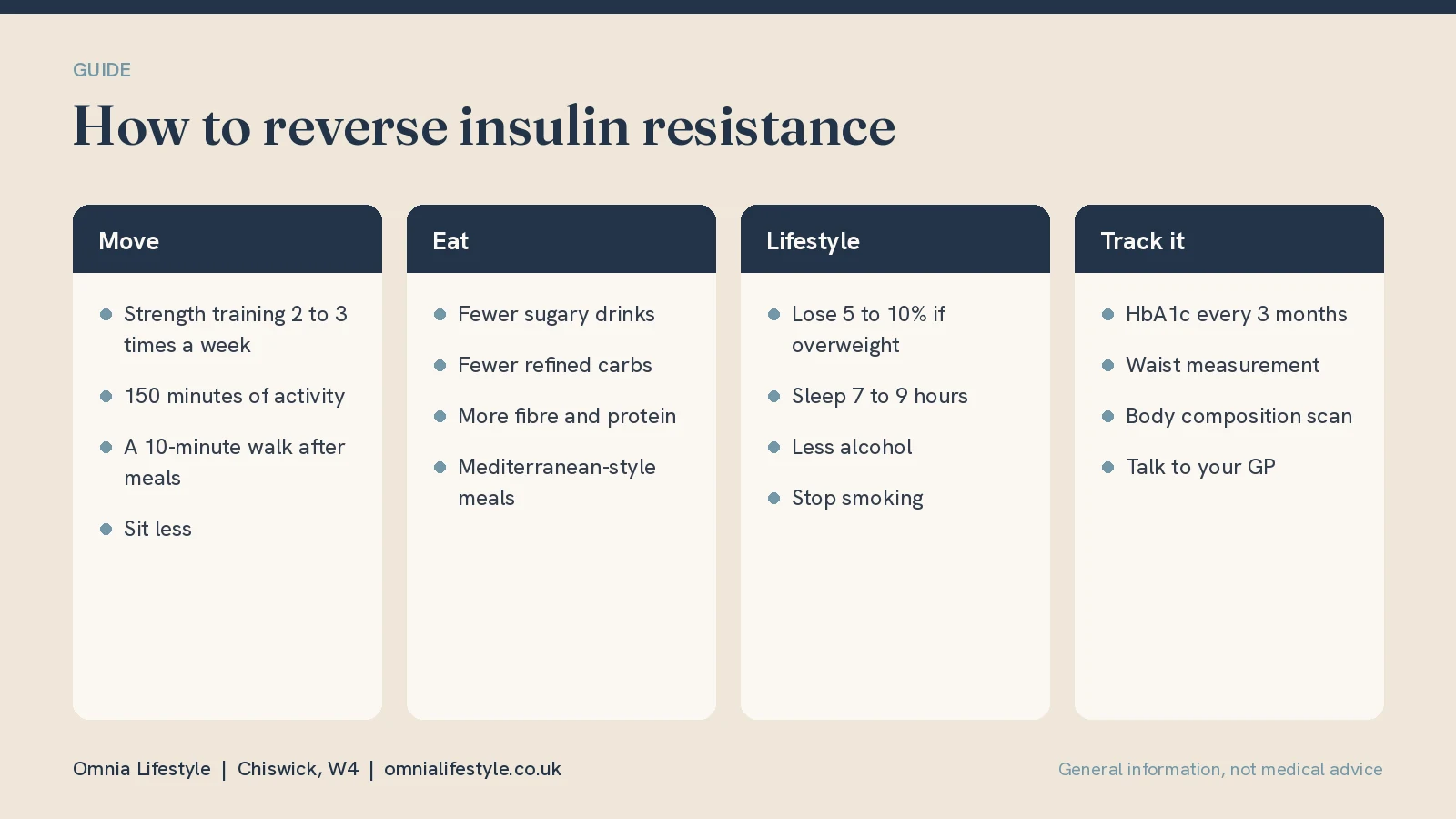
Muscle is the body's biggest store for blood sugar. Strength training two or three times a week improves insulin sensitivity, even before any weight changes. Squats, lunges, push-ups, rows and resistance band work are a good start.
Step 2: Move more every day
- Aim for at least 150 minutes of moderate activity a week, such as brisk walking or cycling
- Take a 10 to 15 minute walk after meals, which lowers the rise in blood sugar
- Break up long periods of sitting every 30 minutes
Step 3: Change what is on your plate
- Cut sugary drinks, including fruit juice and sweetened coffees
- Swap refined carbohydrates such as white bread, pastries and white rice for wholegrains, beans and lentils
- Add protein and fibre at every meal to slow sugar absorption
- Follow a Mediterranean-style pattern with vegetables, olive oil, fish, nuts and pulses
You do not need to cut out carbohydrates entirely. Quality and portion matter more.
Step 4: Lose excess weight around the middle
If you carry extra weight, especially around the waist, losing 5 to 10 percent of body weight can substantially improve insulin sensitivity. Visceral fat, the fat around the organs, is the most important to reduce.
Step 5: Sleep, alcohol and smoking
- Aim for seven to nine hours of sleep, because short sleep worsens insulin resistance
- Keep alcohol within 14 units a week
- Stop smoking, which increases insulin resistance
How to track progress
- HbA1c blood test: shows average blood sugar over two to three months. 42 to 47 mmol/mol suggests prediabetes, and 48 or above suggests diabetes.
- Waist measurement: a waist less than half your height is a helpful target.
- Body composition scan: shows changes in visceral fat and muscle.
Retest HbA1c after about three months, since it reflects the previous two to three months.
How long does it take?
Exercise improves insulin sensitivity within days. Measurable changes in HbA1c usually show after around three months of consistent changes.
When to involve your GP
- Your HbA1c is in the prediabetes or diabetes range
- You have symptoms such as extreme thirst, passing more urine, blurred vision or unexplained weight loss
- You take medication that lowers blood sugar, as doses may need adjusting as you improve
People with prediabetes in England may be eligible for the free NHS Diabetes Prevention Programme.
Frequently asked questions
Can insulin resistance be reversed?
Often, yes. Strength training, daily activity, dietary changes, weight loss where needed and good sleep can significantly improve it.
What is the fastest way to reverse insulin resistance?
Combining strength training with walks after meals and cutting sugary drinks tends to bring the quickest improvements.
What are the signs of insulin resistance?
Weight gain around the middle, energy dips after meals, darker velvety skin in the neck or armpits, and skin tags. Many people have no signs at all.
Is insulin resistance the same as diabetes?
No. It often comes before type 2 diabetes, and treating it early can prevent diabetes developing.
Metabolic health support in Chiswick
Omnia Lifestyle offers HbA1c blood tests, InBody body composition scans and one-to-one fitness and nutrition coaching at our clinic in Chiswick, W4, close to Turnham Green station, on bus routes 94, E3 and 272. Limited parking is available on request when booking.
Read more about insulin resistance and type 2 diabetes, see how to speed up your metabolism and how to lose weight with PCOS, explore blood tests, InBody scans and fitness and nutrition, or book an appointment.
This article is general information, not medical advice. If you take diabetes medication, speak to your GP before making major changes.


.jpg)
.jpg)