




High blood pressure affects around a third of adults in the UK, and many do not know they have it, because it rarely causes symptoms. The encouraging news is that lifestyle changes can lower blood pressure meaningfully, and for some people they are enough on their own.
This guide explains what counts as high blood pressure, the changes with the best evidence, how much difference they make, and when to see a doctor.
What counts as high blood pressure?
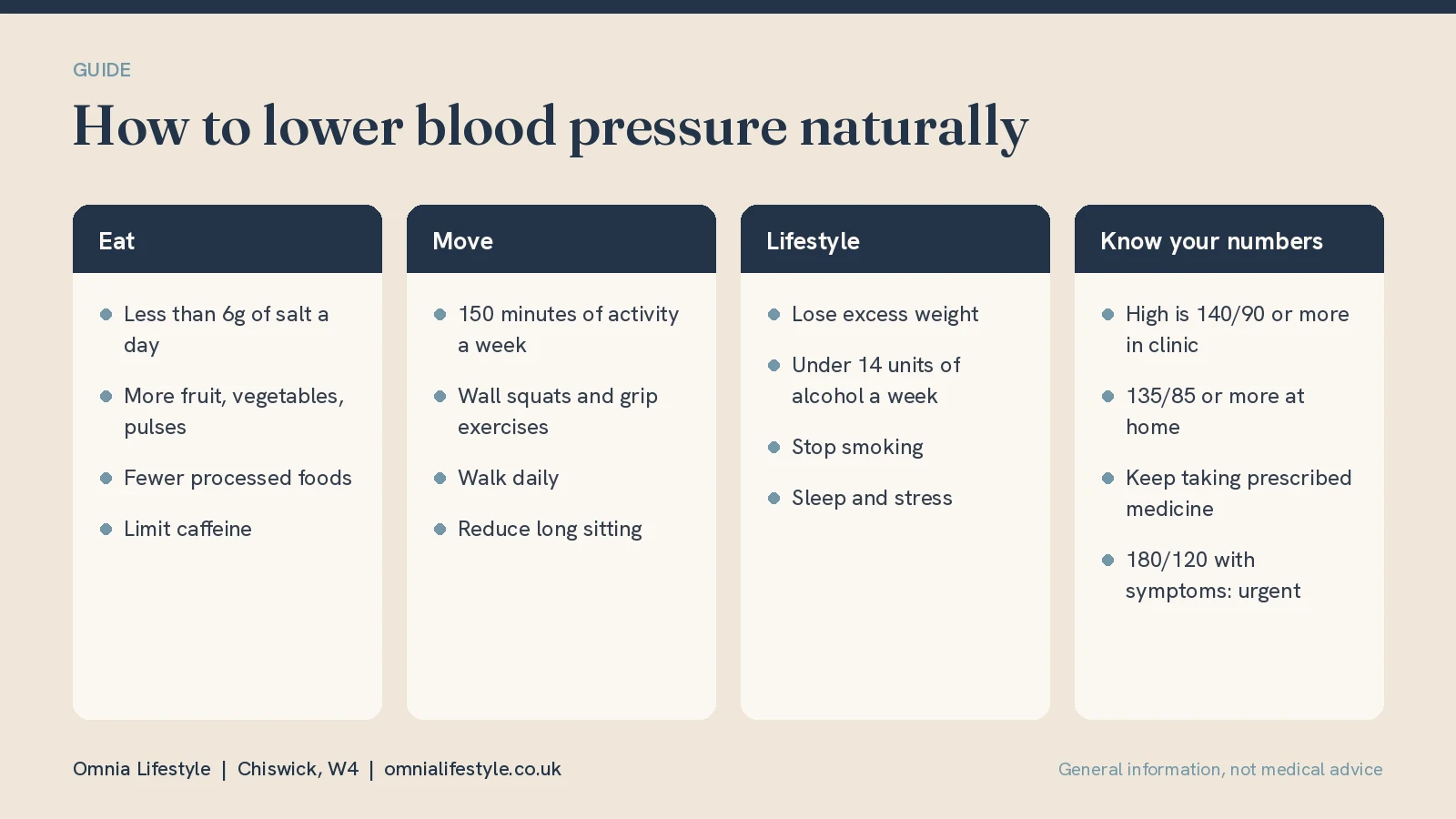
- Clinic reading: 140/90 mmHg or higher
- Home reading: 135/85 mmHg or higher, averaged over several days
- Ideal: generally below 120/80 mmHg
Readings vary through the day, so a single high reading is not a diagnosis. Your GP may suggest home or 24-hour monitoring.
The changes that lower blood pressure
Cut salt
Aim for less than 6g of salt a day, about a teaspoon. Most salt comes from bread, processed food, ready meals and takeaways rather than the salt shaker, so checking labels makes the biggest difference.
Eat more fruit, vegetables and pulses
Diets rich in fruit, vegetables, wholegrains, pulses, nuts and low-fat dairy, sometimes called the DASH diet, lower blood pressure in research trials, partly because they are rich in potassium.
Move more
Aim for at least 150 minutes of moderate activity a week, such as brisk walking or cycling. Research has also found that isometric exercises, such as wall squats and hand grip exercises, can lower blood pressure effectively.
Lose excess weight
For people who are overweight, losing even a few kilograms lowers blood pressure, and the effect grows with further weight loss.
Cut back on alcohol
Keep to no more than 14 units a week, spread over several days. Heavy drinking raises blood pressure.
Stop smoking
Smoking does not cause long-term high blood pressure on its own, but it greatly increases the risk of heart attack and stroke when blood pressure is high.
Limit caffeine and look after sleep and stress
Large amounts of caffeine can raise blood pressure in some people. Poor sleep and long-term stress also contribute.
How long does it take?
Many people see a change within a few weeks of consistent changes, particularly from cutting salt and increasing activity. Keep checking with home readings or at your GP practice.
Does high blood pressure make you tired?
High blood pressure usually causes no symptoms at all, which is why it is called a silent condition. Tiredness is more often caused by something else, such as poor sleep, low iron or, in some people, blood pressure medicines. See our guide to why you may be tired all the time.
Important: keep taking your medicine
If you have been prescribed blood pressure medicine, keep taking it. Lifestyle changes work alongside medication, and your GP may reduce the dose if your readings improve. Do not stop or change medicines without medical advice.
When to seek help
- Urgent: a reading of 180/120 or higher with chest pain, breathlessness, severe headache, confusion or vision changes needs emergency care. Call 999.
- Same day: a reading of 180/120 or higher without symptoms, so contact your GP or NHS 111.
- Routine: see your GP if home readings are regularly 135/85 or higher.
Frequently asked questions
What is the fastest way to lower blood pressure naturally?
Cutting salt and increasing daily activity tend to show the quickest effects, within weeks. There is no safe way to lower it dramatically overnight without medical care.
Can I lower blood pressure without medication?
Some people with mildly raised blood pressure can, with lifestyle changes. Others need medication as well. Your GP will advise based on your readings and overall risk.
Does drinking water lower blood pressure?
Staying hydrated is healthy, but drinking extra water does not lower blood pressure in most people.
What foods lower blood pressure?
Vegetables, fruit, pulses, wholegrains, nuts and low-fat dairy, as part of a lower-salt diet.
Blood pressure support in Chiswick
Omnia Lifestyle supports people with raised blood pressure alongside their GP, with blood tests, body composition scans and fitness and nutrition coaching at our clinic in Chiswick, W4, close to Turnham Green station, on bus routes 94, E3 and 272. Limited parking is available on request when booking.
Read more about high blood pressure and weight management, explore fitness and nutrition, blood tests and tai chi, or book an appointment.
This article is general information, not medical advice. Do not stop or change prescribed medicines without speaking to your doctor.

.jpg)
.jpg)