



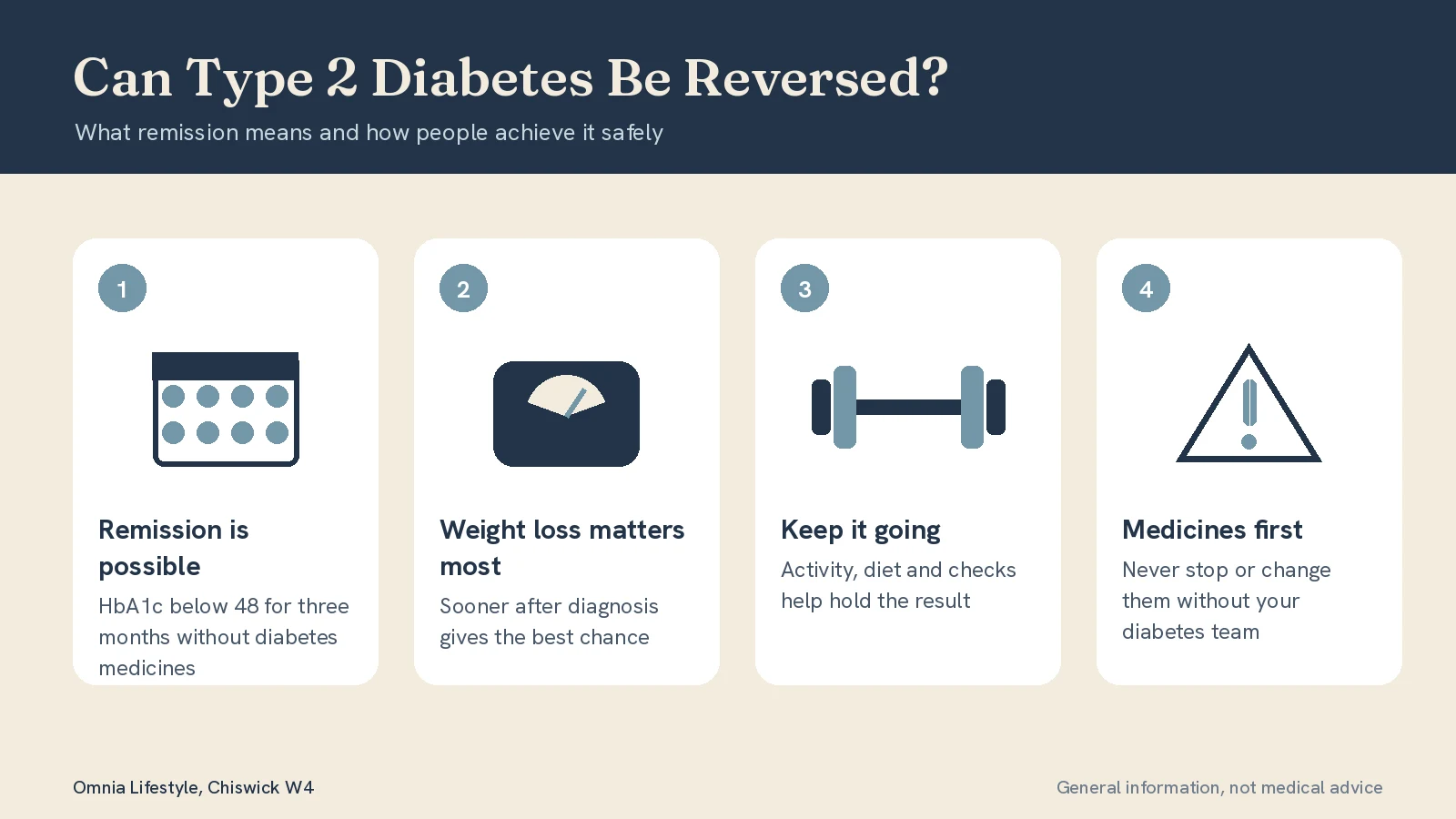


For many people, type 2 diabetes can be put into remission, meaning blood sugar returns to below the diabetes range without diabetes medicines. It is not a cure, because blood sugar can rise again, but it can greatly reduce the risk of complications and improve how you feel.
This guide explains what remission means, what the evidence shows, who is most likely to achieve it, the approaches that work and how to do it safely.
Quick answer
Yes, type 2 diabetes can often be put into remission, mainly through significant weight loss. Remission is most likely within the first few years after diagnosis. In a major UK trial, nearly half of people who followed a supervised low-calorie programme were in remission after a year. Changes to diet and medicines must be planned with your GP or diabetes team, because some diabetes medicines can cause dangerously low blood sugar when you eat much less.
What remission means
Remission is generally defined as an HbA1c below 48 mmol/mol, measured at least three months after stopping all diabetes medicines. Doctors use the word remission rather than cure because the underlying tendency remains. If weight is regained, blood sugar usually rises again, so regular checks continue, including your yearly eye, foot and kidney checks.
What the evidence shows
The UK DiRECT trial tested a supervised programme of total diet replacement, using shakes and soups of around 850 calories a day for three to five months, followed by a gradual return to food and ongoing support. After one year, 46% of participants were in remission. Among those who lost 15 kg or more, the large majority were in remission. After two years, around a third remained in remission, and longer-term follow-up showed that keeping weight off was the key to staying there.
A later study found that people with type 2 diabetes who were not overweight could also achieve remission by losing a modest amount of weight. What seems to matter most is reducing the fat stored in and around the liver and pancreas, which allows the insulin-producing cells to recover.
Who is most likely to achieve remission
- People diagnosed within the last six years
- People who are able to lose a significant amount of weight, often 10 to 15 kg
- People who are not yet using insulin
Remission is still possible for some people outside these groups, and every step towards it improves health even if full remission is not reached.
Approaches that can lead to remission
- Low-calorie diet programmes. Supervised total diet replacement has the strongest evidence. The NHS Type 2 Diabetes Path to Remission programme offers this in England to eligible adults living with overweight who were diagnosed within the last six years. Your GP can tell you whether you qualify.
- Lower-carbohydrate eating. Some people achieve weight loss and better blood sugar by reducing carbohydrates. This must be agreed with your diabetes team if you take medicines that can cause low blood sugar.
- Gradual weight loss through a calorie-controlled diet and regular activity, which works for some people over a longer time
- Weight loss surgery, which leads to remission in many people and may be offered to those who meet the criteria
Exercise alone rarely leads to remission, but it improves blood sugar, protects muscle during weight loss and helps keep weight off afterwards. For practical steps, see how to reverse insulin resistance.
Doing it safely
Eating much less, or cutting carbohydrates sharply, can cause low blood sugar if you take insulin or sulfonylureas such as gliclazide. Some tablets, known as SGLT2 inhibitors, can cause a serious condition called ketoacidosis on very low-carbohydrate diets. Blood pressure medicines may also need reducing as weight falls. Always plan changes with your GP or diabetes team, and never stop or change diabetes medicines on your own.
Keeping remission
Staying in remission depends mainly on keeping the weight off. Regular activity, including strength training, a sustainable eating pattern, good sleep and ongoing support all help. Keep attending your yearly diabetes reviews, because the risk of complications is reduced but not removed.
When to seek medical help
Call 999 or go to A&E if you have diabetes and develop vomiting, stomach pain, fast breathing, confusion, drowsiness or fruity-smelling breath, or if low blood sugar does not respond to treatment or causes confusion or fitting.
Contact your GP or diabetes team the same day if:
- You are having frequent episodes of low blood sugar, with shaking, sweating, hunger or confusion
- A foot wound or sore is red, hot, swollen or not healing
Speak to your GP before starting any low-calorie or low-carbohydrate plan if you take diabetes or blood pressure medicines.
Frequently asked questions
How long does it take to reverse type 2 diabetes?
On supervised low-calorie programmes, blood sugar often improves within weeks, and remission is usually confirmed after several months. With gradual weight loss, it can take longer.
Can you reverse type 2 diabetes without losing weight?
It is unlikely. Weight loss is the main driver of remission, although people who are not overweight may only need to lose a modest amount.
Can type 2 diabetes come back after remission?
Yes. If weight is regained, blood sugar usually rises again. Keeping up healthy habits and regular checks gives the best chance of staying in remission.
Is remission the same as a cure?
No. Remission means blood sugar is below the diabetes range without medicines, but the tendency remains, so regular monitoring continues.
Metabolic health support in Chiswick
Lifestyle support for weight, activity and blood sugar is available at Omnia Lifestyle in Chiswick, W4, close to Turnham Green station, on bus routes 94, E3 and 272. Limited parking is available on request when booking. We work alongside your GP or diabetes team, share your progress with them and never adjust diabetes medicine.
Read more about type 2 diabetes and metabolic health, see what causes type 2 diabetes and how to speed up your metabolism, explore fitness and nutrition coaching, an InBody scan and blood tests, or book an appointment.
This article is general information, not medical advice. If you have any of the warning signs listed above, seek medical attention.



.jpg)
.jpg)