


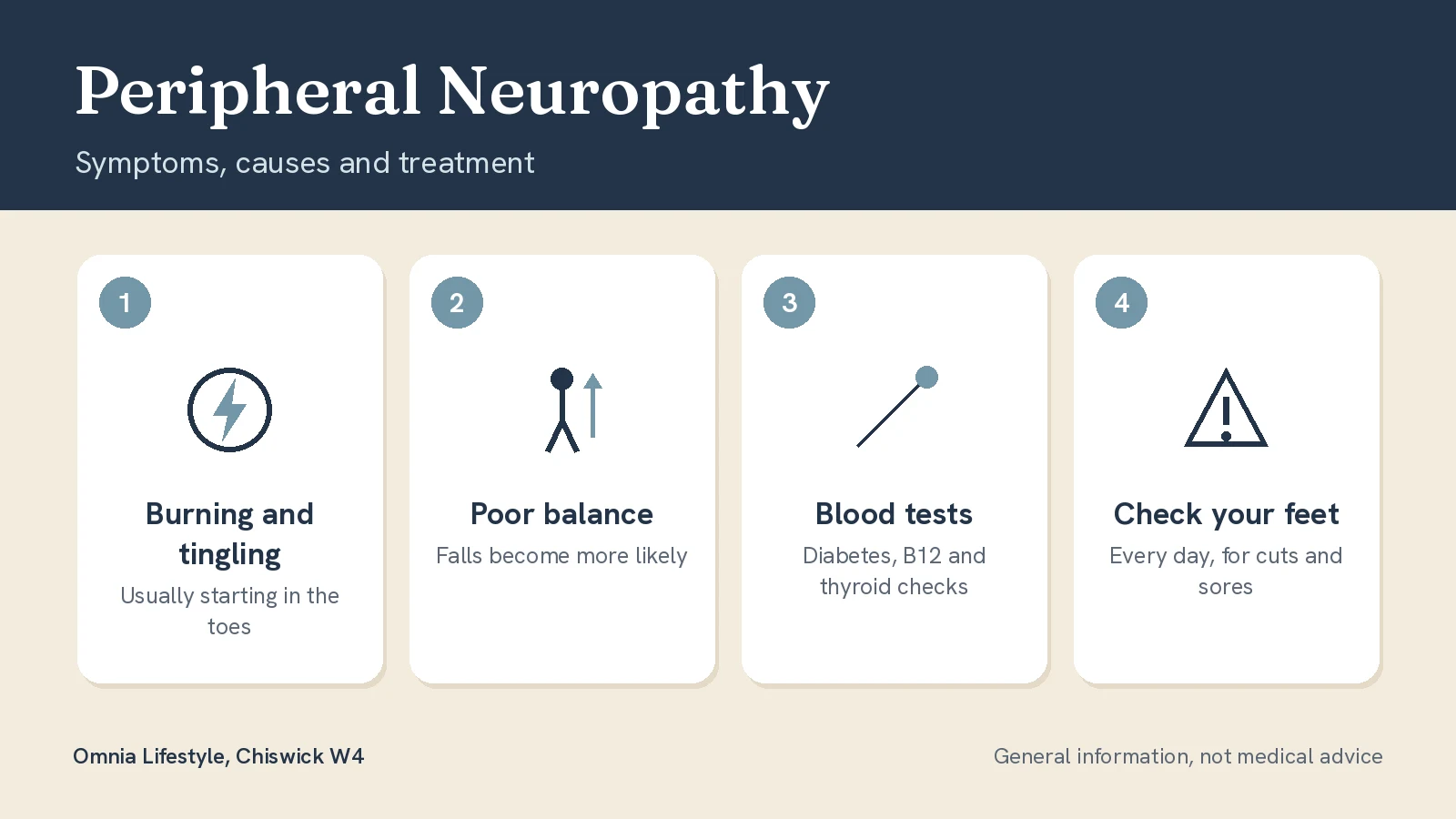


Peripheral neuropathy means damage to the nerves outside the brain and spinal cord. These nerves carry feeling, control movement and run automatic functions such as blood pressure and digestion. When they are damaged, the result is often numbness, tingling or burning pain, usually starting in the feet. It is common, especially in people with diabetes, and the earlier the cause is found, the better the outlook.
This guide explains what peripheral neuropathy is, the symptoms, the causes, whether it can be dangerous and how it is treated, including in the legs and feet.
Quick answer
Peripheral neuropathy is nerve damage that usually causes numbness, tingling, burning or stabbing pain in the feet and hands, sometimes with weakness and poor balance. Diabetes is the most common cause in the UK, followed by low vitamin B12, alcohol, some medicines including chemotherapy, an underactive thyroid and kidney disease. Neuropathy itself is rarely life-threatening, but complications such as foot ulcers, infections and falls can be serious. Treatment focuses on the cause, nerve pain medicines, daily foot care, and strength and balance exercise.
What is peripheral neuropathy?
The peripheral nervous system links the brain and spinal cord to the rest of the body. There are three main types of peripheral nerve:
- Sensory nerves, which carry feelings such as touch, temperature and pain
- Motor nerves, which control muscles
- Autonomic nerves, which control automatic functions such as blood pressure, heart rate, digestion and bladder
Neuropathy can affect one nerve, called mononeuropathy, such as carpal tunnel syndrome, or many nerves, called polyneuropathy. The most common pattern is a polyneuropathy that starts in the toes and spreads slowly upwards.
Symptoms of peripheral neuropathy
- Numbness or reduced feeling in the feet and hands, often in a stocking and glove pattern
- Tingling, pins and needles or a buzzing feeling
- Burning, stabbing or electric shock pains, often worse at night
- A feeling of walking on cotton wool or pebbles
- Pain from light touch, such as bedsheets
- Muscle weakness, cramps or twitching
- Poor balance and coordination, especially in the dark
- Not noticing cuts, blisters or burns on the feet
If autonomic nerves are affected, there may also be dizziness on standing, digestive problems, bladder or sexual problems, or changes in sweating.
What causes peripheral neuropathy?
- Diabetes, the most common cause in the UK
- Low vitamin B12 or folate
- Drinking too much alcohol over a long time
- Some medicines, including certain chemotherapy drugs and antibiotics
- An underactive thyroid. See underactive thyroid symptoms
- Kidney or liver disease
- Infections, such as shingles, HIV and Lyme disease
- Autoimmune conditions, such as rheumatoid arthritis and Guillain-Barre syndrome
- Inherited neuropathies
In some people no cause is found, which is called idiopathic neuropathy.
Can you die from peripheral neuropathy?
Peripheral neuropathy itself rarely causes death, and most people live a normal lifespan with it. The risks come from complications. Numb feet can develop unnoticed wounds and ulcers, which in people with diabetes can lead to serious infection and, in some cases, amputation. Poor balance increases the risk of falls and fractures. Autonomic neuropathy can affect heart rate and blood pressure. A rare, rapidly progressing neuropathy called Guillain-Barre syndrome can weaken the breathing muscles and is a medical emergency. Daily foot checks and prompt treatment of any wound greatly reduce these risks.
How peripheral neuropathy is diagnosed
Your GP will ask about your symptoms, health and alcohol intake, and examine sensation, reflexes, strength and balance. Blood tests usually include blood sugar (HbA1c), vitamin B12 and folate, thyroid, kidney and liver function, and a full blood count. Nerve conduction studies and electromyography may be arranged through a neurologist to measure how well the nerves are working.
Treatment for neuropathy in the legs and feet
- Treat the cause. Good blood sugar control in diabetes, vitamin B12 replacement, cutting down alcohol or changing a medicine can stop neuropathy getting worse, and some types improve.
- Nerve pain medicine. NICE recommends amitriptyline, duloxetine, gabapentin or pregabalin for nerve pain, with capsaicin cream for pain in a small area. Ordinary painkillers usually do not help much.
- Foot care. Check your feet every day, wear well-fitting shoes and never walk barefoot. People with diabetes should have their feet checked at least once a year.
- Strength and balance exercise. Reduces falls and keeps you active. Tai chi has good evidence for balance in people with neuropathy.
- Comfort at night. A bed cradle to lift the covers off sensitive feet and keeping the feet cool can help sleep.
When to seek medical help
Call 999 if you have:
- Weakness that spreads quickly over hours or days, especially with difficulty breathing or swallowing
- Sudden numbness or weakness on one side of the body, drooping of the face or slurred speech
Get same-day medical advice, from your GP or NHS 111, if:
- You have diabetes and a foot wound that is red, hot, swollen, smelly or oozing, or you feel unwell with a high temperature
- A foot changes colour, or becomes hot and swollen without a clear cause
See your GP if:
- You have numbness, tingling or burning in your feet or hands
- Nerve pain is affecting your sleep or daily life
- You have lost your balance or had a fall
- You drink alcohol regularly, have diabetes or follow a vegan diet and have new tingling
Frequently asked questions
Can peripheral neuropathy be reversed?
It depends on the cause. Neuropathy from low B12 or alcohol can improve once the cause is treated. Diabetic neuropathy is harder to reverse, but good control can stop it getting worse.
Is neuropathy the same as carpal tunnel syndrome?
Carpal tunnel syndrome is a type of neuropathy affecting one nerve at the wrist. See carpal tunnel syndrome symptoms.
Does walking help neuropathy?
Yes. Regular walking keeps muscles strong and improves circulation and balance. Wear supportive shoes and check your feet afterwards.
Why is neuropathy worse at night?
With fewer distractions, the brain notices nerve pain more, and lying still and cooler temperatures can increase symptoms.
Neuropathy support in Chiswick
Neuropathy is supported at Omnia Lifestyle in Chiswick, W4, close to Turnham Green station, on bus routes 94, E3 and 272. Limited parking is available on request when booking. We check sensation, strength and balance, can arrange blood tests for common causes and share them with your GP, and may combine physiotherapy for strength and balance, tai chi, red light therapy or acupuncture, with practical advice on footwear and foot care.
Read more about peripheral neuropathy and diabetes and metabolic health, see balance exercises for seniors and whether acupuncture helps nerve pain, explore physiotherapy, blood tests and tai chi, or book an appointment.
This article is general information, not medical advice. If you have any of the warning signs listed above, seek medical attention.



.jpg)
.jpg)