


Book at our Chiswick clinic
Physiotherapy
A nagging ache between your shoulder blades is one of the most common complaints of desk workers, new parents and anyone who spends hours on a phone. Most upper back pain between the shoulder blades comes from muscles and joints and gets better with movement, stretches and a few changes to your day. Occasionally it is a sign of something more serious, so it is worth knowing the warning signs.
This guide explains the common causes, why you might feel pain after sleeping or when breathing, the stretches and exercises that help, and when to get checked.
Quick answer
Upper back pain between the shoulder blades is usually caused by muscle strain, desk posture, stiff joints in the upper back, a neck problem or stress. Relief usually comes from moving more, upper back stretches, strengthening the muscles between the shoulder blades, heat and changes to your workstation. Pain with chest pain, breathlessness, sweating, fever or pain when breathing needs urgent medical help.
Common causes of pain between the shoulder blades
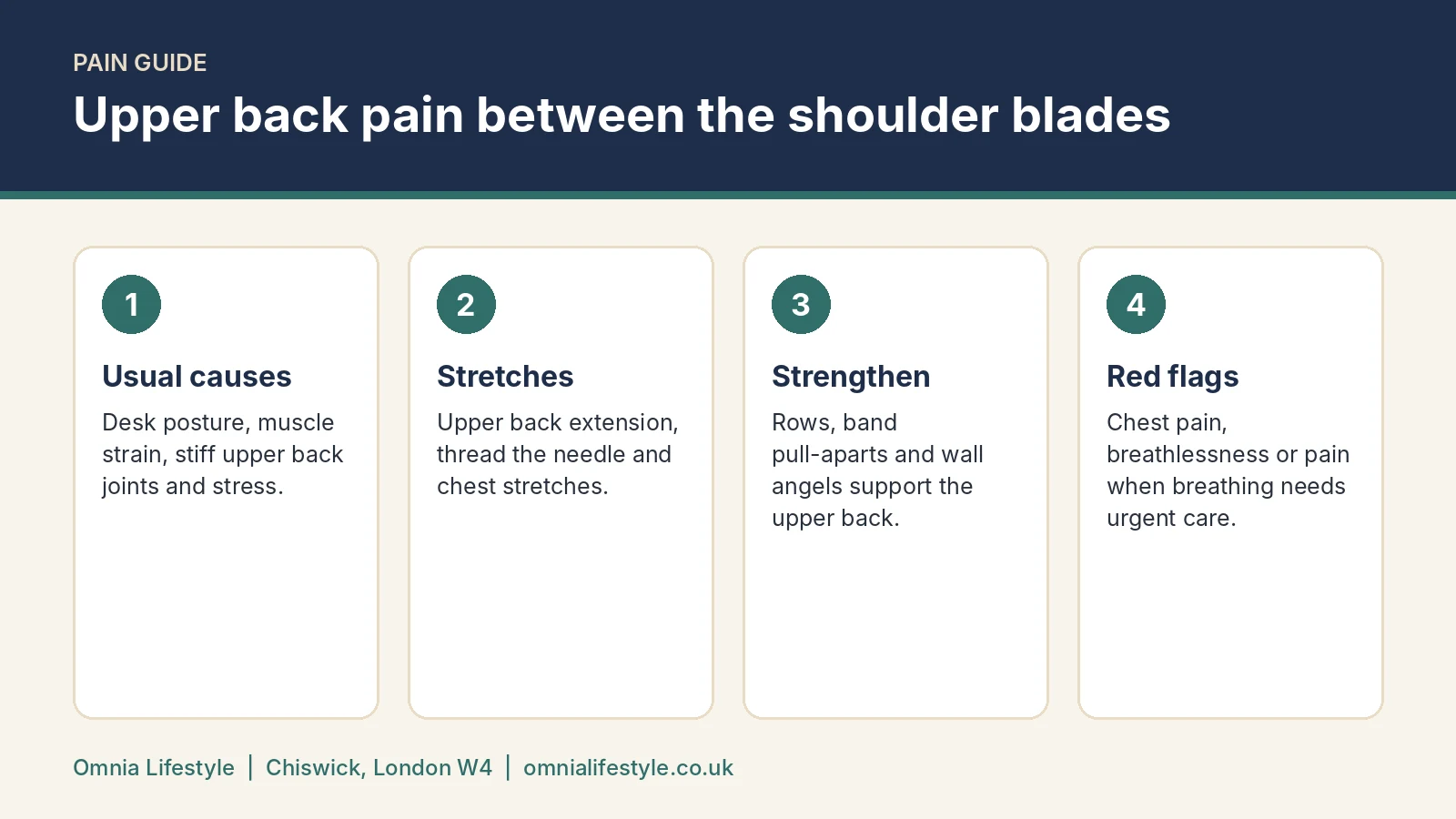
- Desk and phone posture. Long periods with the head forward and shoulders rounded overload the muscles between the shoulder blades, such as the rhomboids and middle trapezius.
- Muscle strain. Lifting, carrying a child on one side, a new gym exercise or a long drive can strain the upper back.
- Stiff upper back joints. The thoracic spine and rib joints can stiffen and become painful, especially if you move them little.
- Neck problems. Irritation of a joint or disc in the neck often refers pain to the area between the shoulder blades.
- Stress. Tension tends to collect in the upper back and shoulders. See knots in shoulders.
- Sleeping position, an unsupportive mattress or a pillow that is too high or too flat.
Upper back pain between shoulder blades after sleeping
Waking with pain often comes from sleeping on your front with your head turned, or from a pillow that pushes your neck out of line. Try sleeping on your back or side with a pillow that keeps your head level with your spine, and do a few gentle upper back stretches before getting up. If morning pain persists for weeks, or wakes you at night regardless of position, see your GP.
Upper back pain between shoulder blades when breathing
A sharp pain on deep breathing can come from a strained muscle or an irritated rib joint, which often hurts when you twist or press on the area. However, pain when breathing can also come from the lungs or the lining around them, such as pleurisy, pneumonia or a blood clot in the lung. Seek urgent help if you are short of breath, coughing up blood, have a fever or feel unwell.
Upper back pain between shoulder blades in women
In women, upper back pain can be linked to carrying children, feeding positions, bra fit, pregnancy and, after menopause, changes in bone strength. Women can also experience heart attack symptoms differently, sometimes as upper back, jaw or arm pain with breathlessness, sickness or sweating rather than classic chest pain. If pain comes on suddenly with any of these, call 999. See pregnancy-related pain for more on pain in pregnancy.
Stretches for pain between the shoulder blades
- Upper back extension. Sit in a chair with your hands behind your head and gently lean back over the top of the chair, then return. Repeat 10 times.
- Thread the needle. On hands and knees, slide one arm under your body along the floor, letting your shoulder and head lower, then reach that arm up towards the ceiling. Eight on each side.
- Cat and cow. On hands and knees, slowly round your back, then let it dip, moving with your breath. Ten times.
- Doorway chest stretch. Forearm on a door frame, step gently forwards until you feel a stretch across the chest. Hold for 30 seconds, twice on each side.
- Foam roller or towel stretch. Lie on a foam roller or rolled towel placed across your upper back and let your arms rest by your head for one to two minutes.
Exercises to strengthen the upper back
- Band pull-aparts. Hold a resistance band in front of you at shoulder height and pull it apart, squeezing your shoulder blades. Three sets of 15.
- Rows. With a band or light weights, pull your elbows back past your body. Three sets of 12.
- Wall angels. Stand with your back against a wall and slide your arms up and down in a W to Y shape. Three sets of 10.
For more, see posture exercises and neck pain exercises.
Other ways to get relief
- Heat, such as a warm shower or heat pack, eases muscle tension
- Move every 30 minutes if you sit for work
- Set up your desk so your screen is at eye level and your elbows rest at your sides
- Massage and hands-on treatment can ease tight muscles and stiff joints
- Simple pain relief from a pharmacist for short-term use
When to seek medical help
Call 999 if upper back pain comes with:
- Chest pain, tightness or pain spreading to the arm, jaw or neck
- Breathlessness, sweating or feeling sick
- Sudden severe tearing pain in the back
See a doctor urgently if:
- You have pain when breathing with a fever, cough or breathlessness
- Pain followed a fall or injury
- You have unexplained weight loss, a history of cancer or osteoporosis
- Pain is constant and severe, including at night
- Pain is under the right shoulder blade after fatty meals, which can come from the gallbladder
Frequently asked questions
How long does upper back pain last?
Most muscle-related upper back pain improves within a few days to a few weeks with movement and stretches.
Is pain between the shoulder blades serious?
Usually not. It is most often muscular. Seek help urgently if you have any of the warning signs above.
Can stress cause pain between the shoulder blades?
Yes. Stress increases muscle tension in the upper back and shoulders and can make pain feel worse.
What is the best sleeping position for upper back pain?
On your back or side, with a pillow that keeps your neck level with your spine.
Upper back pain treatment in Chiswick
Upper back pain is assessed and treated at Omnia Lifestyle, 8 to 9 Bedford Corner, The Avenue, Chiswick W4 1LZ, close to Turnham Green station, on bus routes 94, E3 and 272. Limited parking is available on request when booking. Our physiotherapists combine hands-on treatment with exercises, and deep tissue massage and acupuncture are available under the same roof.
Read more about neck and shoulder pain, explore physiotherapy in London and deep tissue massage, or book an assessment.
This article is general information, not medical advice. If you have any of the warning signs listed above, seek medical attention.
Ready to book?
Physiotherapy



.jpg)
.jpg)