


Book at our Chiswick clinic
Physiotherapy
Left shoulder pain is very common, and most of the time it comes from the muscles, tendons or joints of the shoulder and neck. Because the heart sits on the left side of the chest, though, pain in the left shoulder or arm can occasionally be a sign of a heart attack, so it is important to know which symptoms need an ambulance.
This guide explains the urgent warning signs first, then the common causes of pain in the left shoulder and arm, what different patterns of pain can mean, what helps and when to see a GP or physiotherapist.
Quick answer
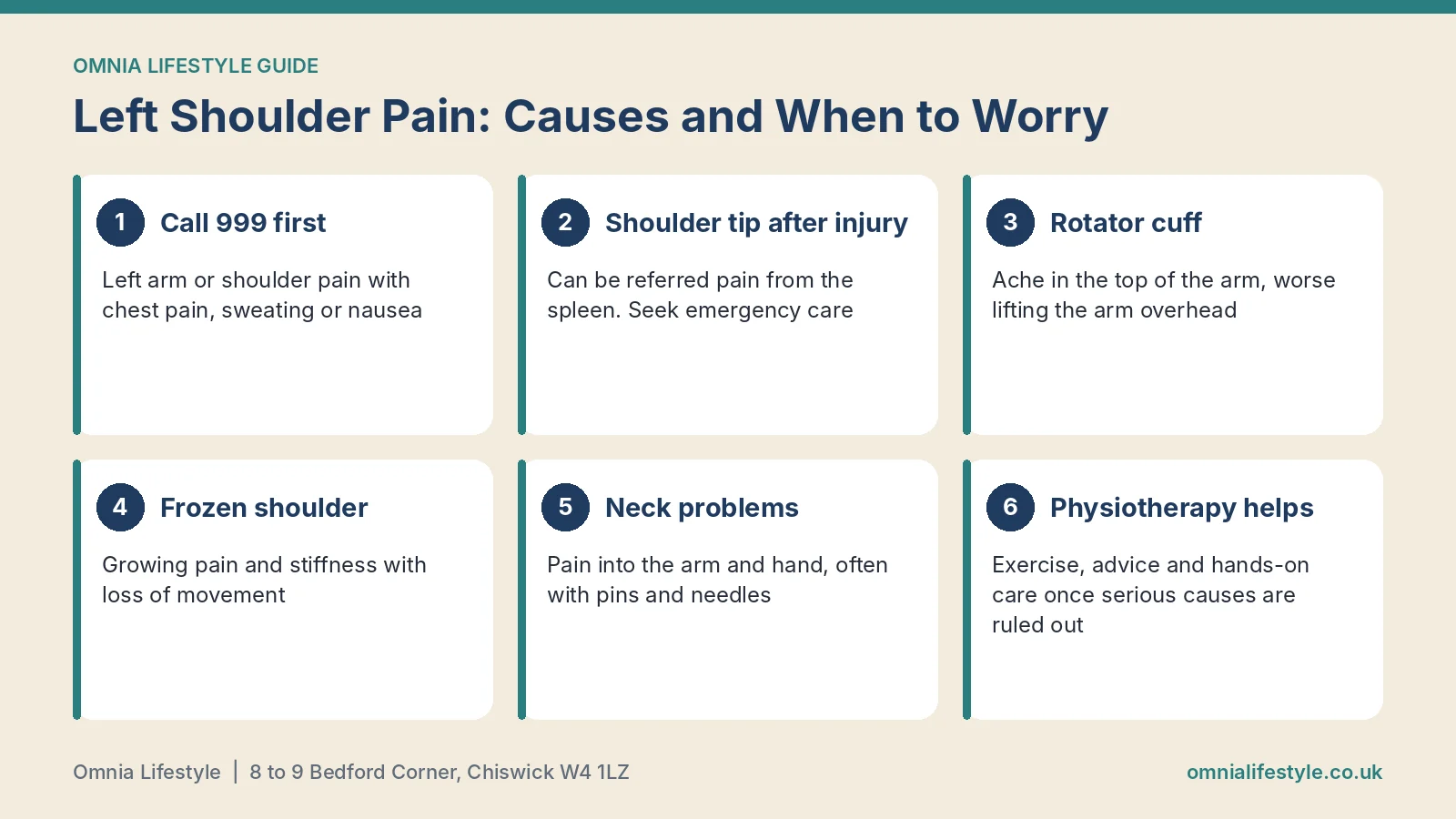
Most left shoulder pain is caused by a muscle strain, rotator cuff irritation, frozen shoulder, arthritis or pain referred from the neck. However, discomfort in the left shoulder and arm that comes with chest pain or tightness, breathlessness, sweating, nausea or feeling faint can be a heart attack: call 999 immediately. Pain at the tip of the left shoulder after an injury to the tummy or ribs can come from the spleen and also needs emergency care. Otherwise, gentle movement and assessment usually help.
Left shoulder pain: when to call 999
Call 999 straight away if you have pain or discomfort in your left shoulder or left arm with any of the following, as it could be a heart attack:
- Chest pain, pressure, tightness or heaviness, which may spread to the left arm, neck, jaw, back or stomach
- Breathlessness
- Sweating, feeling sick or being sick
- Feeling light-headed, dizzy or faint
- An overwhelming sense of anxiety or that something is badly wrong
Heart attack symptoms are not always dramatic. Some people, particularly women, older people and those with diabetes, feel only a dull ache in the left arm, mild chest discomfort, unusual tiredness or breathlessness. Do not wait to see if it passes, and do not drive yourself to hospital.
Also call 999 or go to A&E if:
- You have pain at the tip of the left shoulder after a blow or fall onto the left side of your tummy or lower ribs, especially with tummy pain, dizziness or feeling faint. This can be referred pain from an injured spleen, which can bleed internally.
- Left shoulder pain when breathing comes with sudden breathlessness, coughing up blood or chest pain, which can be a blood clot in the lung or a collapsed lung
- You have a fall or injury and the shoulder looks deformed or you cannot move your arm
- You have sudden weakness or numbness in the arm with a drooping face or slurred speech
Common causes of pain in the left shoulder
In most people, pain in the left shoulder comes from the shoulder itself or the neck. The causes are the same as on the right side.
- Rotator cuff tendon pain or impingement: aching on the outside of the upper arm, worse when lifting the arm out to the side or overhead, and often worse lying on that side at night.
- Frozen shoulder: gradually increasing pain and stiffness, with a marked loss of movement in all directions. It is more common between 40 and 60 and in people with diabetes. See our frozen shoulder page.
- Muscle strain and tension: aching across the top of the shoulder and neck, often linked to posture, desk work, stress or a sudden effort. See knots in shoulders.
- Neck problems: pain referred from the neck into the shoulder blade and arm, sometimes with pins and needles or numbness in the hand.
- Arthritis: osteoarthritis of the shoulder joint or the small joint at the end of the collarbone, causing aching and stiffness.
- Injury: a fall can cause a dislocation, fracture or a rotator cuff tear.
For a fuller explanation of these conditions, see what causes shoulder pain.
Discomfort in left shoulder and arm
An ache in the left shoulder and arm together is usually musculoskeletal, but this pattern is also the one most closely linked with heart problems, so it is worth thinking carefully about the context.
Signs that point to a muscle, joint or nerve cause:
- The pain changes with arm or neck movement, or with particular positions
- Pressing on the shoulder or muscles reproduces the pain
- It followed an injury, new activity, a long drive or a long day at a desk
- There are pins and needles in the fingers that change with neck position
Signs that need urgent medical assessment:
- The ache comes on with exertion, such as walking uphill or climbing stairs, and eases with rest. This can be angina and needs a GP appointment the same day, or 999 if it does not settle within a few minutes of resting.
- It comes with chest discomfort, breathlessness, sweating or nausea, in which case call 999
- You have heart disease risk factors, such as diabetes, high blood pressure, high cholesterol, smoking or a family history, and the pain is new and unexplained
Pain and soreness in left arm
When the left arm is in pain without much shoulder pain, common non-urgent causes include:
- Rotator cuff problems: an ache in the top of the left arm, around the outside of the upper arm, is a classic sign of shoulder tendon pain rather than an arm problem
- A trapped nerve in the neck: pain running from the shoulder into the arm and hand, with tingling, numbness or weakness
- Muscle overuse: after lifting, carrying, sport or repetitive work
- Elbow and wrist conditions: such as tennis elbow or carpal tunnel syndrome
Dull ache in left arm in women
A dull ache in the left arm in women is still most often musculoskeletal. However, women are more likely than men to have less typical heart attack symptoms, such as arm, jaw or back discomfort, tiredness, breathlessness or nausea, without severe chest pain. If a dull ache in the left arm comes with any of these, call 999.
Sharp pain in left shoulder and other patterns
Left shoulder pain when breathing
Shoulder pain when breathing in can come from strained muscles between the ribs, but it can also be caused by irritation of the lining of the lungs (pleurisy), a chest infection, a blood clot in the lung or a collapsed lung. Irritation under the diaphragm can also be felt in the shoulder tip. Sharp pain on breathing with breathlessness, fever or coughing up blood needs urgent medical attention.
Pain at the tip of the left shoulder
Pain felt at the very tip of the shoulder can be referred from the diaphragm. After an injury to the left side of the tummy or lower ribs, this can signal a damaged spleen and is an emergency. Shoulder tip pain can also follow keyhole surgery on the abdomen, when it usually settles within a few days.
Left shoulder hurts after eating
Shoulder pain linked to meals can be referred from the stomach, pancreas or gallbladder, and pain from the heart is sometimes brought on after a large meal. This pattern should be checked by a GP rather than treated as a shoulder problem. Severe pain, vomiting, chest pain or breathlessness needs urgent care.
Pain on left collarbone
Pain on the left collarbone may come from the joints at either end of the collarbone, the muscles that attach to it, or a fracture after a fall. Swelling, a bump or a grinding feeling after an injury needs an X-ray.
When to see a GP
Get same-day advice from your GP or NHS 111 if:
- You get left arm or shoulder pain with exertion that eases with rest
- The shoulder is hot, red and swollen, or you feel feverish
- You have numbness or weakness in the arm or hand that is getting worse
See your GP or a physiotherapist if:
- Pain has not improved after two weeks of home care
- You cannot lift your arm, or movement is steadily getting stiffer
- Pain is waking you at night most nights
- You have unexplained weight loss or feel generally unwell
What helps left shoulder pain
Once a heart, lung or abdominal cause has been ruled out, most left shoulder and arm pain improves with simple measures:
- Keep the shoulder moving gently within comfort, as stiffness can build if it is kept still
- Avoid aggravating activities such as heavy lifting or repeated overhead reaching for a while
- Use heat or ice for up to 20 minutes at a time, whichever feels better
- Consider painkillers such as paracetamol or ibuprofen if they are suitable for you, and ask a pharmacist for advice
- Adjust your sleep position, lying on your back or the other side with a pillow supporting the arm
- Check your desk set-up and take regular breaks from long periods of sitting
- Start gentle exercises: our shoulder exercises for pain guide covers a simple progression
How a physiotherapist helps
A physiotherapist will ask about your symptoms and general health, check for anything that needs medical review, and examine the neck and shoulder to find the likely source of pain. Treatment usually combines a tailored exercise programme to restore movement and strength, advice on posture, work and sleep, and hands-on techniques for short-term relief where helpful. For pain when lifting the arm, our shoulder impingement exercises guide explains the usual approach.
Frequently asked questions
When should I worry about left shoulder pain?
Worry, and call 999, if left shoulder or arm pain comes with chest pain, breathlessness, sweating, nausea or feeling faint, or after an injury to the left side of the tummy. Pain that changes with shoulder movement is much more likely to be a muscle or joint problem.
What does a sharp pain in the left shoulder mean?
Sharp pain when moving the arm usually comes from the rotator cuff or shoulder joint. Sharp pain when breathing, or at the shoulder tip after an injury, needs urgent assessment.
Why does my left arm ache from the shoulder down?
Pain from the shoulder into the upper arm is often rotator cuff related, while pain running into the hand with tingling may come from a trapped nerve in the neck. New arm pain with exertion should be checked by a GP the same day.
Can stress cause pain in my left shoulder?
Stress can increase muscle tension in the neck and shoulders and make pain feel worse. Do not assume pain is due to stress if it comes with chest discomfort or breathlessness.
Can left shoulder pain be referred from the neck?
Yes. Neck problems commonly cause aching across the shoulder and shoulder blade, sometimes with pins and needles in the arm or hand.
Left shoulder pain treatment in Chiswick
Shoulder and arm pain is assessed and treated at Omnia Lifestyle, 8 to 9 Bedford Corner, The Avenue, Chiswick W4 1LZ, close to Turnham Green station, on bus routes 94, E3 and 272. Limited parking is available on request when booking. Assessment checks for any signs that need medical review, identifies whether the pain is coming from the shoulder or neck and sets a clear exercise plan.
Read more about neck and shoulder pain and the common causes of shoulder pain, explore physiotherapy in Chiswick, or book an assessment.
This article is general information, not medical advice. If you have any of the warning signs listed above, call 999 or seek urgent medical attention.
Ready to book?
Physiotherapy



.jpg)
.jpg)