


Book at our Chiswick clinic
Physiotherapy
Shoulder and arm pain often go together. An ache that starts in the shoulder can spread into the upper arm, and pain that runs from the shoulder down the arm to the hand is frequently coming from the neck. Most of the time the cause is a tendon, joint, muscle or nerve problem that responds well to exercise.
Occasionally, though, discomfort in the shoulder and arm is a sign of a heart problem, so this guide starts with the warning signs. It then explains the common causes, what different patterns of pain can mean, including aching in both shoulders and upper arms, pain under the arm and elbow and forearm pain, and what you can do about it.
Quick answer
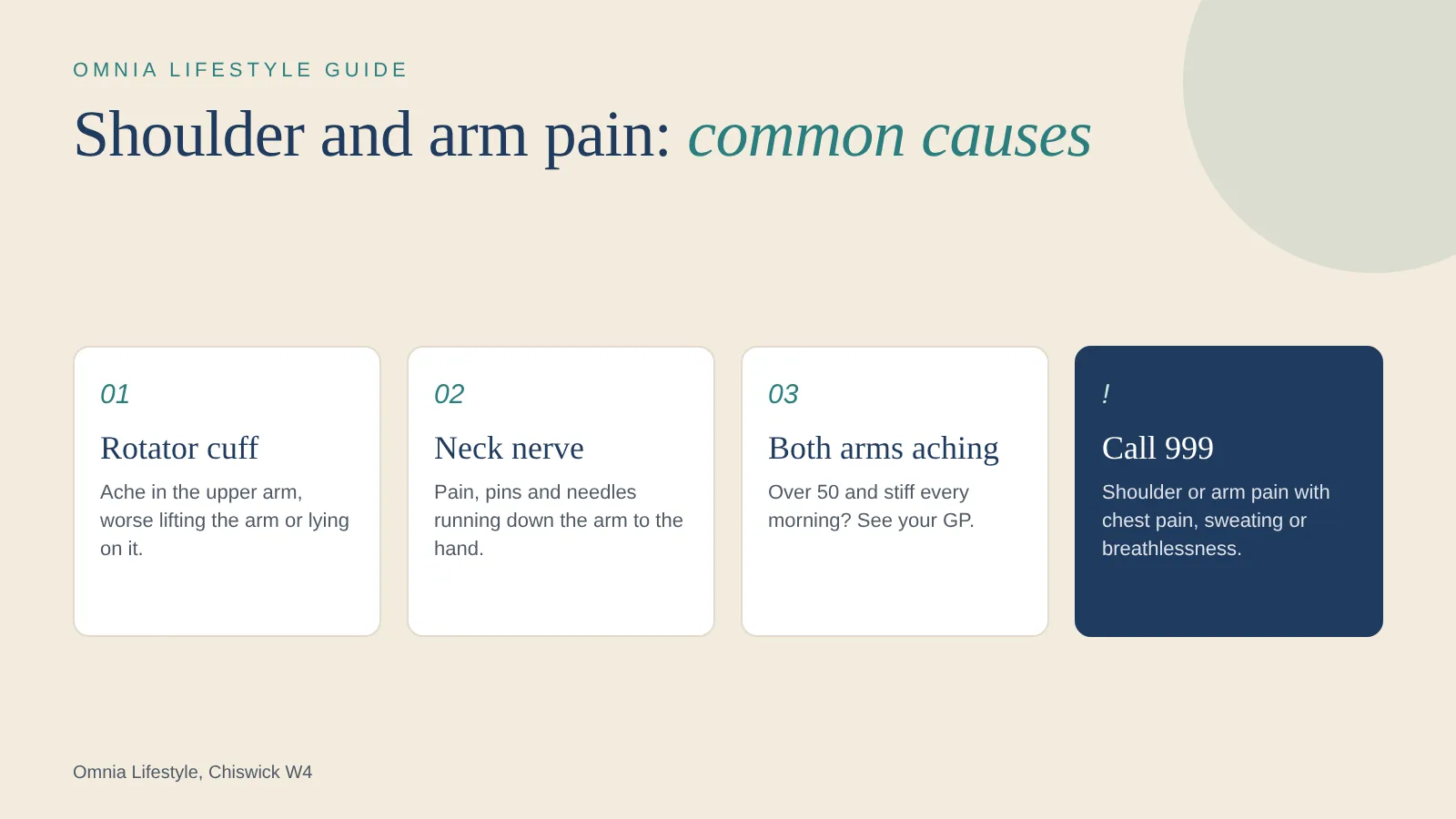
Most shoulder and arm pain comes from rotator cuff irritation, a trapped nerve in the neck, frozen shoulder, muscle strain or arthritis, and usually improves with gentle movement and exercise. Call 999 if pain in the shoulder or either arm comes with chest pain, breathlessness, sweating or feeling sick. Aching in both shoulders and upper arms with morning stiffness, if you are over 50, needs a GP appointment.
When shoulder and arm pain is an emergency
Call 999 straight away if you have pain or discomfort in your shoulder or arm with any of these:
- Chest pain, pressure, tightness or heaviness
- Pain spreading to your neck, jaw, back or tummy
- Breathlessness, sweating, feeling sick or being sick
- Feeling light-headed, dizzy or faint
- Sudden weakness or numbness in the arm with a drooping face or slurred speech, which can be a stroke
Which arm hurts in a heart attack?
Heart attack pain most often spreads to the left arm, but it can affect the right arm or both arms. Some people, particularly women, older people and people with diabetes, feel only a heavy ache in the arm or shoulder with tiredness or breathlessness, rather than crushing chest pain. Whichever arm is affected, do not wait to see if it passes. Our guide to left shoulder pain covers heart-related symptoms in more detail.
Arm or shoulder discomfort that comes on with exertion, such as walking uphill, and eases within minutes of resting can be angina. Book a same-day GP appointment, or call 999 if it does not settle with rest.
Common causes of shoulder and arm pain
- Rotator cuff problems: the most common cause of pain in the shoulder and upper arm. The ache is felt on the outside of the upper arm, sometimes as far as the elbow, and is worse lifting the arm out to the side, reaching overhead or lying on that side at night.
- A trapped nerve in the neck (cervical radiculopathy): sharp, burning or electric pain running from the neck or shoulder blade down the arm, often with pins and needles, numbness or weakness in part of the hand.
- Frozen shoulder: pain and stiffness that build over weeks or months, with a marked loss of movement in every direction. It is most common between 40 and 60 and in people with diabetes. See our frozen shoulder page.
- Muscle strain and tension: aching across the top of the shoulder and upper arm after lifting, carrying, a new gym programme or long hours at a desk.
- Arthritis: osteoarthritis of the shoulder joint or the joint at the end of the collarbone, causing a deep ache and stiffness.
- Injury: a fall onto the arm can cause a dislocation, fracture or rotator cuff tear.
For more on problems that start in the shoulder joint itself, see what causes shoulder pain.
Shoulder pain and upper arm pain
Pain in the shoulder and upper arm, or pain on the top of the arm and shoulder, is usually rotator cuff related. The tendons sit deep inside the shoulder, but the pain they produce is typically felt in the upper arm, around the outer edge, rather than in the joint. That is why many people think they have an arm problem when the source is the shoulder.
Clues that point to the rotator cuff include pain when you lift the arm between shoulder and head height, difficulty putting on a coat or doing up a bra, and an ache when lying on that side. Our shoulder impingement exercises guide explains how this is usually treated.
Radiating shoulder pain down the arm
When pain travels from the shoulder down the arm, past the elbow and into the forearm or hand, the neck is a common source. A nerve root in the neck can be irritated by a disc bulge or by age-related narrowing around the nerve. Typical signs are:
- Pain that follows a line down the arm, often worse than the neck pain itself
- Pins and needles or numbness in particular fingers
- Pain that changes when you turn or tilt your head
- Weakness in grip or in lifting the arm
Arm and shoulder nerve pain from the neck often settles within a few weeks to a few months. See your GP or a physiotherapist if it is severe or not improving, and get urgent advice if weakness is getting worse. Our neck and shoulder pain page explains how neck problems cause arm pain.
Aching shoulders and upper arms on both sides
Aching in both shoulders and upper arms at the same time is less likely to be a simple tendon problem. Common reasons include:
- Overuse or unaccustomed exercise: sore arms and shoulders a day or two after decorating, gardening or a new workout usually settle within a few days. See why do my muscles ache.
- Viral illness: flu and other infections cause general aches across the shoulders and arms.
- Polymyalgia rheumatica: pain and stiffness in both shoulders and upper arms, often the hips too, that is worst in the morning and mainly affects people over 50. It needs a GP diagnosis and treatment.
- Posture and desk work: long hours with the shoulders rounded forward can leave both sides aching.
Ask for an urgent GP appointment if you have aching shoulders and upper arms together with a new headache, scalp tenderness, jaw pain when chewing or any change in your vision.
Pain in the shoulder and under the arm
Pain in the shoulder and armpit area is often a strain of the chest or shoulder blade muscles, or rotator cuff pain felt towards the back of the arm. Pain under the arm can also come from swollen lymph glands during an infection, shingles before the rash appears, or a cyst or boil. See your GP if you find a lump in your armpit that has not gone after two weeks, or one that keeps growing, whether you are a man or a woman.
Elbow and forearm pain
Pain in the elbow and forearm without shoulder pain usually comes from the tendons around the elbow:
- Tennis elbow: pain on the outside of the elbow and forearm, worse gripping or lifting with the palm down. See how to treat tennis elbow.
- Golfer's elbow: pain on the inside of the elbow and forearm. See our golfer's elbow exercises.
- Nerve irritation: tingling into the hand, which may come from the neck, the elbow or the wrist, as in carpal tunnel syndrome.
Arm pain after a flu jab
A sore arm after a flu jab or other vaccine is common and usually settles within a day or two. Keep moving the arm normally and use a painkiller if you need one. If shoulder pain and stiffness after an injection are getting worse rather than better after a week, see your GP or a physiotherapist.
When to see a GP
Get advice from your GP or NHS 111 urgently if:
- You cannot move your arm, or the shoulder looks deformed after a fall
- The shoulder is hot, red and swollen, or you feel feverish
- Numbness, tingling or weakness in the arm or hand is getting worse
- Pain in both shoulders and arms comes with headache, jaw pain or vision changes
See your GP or a physiotherapist if:
- Shoulder and arm pain has not improved after two weeks of home care
- It is very painful to move your arm, or movement keeps getting stiffer
- Pain wakes you most nights
- Pins and needles have not settled after a few weeks
What you can do at home
- Keep the arm moving gently within comfort, as resting it completely can lead to stiffness
- Ease off aggravating activities such as heavy lifting or repeated overhead reaching for a week or two
- Use heat or ice for up to 20 minutes at a time, whichever feels better
- Try painkillers such as paracetamol or ibuprofen if they are suitable for you, and ask a pharmacist if unsure
- Support the arm at night with a pillow, and avoid lying on the painful side
- Check your desk set-up and take regular breaks to move your neck and shoulders
- Start simple exercises from our shoulder exercises for pain guide, or our neck pain exercises if the pain seems to come from the neck
How we help in Chiswick
At Omnia Lifestyle our HCPC-registered physiotherapists start by working out where your shoulder and arm pain is really coming from: the shoulder, the neck, the elbow or a mix. They check for any signs that need a GP or scan, then explain what they have found in plain language.
- Physiotherapy in Chiswick: a 70-minute initial assessment and treatment for £99, with follow-ups from £70. Treatment combines hands-on therapy with an exercise plan to restore movement and strength. Physiotherapy is recognised by AXA Health, Aviva, WPA and Vitality.
- Sports massage and deep tissue massage: from £65 for 30 minutes, helpful for tight, overworked shoulder and upper arm muscles alongside exercise.
- Acupuncture: traditional acupuncture is £80 for 60 minutes, and some people with long-standing neck and shoulder pain choose it alongside an exercise programme.
- Home visit physiotherapy across West London from £110, if travelling is difficult.
Frequently asked questions
Why does my arm hurt from the shoulder down?
Pain from the shoulder into the upper arm is usually the rotator cuff. Pain that runs past the elbow into the hand, especially with tingling, more often comes from a trapped nerve in the neck. New arm pain with exertion or chest discomfort needs urgent medical advice.
Can a trapped nerve cause shoulder and arm pain?
Yes. A trapped nerve in the neck commonly causes pain across the shoulder blade and down the arm, with pins and needles or numbness in the hand. Most cases improve over weeks to months with movement, exercise and time.
Why do my shoulders and upper arms ache all the time?
Constant aching in both shoulders and upper arms can come from posture, overuse or poor sleep, but if you are over 50 and stiff for a long time each morning, see your GP to check for polymyalgia rheumatica.
Is shoulder and arm pain a sign of a heart attack?
It can be, when it comes with chest pain, breathlessness, sweating or feeling sick, and it can affect either arm. Call 999. Pain that changes with arm or neck movement and has no other symptoms is far more likely to be musculoskeletal.
How long does shoulder and arm pain take to heal?
Muscle strains often settle within a few weeks. Rotator cuff pain and trapped nerves usually take six to twelve weeks with the right exercise, and frozen shoulder can take much longer.
Shoulder and arm pain in Chiswick
Shoulder and arm pain is assessed and treated at Omnia Lifestyle, 8 to 9 Bedford Corner, The Avenue, Chiswick W4 1LZ, close to Turnham Green station, on bus routes 94, E3 and 272. Limited parking is available on request when booking. Appointments can be booked online.
Read more about neck and shoulder pain and right shoulder pain, explore physiotherapy in Chiswick, or book an assessment.
This article is general information, not medical advice. If you have any of the warning signs listed above, call 999 or seek urgent medical attention.
Ready to book?
Physiotherapy



.jpg)
.jpg)