


Book at our Chiswick clinic
Physiotherapy
Piriformis syndrome is a cause of deep buttock pain that can spread down the back of the thigh, often mistaken for sciatica from the back. It is linked to the piriformis, a small muscle deep in the buttock that sits close to the sciatic nerve. Sitting for long periods, driving and running are common triggers, and the right combination of stretching, strengthening and changes to how you sit usually settles it.
This guide explains what piriformis syndrome is, how it differs from sciatica caused by the back, the exercises that help, what to avoid, and when buttock and leg pain needs assessment.
Quick answer
Piriformis syndrome causes a deep ache in one buttock, often worse when sitting, that can travel down the back of the thigh. Gentle stretches such as the figure-4 stretch ease the muscle, while clamshells, bridges and side-lying leg raises strengthen the hip so the muscle is not overworked. Break up long periods of sitting and avoid sitting on a wallet or phone. Most people improve within a few weeks to a few months. Because back problems cause similar pain, persistent symptoms should be assessed.
What piriformis syndrome is
The piriformis runs from the base of the spine to the top of the thighbone and helps turn the leg outwards and steady the hip. The sciatic nerve passes just beneath it, and in some people through it. When the muscle is tight, overworked or irritated, it can cause pain in the buttock and sometimes irritate the nearby nerve, producing pain or tingling down the back of the leg.
Typical symptoms
- A deep ache in one buttock
- Pain worse when sitting, especially on hard seats or for long drives
- Pain on climbing stairs or hills, or when running
- Pain or tingling down the back of the thigh, usually not below the knee
- Tenderness deep in the middle of the buttock
Piriformis syndrome or sciatica from the back?
Most sciatica comes from an irritated nerve root in the lower back, often from a disc. That type more often causes pain below the knee, numbness or pins and needles in the foot, and pain that changes with bending or coughing. Piriformis syndrome is more likely when the pain is centred in the buttock, worse with sitting and reproduced by pressing on or stretching the muscle. The two can be hard to tell apart, which is why an assessment that checks the back first is worthwhile. If your pain travels below the knee, see our sciatica exercises guide.
When to seek urgent help
Call 999 or go to A&E if buttock or leg pain comes with numbness around the genitals or inner thighs, new difficulty passing urine, loss of bladder or bowel control, or weakness in both legs. These can be signs of cauda equina syndrome.
See your GP if you have pain with fever, unexplained weight loss, a history of cancer, or pain that is severe at night.
Stretches
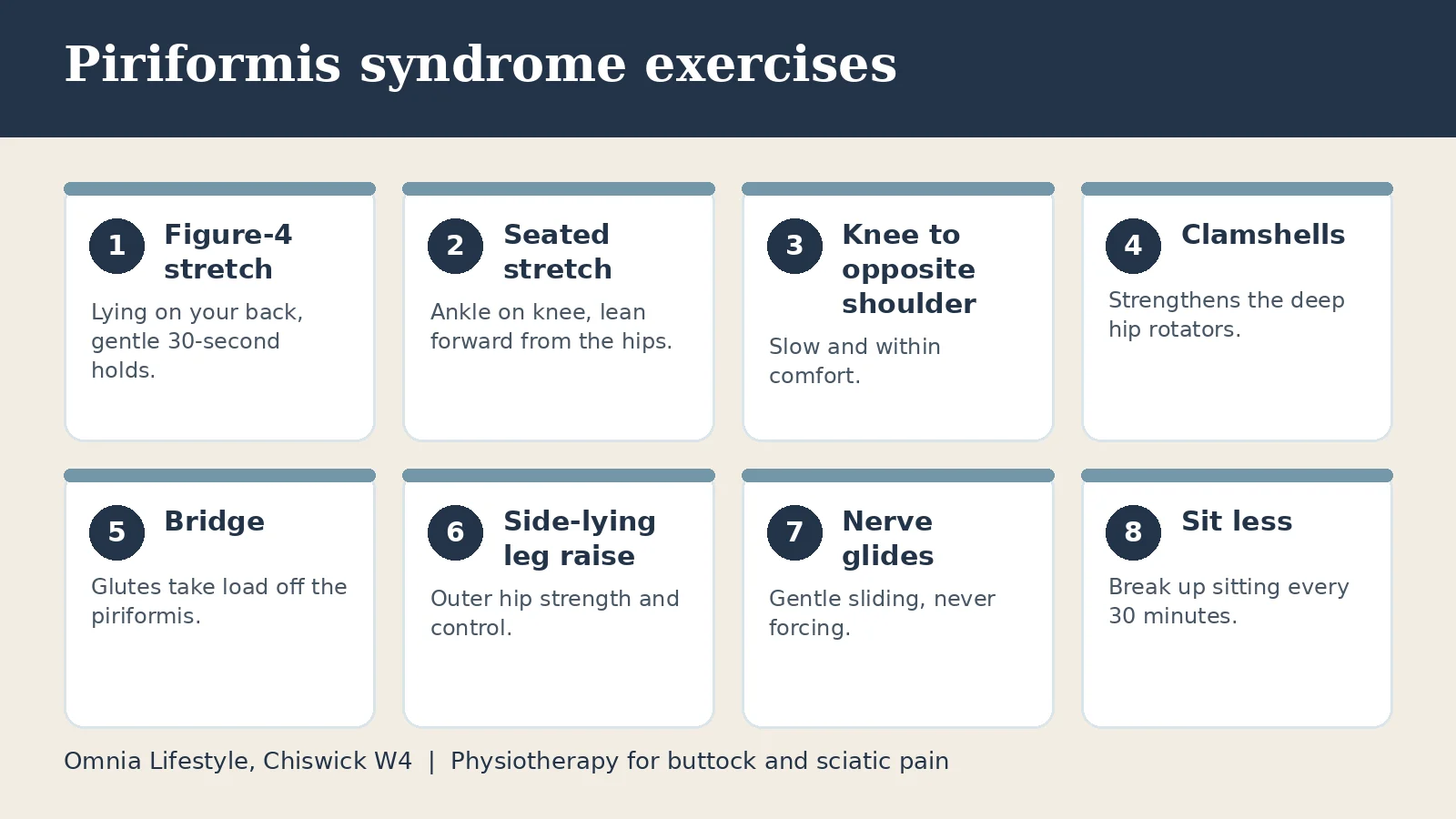
1. Figure-4 stretch
Lie on your back with both knees bent. Cross the ankle of the painful side over the opposite knee. Gently pull the lower thigh towards your chest until you feel a stretch deep in the buttock. Hold for 30 seconds, three times.
2. Seated piriformis stretch
Sit on a chair with the ankle of the painful side resting on the opposite knee. Keeping your back straight, lean forward from the hips until you feel a stretch. Hold for 30 seconds, three times. This one is easy to do at a desk.
3. Knee to opposite shoulder
Lie on your back with your legs straight. Bend the painful leg and gently pull the knee towards the opposite shoulder. Hold for 20 to 30 seconds, three times.
Stretches should feel like a stretch, not sharp pain. If a stretch sends tingling down the leg, ease off.
Strengthening exercises
4. Clamshells
Lie on your side with knees bent and feet together. Keeping your feet touching, lift the top knee, then lower slowly. Three sets of 15. Add a resistance band around the thighs as it gets easier.
5. Bridge
Lie on your back with knees bent and lift your hips, squeezing your buttocks. Hold for five seconds and lower slowly. Build up to three sets of 10, then progress to single-leg bridges.
6. Side-lying leg raise
Lie on your side with the top leg straight and slightly behind you. Lift it towards the ceiling and lower slowly. Three sets of 15. This strengthens the larger hip muscles so the piriformis does less of the work.
7. Sciatic nerve glides
Sit on a chair. Straighten the painful knee while lifting your head to look up, then bend the knee as you bring your chin down. Move smoothly for 10 repetitions. This should never be forced; stop if symptoms increase.
Everyday changes that help
- Break up sitting every 30 minutes, and use a cushion on hard chairs.
- Do not sit on a wallet or phone in your back pocket.
- Adjust long drives with regular breaks and a supportive seat.
- Build running load gradually and reduce hills while it settles.
- Avoid aggressive foam rolling or deep pressure on the sore spot during a flare.
How long does it take to get better?
Many people improve within a few weeks of regular stretching, strengthening and sitting changes. Longer-standing pain can take two to three months. If there is no improvement after six weeks of consistent exercise, an assessment can confirm the cause and adjust the plan.
Frequently asked questions
Can piriformis syndrome cause pain down the leg?
Yes. It can irritate the sciatic nerve and cause pain or tingling down the back of the thigh. Pain below the knee is more often from the back, so it is worth having checked.
Is walking good for piriformis syndrome?
Usually yes. Walking on flat ground keeps the hip moving. Reduce hills and long walks if they flare the pain.
Does massage help?
Gentle soft tissue work and sports massage can ease tension in the buttock, especially alongside exercise. See sports massage in Chiswick.
Can acupuncture help?
Some people find acupuncture eases deep buttock and leg pain. See acupuncture for back pain and sciatica.
What is the best sleeping position?
Lying on the pain-free side with a pillow between the knees, or on your back with a pillow under the knees, is usually most comfortable.
Buttock and sciatic pain treatment in Chiswick
Buttock and leg pain is assessed and treated at Omnia Lifestyle, 8 to 9 Bedford Corner, The Avenue, Chiswick W4 1LZ, close to Turnham Green station, on bus routes 94, E3 and 272. Limited parking is available on request when booking. Assessment checks whether the back, the hip or the piriformis is the source of your pain and sets a programme to match.
Read more about sciatica symptoms and treatment and back pain, see our lower back pain exercises, explore physiotherapy, or book an assessment.
This article is general information, not medical advice. If you have any of the warning signs listed above, seek medical attention.
Ready to book?
Physiotherapy



.jpg)
.jpg)