


Book at our Chiswick clinic
Physiotherapy
Lower back pain is one of the most common reasons adults see a GP or physiotherapist, and for most people the right exercise is the best treatment available. The difficulty is knowing which exercises to do, how hard to push, and what to do differently during a flare compared with when the pain is settling.
This guide sets out eight lower back pain exercises in a sensible order, a ten-minute daily routine, what to ease off during a flare, and the warning signs that mean your back should be assessed rather than exercised.
Quick answer
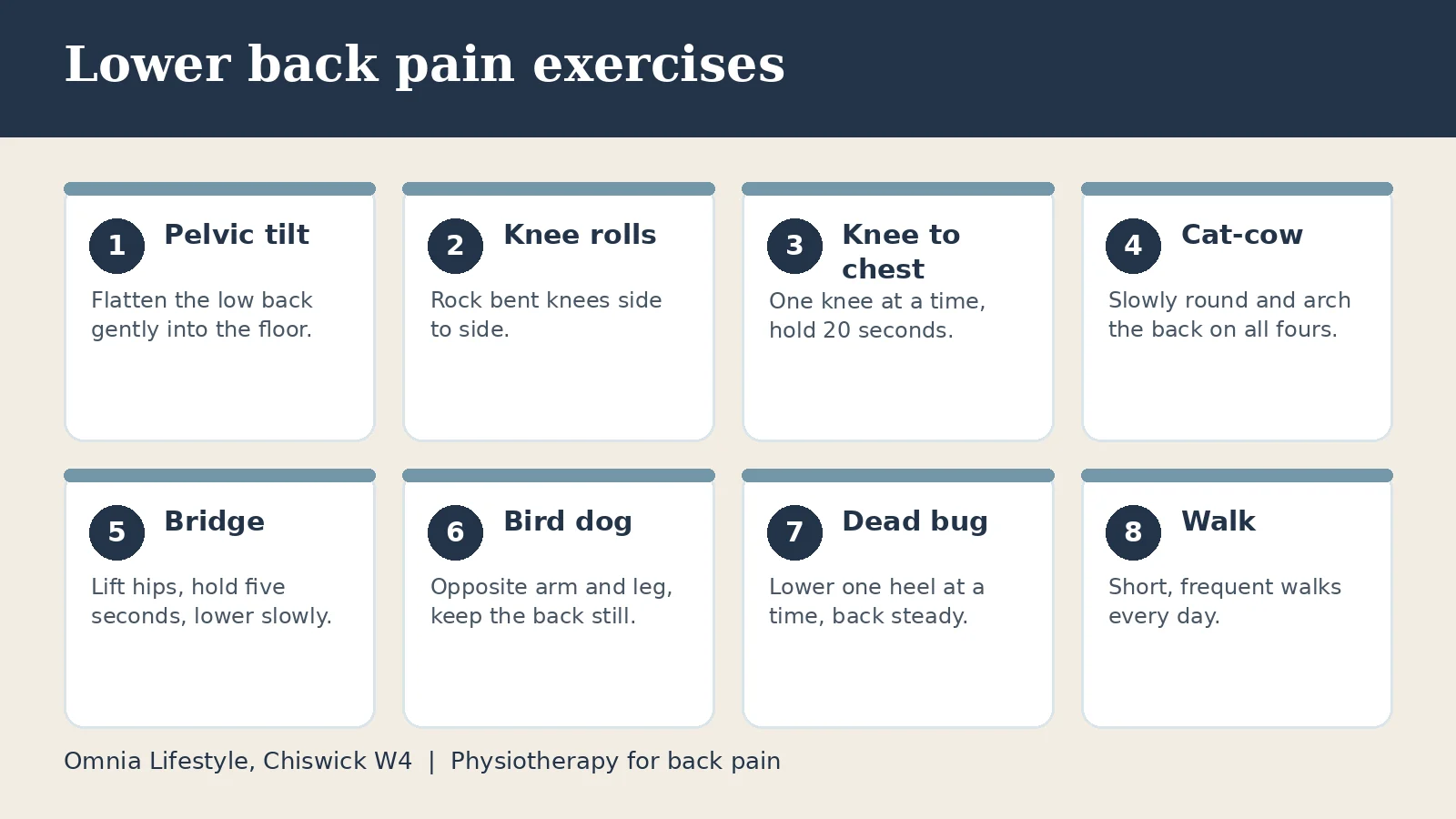
The most useful lower back pain exercises start gentle and build strength: pelvic tilts, knee rolls, single knee to chest and cat-cow ease stiffness during a flare, then bridges, bird dog and dead bug rebuild support for the spine. Walk every day. Mild discomfort while exercising is fine if it settles within a day. Most episodes improve within two to six weeks, and keeping up strength work afterwards reduces the chance of the pain returning.
Before you start
If pain travels below your knee with tingling or numbness, the nerve may be involved, and our sciatica exercises guide is a better place to start. Read the warning signs at the end of this article before beginning any programme.
Three principles that matter
Keep moving. Bed rest slows recovery. UK guidance from NICE recommends staying active and exercise as the core treatment for low back pain, and no single type of exercise has been shown to be clearly better than another. The best programme is one you will actually do.
Use pain as a guide, not a stop sign. Discomfort up to about 3 or 4 out of 10 during exercise is acceptable if it settles within 24 hours. Pain that is sharply worse during an exercise, or worse the next morning, means that exercise needs to be eased back for now.
Build strength once it settles. Gentle mobility helps in a flare, but strength in the trunk and hips is what makes the back more resilient over the following months.
Gentle exercises for a flare
1. Pelvic tilt
Lie on your back with your knees bent and feet flat. Gently flatten your lower back into the floor by tightening your stomach muscles and tilting your pelvis, then relax. Repeat 10 times slowly, breathing normally.
2. Knee rolls
Lie on your back with knees bent and together. Slowly let both knees fall to one side as far as is comfortable, keeping your shoulders on the floor, then bring them back and roll to the other side. Repeat 10 times each way.
3. Single knee to chest
Lie on your back with knees bent. Bring one knee towards your chest, holding behind the thigh, and hold for 20 seconds. Lower and swap sides. Repeat three times on each side. If bringing the knee up increases pain, keep the movement smaller.
4. Cat-cow
On your hands and knees, with hands under shoulders and knees under hips, slowly round your back towards the ceiling, then let it gently dip towards the floor. Move within a comfortable range for 10 slow repetitions.
Strengthening exercises as it settles
5. Bridge
Lie on your back with knees bent and feet hip-width apart. Squeeze your buttocks and lift your hips until your body forms a straight line from shoulders to knees. Hold for five seconds and lower slowly. Build up to three sets of 10.
6. Bird dog
On your hands and knees, slowly stretch one arm forward and the opposite leg back, keeping your back level and still, as if balancing a cup of tea on it. Hold for five seconds, return and swap sides. Repeat eight times each side.
7. Dead bug
Lie on your back with knees bent and lifted so your hips and knees are at right angles, arms pointing to the ceiling. Keeping your lower back steady against the floor, slowly lower one heel to tap the floor, then return it. Alternate legs for 10 repetitions. Add the opposite arm reaching overhead once this is easy.
8. Walking
Short, frequent walks are one of the best things for a sore back. Start with whatever is comfortable, even five minutes several times a day, and build up gradually. Walking often feels easier than sitting during a flare.
A ten-minute daily routine
- Pelvic tilts: 10 repetitions
- Knee rolls: 10 each way
- Single knee to chest: 3 holds each side
- Cat-cow: 10 slow repetitions
- Bridges: 2 sets of 10
- Bird dog: 8 each side
- Finish with a walk
During a flare, do the first four once or twice a day. As the pain settles, add the strengthening exercises and progress them every week or two.
What to ease off during a flare
- Long periods of sitting. Stand up and move every 20 to 30 minutes.
- Heavy lifting and repeated bending while pain is high. Reintroduce them gradually rather than avoiding them for good.
- Forcing stretches into sharp pain. Gentle stiffness is fine; pushing through sharp pain is not.
- Complete rest. It feels protective but tends to make stiffness and pain last longer.
No movement is permanently off limits for most people. The aim is to calm a flare, then gradually rebuild tolerance for the things you need to do.
Why a generic exercise sheet sometimes fails
Back pain has different drivers. Some people are worse bending forwards and better arching back; others are the opposite. A sheet that suits one pattern can aggravate another. Pain that is not improving after a few weeks of consistent exercise is a sign that the programme, not the effort, needs to change. Read more about what causes back pain.
When to seek medical attention
Call 999 or go to A&E if back pain comes with:
- Numbness around the genitals, buttocks or inner thighs
- New difficulty passing urine, or loss of bladder or bowel control
- Weakness in both legs, or rapidly worsening weakness in one
These can be signs of cauda equina syndrome, which needs emergency treatment.
See your GP promptly if you have back pain with fever, unexplained weight loss, a history of cancer, pain after a significant fall, or pain that is severe at night and not eased by changing position.
Frequently asked questions
How often should I do lower back exercises?
Gentle mobility exercises can be done once or twice a day during a flare. Strengthening exercises are usually done three or four times a week, progressing as they become easy.
Should I rest or exercise with lower back pain?
Stay as active as you can. Short rests are fine when pain is severe, but long periods of bed rest slow recovery.
Is walking good for lower back pain?
Yes. Walking is one of the best activities for most back pain. Start with short walks and build up gradually.
What is the best sleeping position?
Whatever is most comfortable. Many people find lying on their side with a pillow between the knees, or on their back with a pillow under the knees, eases the strain.
How long does lower back pain take to get better?
Most new episodes improve considerably within two to six weeks. Pain lasting longer than twelve weeks benefits from a structured plan.
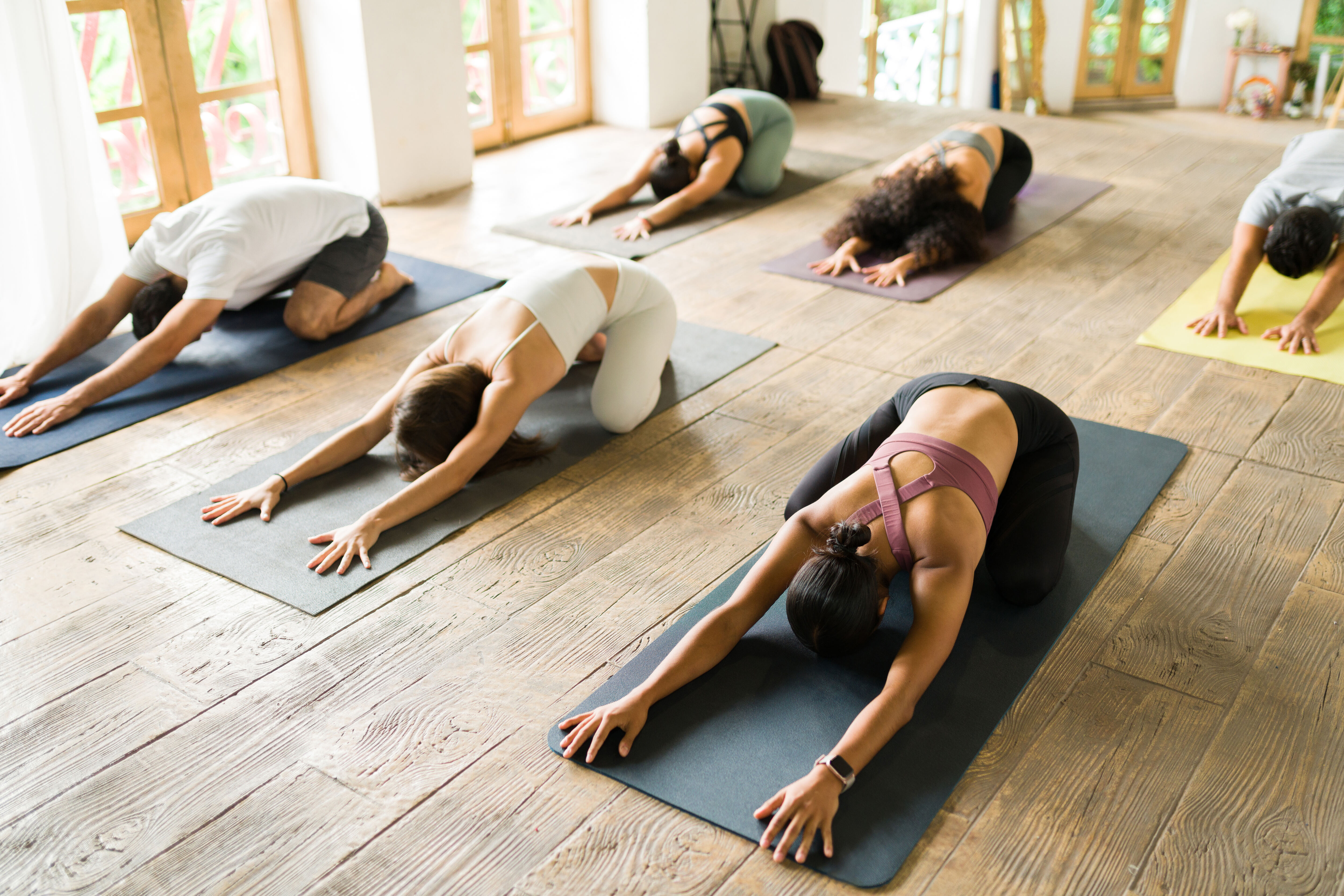
Can yoga help?
Yes, for many people. Our clinicians have published research on this, summarised in Can yoga help with low back pain?
Back pain assessment and treatment in Chiswick
Back pain is assessed and treated at Omnia Lifestyle, 8 to 9 Bedford Corner, The Avenue, Chiswick W4 1LZ, close to Turnham Green station, on bus routes 94, E3 and 272. Limited parking is available on request when booking. Assessment identifies what is driving your pain and sets an exercise programme matched to your movement pattern, progressed at each visit.
Read more about back pain symptoms and treatment, explore physiotherapy and Pixformance guided strength training, see how much private physiotherapy costs, or book an assessment.
This article is general information, not medical advice. If you have any of the warning signs listed above, seek medical attention.
Ready to book?
Physiotherapy


.jpg)
.jpg)