



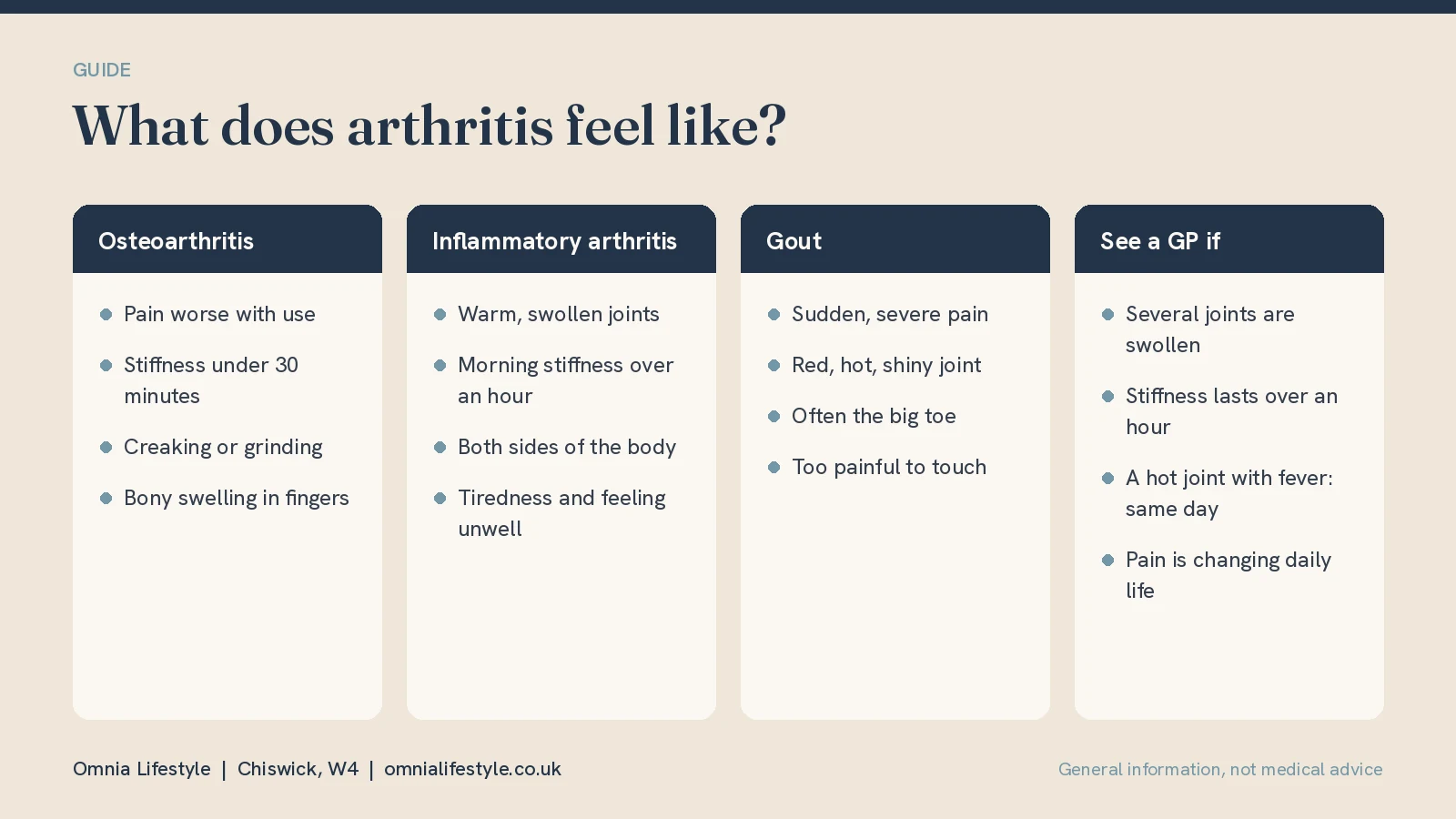


Arthritis is not one condition but more than 100, and they feel quite different. Recognising the pattern of your symptoms helps you and your doctor work out which type you have, and that matters, because the treatments are very different.
This guide describes what the most common types of arthritis feel like, the early signs to look out for, and when joint pain should be checked by a GP.
What osteoarthritis feels like
Osteoarthritis is the most common type in the UK, usually affecting the knees, hips, hands and lower back.
- Pain that is worse with use and towards the end of the day, easing with rest
- Stiffness after rest or first thing in the morning that eases within about 30 minutes
- A creaking or grinding feeling when the joint moves
- Bony swelling, especially at the finger joints
- Flares after a busy day, a long walk or a change in routine
What inflammatory arthritis feels like
Rheumatoid arthritis and psoriatic arthritis happen when the immune system attacks the joints.
- Warm, swollen, tender joints, often the small joints of the hands and feet
- Morning stiffness lasting more than an hour
- Joints affected on both sides of the body in rheumatoid arthritis
- Tiredness and feeling generally unwell
- Pain that eases with gentle movement rather than getting worse with it
Inflammatory arthritis needs early treatment from a rheumatologist, so these symptoms should always be checked.
What gout feels like
- Sudden, severe pain, often starting at night
- A red, hot, shiny, swollen joint, most often the big toe
- Extreme tenderness, so that even a bedsheet hurts
- Attacks that settle over a week or two, then may return
Early signs of arthritis
- Stiffness after sitting that takes a few minutes to ease
- Aching in a joint after activity that was previously comfortable
- Reduced range of movement, such as difficulty kneeling or making a fist
- Swelling that comes and goes
Arthritis in different joints
- Knees: pain on stairs and getting up from a chair, stiffness after sitting, sometimes swelling.
- Hips: pain in the groin, sometimes felt in the thigh or knee, and difficulty putting on shoes and socks.
- Hands: stiff, aching fingers, bony lumps at the finger joints and pain at the base of the thumb.
- Back and neck: stiffness and aching, often worse after long periods in one position.
When to see a GP
- Several joints are swollen
- Morning stiffness lasts more than an hour
- Joint pain comes with fever, a rash or weight loss
- Pain is affecting sleep, work or daily tasks
- Same day: a single hot, red, swollen joint with fever, which can be an infection
What helps
For every type, staying active and strengthening the muscles around the joint help. Osteoarthritis is managed mainly with exercise and weight management. Inflammatory arthritis and gout need medical treatment, with exercise alongside.
If arthritis runs in your family, see whether arthritis is hereditary.
Frequently asked questions
Does arthritis pain come and go?
Yes. Most types have good and bad days, with flares after activity, illness or stress.
Is arthritis worse in cold weather?
Many people feel stiffer in cold, damp weather. The research is mixed, but keeping warm and active helps.
Can young people get arthritis?
Yes. Inflammatory types can start at any age, and osteoarthritis can follow an earlier joint injury.
Does clicking mean I have arthritis?
Not on its own. Painless clicking is common and usually harmless.
Arthritis assessment and support in Chiswick
Joint pain is assessed at Omnia Lifestyle in Chiswick, W4, close to Turnham Green station, on bus routes 94, E3 and 272. Limited parking is available on request when booking. Blood tests can be arranged where inflammation or gout needs ruling out, and results are shared with your GP.
Read more about arthritis, osteoarthritis, gout and joint pain, see the stages of osteoarthritis and our knee pain exercises, explore physiotherapy and blood tests, or book an assessment.
This article is general information, not medical advice. If you have any of the warning signs listed above, seek medical attention.



.jpg)
.jpg)