




A slipped disc is one of the most common causes of back and leg pain. The name is misleading, because discs do not slip out of place. What actually happens is that part of the soft centre of a disc bulges out and can press on a nearby nerve. Knowing what it feels like, and what really helps, makes recovery much less worrying.
This guide explains what a slipped disc feels like in the lower back and neck, whether it can be put back in place, how long recovery takes and when to get help.
What a slipped disc is
The discs between the bones of the spine have a tough outer ring and a soft, gel-like centre. A slipped disc, also called a herniated or prolapsed disc, happens when part of the centre pushes through a weakness in the outer ring. If it presses on a nerve, it causes pain, numbness or weakness along that nerve.
What a slipped disc feels like in the lower back
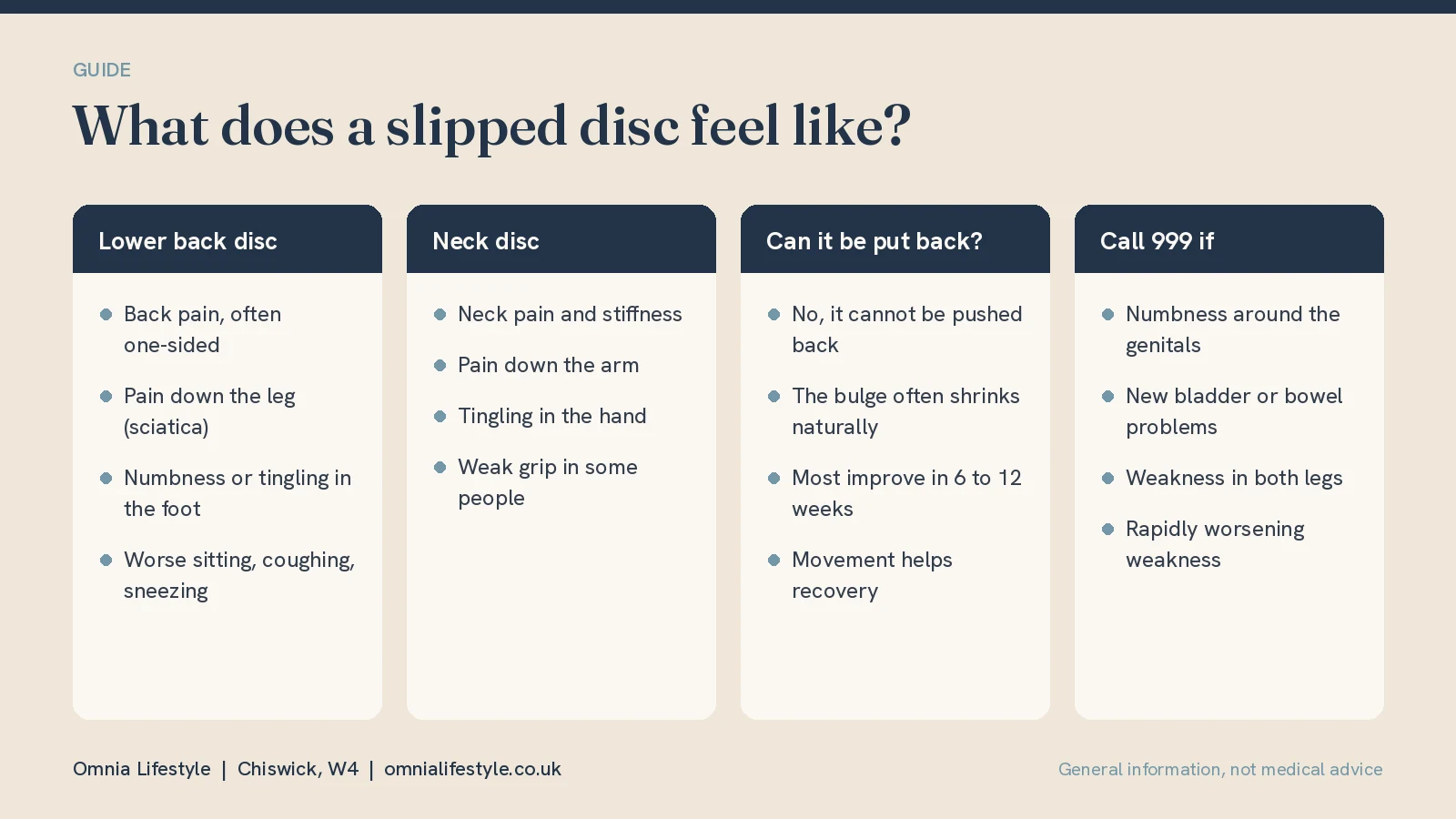
- Lower back pain, often worse on one side
- Pain travelling down the buttock and leg, often below the knee, known as sciatica
- Numbness, tingling or pins and needles in the leg or foot
- Pain that is worse with sitting, bending, coughing or sneezing
- Muscle weakness in the leg or foot in some people
Leg pain is often worse than back pain. Some people have very little back pain at all.
What a slipped disc feels like in the neck
- Neck pain and stiffness
- Pain travelling into the shoulder blade and down the arm
- Tingling or numbness in the arm or hand
- Weakness in the grip in some people
Can a slipped disc be put back in place?
No. A slipped disc cannot be pushed or clicked back into place, despite what is sometimes claimed. Manipulation can ease pain and stiffness, but it does not reposition the disc. The good news is that the body often reabsorbs part of the bulging disc material over time, and larger herniations are often the ones that shrink the most.
How long does a slipped disc take to heal?
Most people improve within six to twelve weeks with activity, exercise and pain relief. Surgery is needed only in a small minority, usually when severe pain persists or nerve weakness is getting worse.
What helps
- Keep active with short, frequent walks rather than bed rest
- Positions that ease leg pain, such as lying on your back with your calves on a chair
- Gentle exercises guided by a physiotherapist, matched to what eases your symptoms
- Pain relief discussed with your pharmacist or GP
- Heat for muscle spasm
For practical relief, see our guide to how to relieve sciatica pain.
When to seek help
Call 999 or go to A&E if you have numbness around the genitals, inner thighs or buttocks, new problems controlling your bladder or bowels, or weakness in both legs. These can be signs of cauda equina syndrome.
See your GP or a physiotherapist if:
- Pain is not improving after six weeks
- Weakness in the leg, foot, arm or hand is getting worse
- Pain is severe and not controlled
- You have a fever, unexplained weight loss or a history of cancer
Some people also use acupuncture for pain relief alongside exercise. See acupuncture for a slipped disc.
Frequently asked questions
How do I know if I have a slipped disc?
Pain travelling down a leg or arm, with tingling or numbness, suggests a disc may be pressing on a nerve. A physiotherapist or GP can usually tell from your symptoms and an examination. Scans are only needed in some cases.
Should I rest with a slipped disc?
Short periods of rest during a flare are fine, but staying active speeds recovery.
Can a slipped disc heal on its own?
Yes. Most improve without surgery, as the body reabsorbs part of the disc material and inflammation settles.
Is walking good for a slipped disc?
Usually yes. Short, frequent walks help most people.
Slipped disc treatment in Chiswick
Slipped discs are assessed and treated at Omnia Lifestyle in Chiswick, W4, close to Turnham Green station, on bus routes 94, E3 and 272. Limited parking is available on request when booking, and home visits are available when travelling is too painful.
Read more about slipped discs and sciatica, see how long sciatica lasts and our sciatica exercises guide, explore physiotherapy, or book an assessment.
This article is general information, not medical advice. If you have any of the warning signs listed above, seek medical attention.

.jpg)
.jpg)