




Shoulder pain is very common and usually comes from the muscles and tendons around the joint rather than anything serious. The shoulder is the most mobile joint in the body, which also makes it easy to irritate with repeated reaching, lifting or sleeping in an awkward position. Sometimes, though, pain felt in the shoulder comes from somewhere else, such as the neck, heart or lungs.
This guide explains the common causes of shoulder pain, why women are affected differently, what helps and when shoulder pain needs urgent attention.
Quick answer
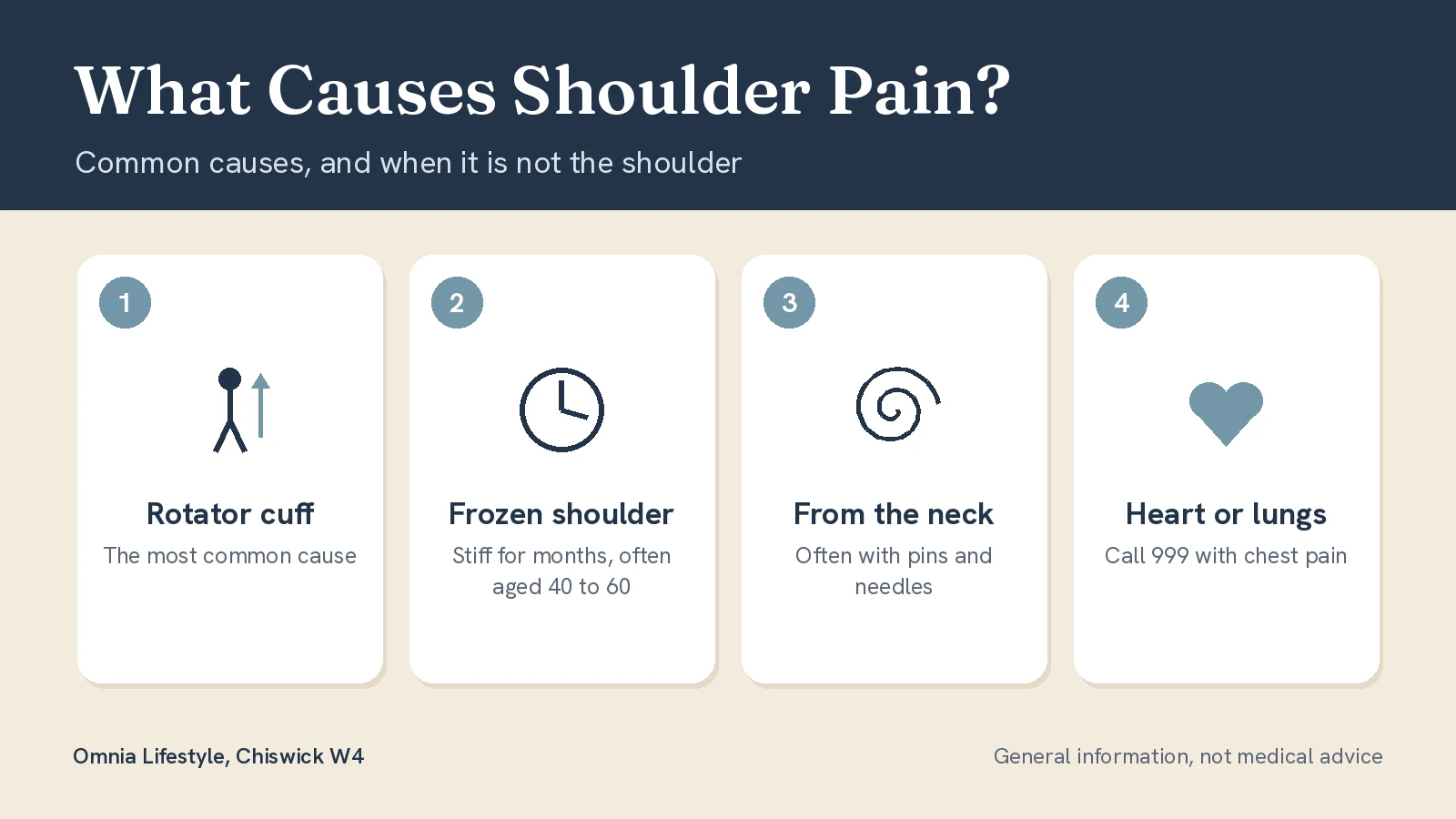
The most common cause of shoulder pain is irritation of the rotator cuff tendons, often from repeated overhead activity or a sudden increase in use. Other common causes are frozen shoulder, which causes severe stiffness and is most common in women aged 40 to 60, rotator cuff tears, shoulder instability, osteoarthritis and pain referred from the neck. Most shoulder pain improves with relative rest, painkillers and exercises over a few weeks. Shoulder or arm pain with chest pain, breathlessness or sweating needs a 999 call.
Common causes of shoulder pain
- Rotator cuff tendinopathy. Irritation of the tendons that move and stabilise the shoulder, causing pain on the outside of the upper arm, especially when lifting the arm or lying on that side. Often linked to repeated reaching, lifting or a sudden increase in activity.
- Frozen shoulder. Inflammation and tightening of the joint capsule, causing pain and then severe stiffness, especially when reaching behind the back or turning the arm outwards. It can last one to three years. See frozen shoulder.
- Rotator cuff tear. After a fall or heavy lift, or gradually with age, causing pain and weakness lifting the arm.
- Calcific tendinopathy. Calcium deposits in a tendon, which can cause sudden, severe pain.
- Shoulder instability or dislocation. More common in younger, active people and after injury.
- Osteoarthritis of the shoulder or the small joint at the top of the shoulder, more common in older adults.
- Referred pain from the neck. Often with neck stiffness, and pain or pins and needles spreading down the arm.
Causes of shoulder pain in women
Women share all the causes above, but some are more common in women. Frozen shoulder is more common in women aged 40 to 60, particularly around the perimenopause and in people with diabetes or thyroid problems. Repetitive tasks, carrying heavy bags on one side and long periods at a desk add strain. After breast surgery or radiotherapy, shoulder stiffness is common and responds well to physiotherapy. Pain at the tip of the shoulder in early pregnancy, with tummy pain or bleeding, can be a sign of an ectopic pregnancy and needs urgent care.
When shoulder pain is not from the shoulder
- The heart. Pain in the left shoulder, arm, jaw or neck with chest pain, breathlessness, sweating or feeling sick can be a heart attack.
- The lungs and diaphragm. Pain at the tip of the shoulder that is worse when breathing in can come from irritation of the lining of the lungs or the diaphragm.
- The gallbladder. Pain under the right ribs can spread to the right shoulder blade, especially after fatty meals.
How to relieve shoulder pain
- Keep the shoulder moving gently within comfort, avoiding complete rest
- Cut down on activities that trigger pain, such as reaching overhead, for a week or two
- Take paracetamol or ibuprofen if suitable for you, or use an anti-inflammatory gel
- Use an ice pack in the first few days after a strain, then heat for stiffness
- Sleep on your back or the other side, hugging a pillow to support the sore arm
- Start gentle exercises once the worst pain settles. See shoulder exercises for pain
Most shoulder pain improves within two to six weeks. Pain that persists usually responds well to a targeted strengthening programme, and a steroid injection is sometimes used to settle pain so exercise is possible.
When to seek medical help
Call 999 if you have:
- Shoulder, arm, neck or jaw pain with chest pain, breathlessness, sweating or feeling sick
- Sudden shoulder tip pain with tummy pain or vaginal bleeding when you are, or could be, pregnant
Go to A&E or an urgent treatment centre the same day if:
- Your shoulder looks deformed or you cannot move your arm after an injury
- Your shoulder is hot, red and swollen and you have a high temperature
- You have sudden severe pain with numbness or pins and needles in the arm after a fall
See your GP or a physiotherapist if:
- Pain has not improved after two weeks
- You cannot lift your arm, or it feels weak
- Pain wakes you at night or is getting worse
- You have pins and needles or numbness in the arm or hand
Frequently asked questions
Why does my shoulder hurt when I lift my arm?
Pain lifting the arm, especially between shoulder and head height, is typical of rotator cuff tendinopathy. It usually improves with strengthening exercises.
Why does my shoulder hurt at night?
Lying on the sore side compresses irritated tendons. Rotator cuff problems and frozen shoulder often cause night pain. Sleep on the other side with a pillow for support.
Can stress cause shoulder pain?
Stress increases muscle tension across the neck and shoulders, which can cause aching and stiffness, often alongside tension headaches.
Is it better to rest or move a painful shoulder?
Gentle movement is better than complete rest, which can lead to stiffness. Avoid only the movements that clearly make it worse.
Shoulder pain treatment in Chiswick
Shoulder pain is assessed and treated at Omnia Lifestyle in Chiswick, W4, close to Turnham Green station, on bus routes 94, E3 and 272. Limited parking is available on request when booking. Our physiotherapists work out whether the shoulder or the neck is the source, then build a strengthening programme, with manual therapy, acupuncture or laser therapy to ease pain where helpful. We refer to your GP where imaging or an injection may be needed.
Read more about neck and shoulder pain and frozen shoulder, see shoulder exercises for pain, frozen shoulder exercises and neck pain exercises, explore physiotherapy, manual therapy and acupuncture, or book an assessment.
This article is general information, not medical advice. If you have any of the warning signs listed above, seek medical attention.


.jpg)
.jpg)