




Back pain affects most adults at some point, and lower back pain is one of the leading causes of time off work in the UK. The reassuring news is that most back pain is mechanical, coming from the muscles, ligaments and joints of the spine, and is not caused by serious damage or disease. Often no single structure can be blamed, and the pain settles within a few weeks.
This guide explains what causes back pain, the less common specific causes, why scans rarely help and the warning signs that need a doctor straight away.
Quick answer
Most back pain is non-specific mechanical pain, triggered by things such as lifting, twisting, a sudden movement, long hours sitting, inactivity, poor sleep or stress. Specific causes include a slipped disc pressing on a nerve, arthritis in the spinal joints and narrowing of the spinal canal. Rarely, back pain is caused by an infection, a fracture or cancer. Numbness around the genitals or buttocks, or new bladder or bowel problems, needs a 999 call.
Non-specific back pain
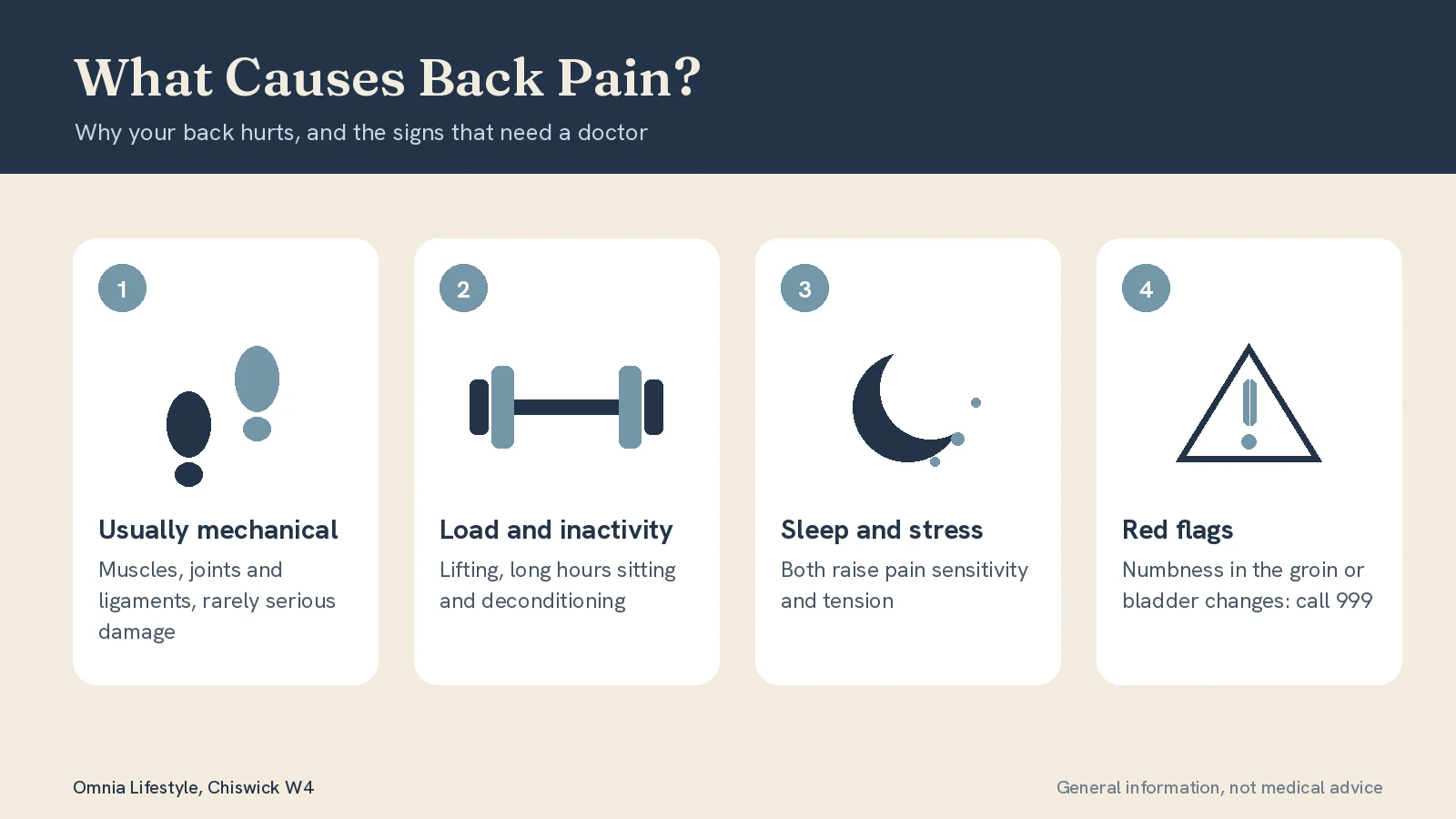
Around nine in ten cases of lower back pain are described as non-specific. This means the pain is real but comes from the normal structures of the back, such as muscles, ligaments and small joints, rather than from a specific injury that a scan would show. It often starts after an awkward movement, though sometimes there is no obvious trigger at all.
Common triggers
- Lifting, bending or twisting, especially when tired or unaccustomed to the task
- Long periods of sitting, driving or standing in one position
- Inactivity and deconditioning, which leave the back and hip muscles less able to cope with load
- A sudden increase in activity, such as gardening, decorating or a new gym routine
- Poor sleep and stress, which increase muscle tension and pain sensitivity
- Excess weight and smoking
- Pregnancy, when changes in posture and ligaments put extra strain on the back and pelvis. See pelvic girdle pain in pregnancy.
Specific causes of back pain
- Slipped disc. Part of a disc bulges and can press on a nerve, causing pain down the leg known as sciatica. See what a slipped disc feels like.
- Facet joint pain. Irritation of the small joints at the back of the spine, often worse leaning backwards or twisting.
- Spinal stenosis. Narrowing of the spinal canal, usually in older adults, causing leg pain or heaviness when walking that eases when sitting or bending forward.
- Spondylolisthesis. One vertebra slipping forward on another, sometimes seen in young athletes and older adults.
- Inflammatory back pain. Conditions such as axial spondyloarthritis usually start before 45, cause morning stiffness lasting more than 30 minutes, improve with exercise and may wake you in the second half of the night. These need a GP referral.
- Osteoporotic fracture. A small fracture in a weakened vertebra, sometimes after a minor fall or even a cough.
Why does my lower back ache?
A dull ache that is worse in the morning or after sitting, and eases as you move, is very typical of mechanical back pain and stiffness. Pain that builds up through the day may reflect posture, load or fatigue. Changing position often, staying active and strengthening the back and hips usually helps. If you sit for long hours, see the silent damage of sitting all day.
Do I need a scan?
Usually not. Scans often show age-related changes, such as disc bulges or wear in the joints, in many people with no pain at all, so they rarely explain the pain or change treatment. UK guidance advises against routine X-rays and MRI for low back pain. Imaging is useful when there are warning signs, when nerve symptoms are getting worse, or when surgery is being considered.
What helps
Staying active, gentle exercise, heat and strengthening the back and hips help most back pain, and exercise has the strongest evidence for recovery and preventing recurrence. For practical steps, see how to relieve back pain naturally, and if pain travels down your leg, how to relieve sciatica pain.
When to seek medical help
Call 999 or go to A&E if:
- Back pain comes with numbness around the genitals, buttocks or inner thighs, new difficulty controlling your bladder or bowels, or weakness in both legs. These can be signs of cauda equina syndrome
- Upper back pain comes with chest pain, breathlessness or sweating
- You develop sudden, severe pain in the back or abdomen, especially if you are older or smoke
See your GP promptly if:
- You have a fever or feel generally unwell with back pain
- You have unexplained weight loss or a history of cancer
- The pain started after a significant fall or injury, or you have osteoporosis
- Pain is constant, severe, getting worse and does not change with position, including at night
- You have pain in your side with a fever or problems passing urine, which may be a kidney problem
- You have new back pain and are under 20 or over 50
Frequently asked questions
Can stress cause back pain?
Stress does not damage the spine, but it increases muscle tension and pain sensitivity and can make back pain last longer.
Can a mattress cause back pain?
An old or very soft mattress can contribute to morning stiffness. Many people find a medium-firm mattress more comfortable than a very hard one.
Is back pain a sign of kidney problems?
Occasionally. Kidney pain is usually felt higher up, in the side, and often comes with fever, pain passing urine or feeling unwell. Most lower back pain is not kidney-related.
Why does my back hurt when I wake up?
Morning stiffness is common with mechanical back pain and usually eases within half an hour of moving. Stiffness lasting longer than 30 minutes, especially if you are under 45, is worth discussing with your GP.
Back pain assessment in Chiswick
Back pain is assessed and treated at Omnia Lifestyle in Chiswick, W4, close to Turnham Green station, on bus routes 94, E3 and 272. Limited parking is available on request when booking, and home visits are available when travelling is too painful. Assessment identifies what is driving your pain and sets an exercise programme at the right level.
Read more about back pain and sciatica, explore physiotherapy, manual therapy and acupuncture, or book an assessment.
This article is general information, not medical advice. If you have any of the warning signs listed above, seek medical attention.


.jpg)
.jpg)