



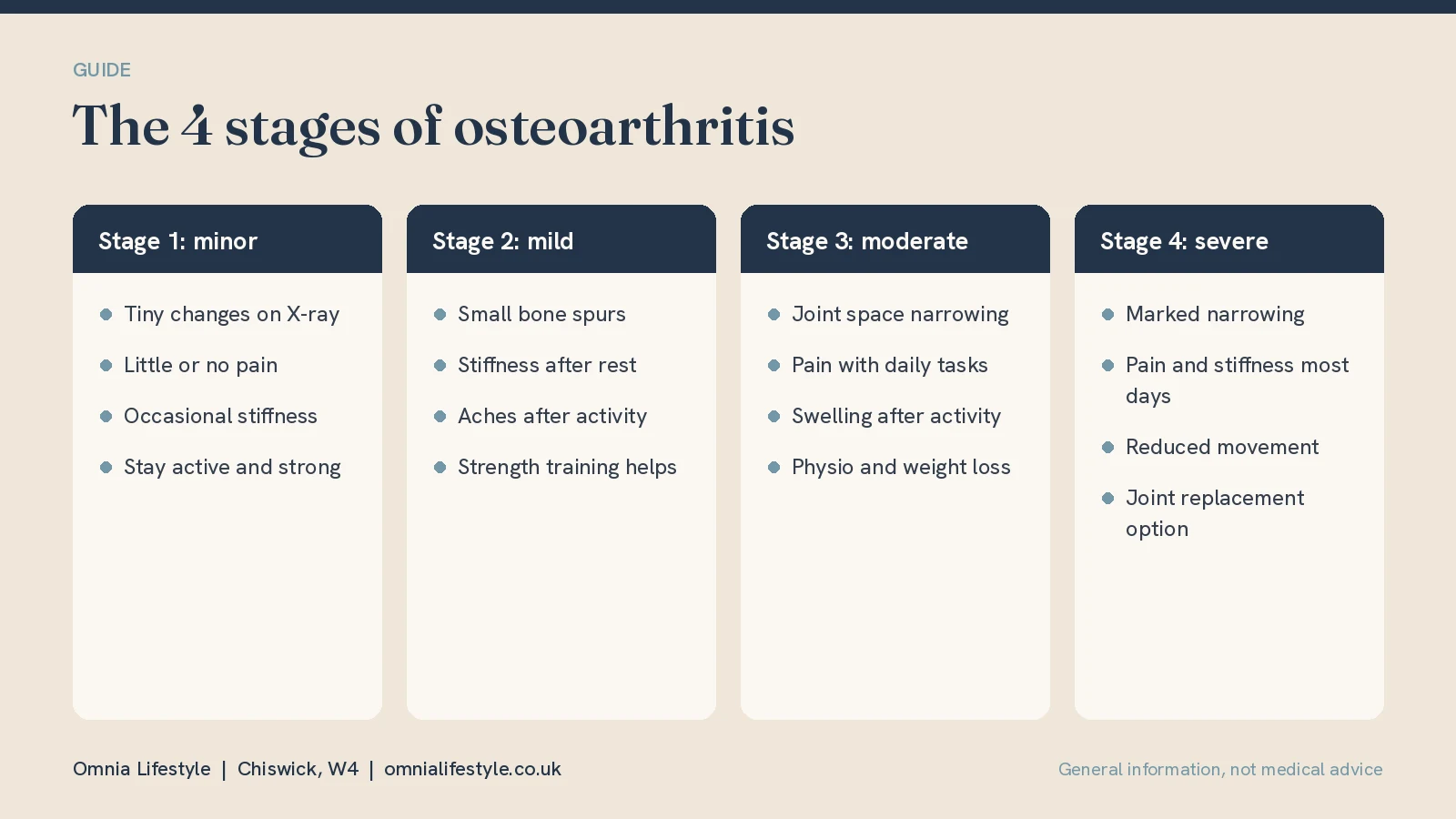


Osteoarthritis is often described in four stages, from minor changes with little pain to severe joint changes. Knowing the stages helps explain what your X-ray report means, but there is an important catch: how much pain you have often does not match what an X-ray shows.
This guide explains the four stages of osteoarthritis, what helps at each one, and why the stage is only part of the picture.
How osteoarthritis is staged
Stages are usually based on an X-ray scoring system that looks at the space between the bones, small bony growths called osteophytes, and changes in the bone surface. The joint space narrows as the cartilage covering the bone ends thins.
Stage 1: minor
Very small bony growths may be seen, with little or no narrowing of the joint space. Most people have no pain or only occasional stiffness. This is the ideal time to build strength and stay active.
Stage 2: mild
Bony growths are clearer and the joint space may start to narrow slightly. People often notice stiffness after sitting or first thing in the morning, and aching after activity. Strengthening exercise, staying active and managing weight make the biggest difference here.
Stage 3: moderate
There is definite narrowing of the joint space and more bony growths. Pain is more frequent, particularly with walking, stairs, kneeling or getting up from a chair, and the joint may swell after activity. Physiotherapy, a structured strength programme, weight loss where relevant and pain management help most people stay active.
Stage 4: severe
The joint space is markedly reduced and the bone ends may be close together. Pain and stiffness are present on most days, and movement is reduced. Exercise still helps, and joint replacement is an option to discuss when pain and function remain poor despite other treatment.
Why the stage is only part of the picture
X-ray findings and symptoms often do not match. Many people with stage 3 or 4 changes have little pain, while others with mild changes have significant pain. For this reason, UK guidance says osteoarthritis can usually be diagnosed without an X-ray in people over 45 with typical symptoms, and decisions about treatment, including surgery, are based on your symptoms and function rather than the X-ray alone.
Does osteoarthritis always get worse?
No. Osteoarthritis does not inevitably progress through all four stages. Many people stay stable for years, and symptoms often improve with the right exercise, even when X-ray changes remain.
What helps at every stage
- Strengthening exercise for the muscles around the joint, two or three times a week
- Regular activity such as walking, cycling or swimming
- Weight loss where relevant, which reduces load on knees and hips
- Supportive footwear for knee and hip osteoarthritis
- Heat for stiffness and pacing on busy days
When to see a doctor
- Pain is stopping you sleeping or doing daily tasks
- The joint locks or gives way
- You want to discuss joint replacement
- Same day: a joint that suddenly becomes hot, red and very swollen, especially with fever
Frequently asked questions
What stage of osteoarthritis needs a knee replacement?
It depends on symptoms, not the stage alone. Replacement is considered when pain and loss of function significantly affect your life despite exercise and other treatments.
Can you reverse osteoarthritis?
The X-ray changes cannot be reversed, but symptoms often improve a great deal with strengthening, weight loss and staying active.
How fast does osteoarthritis progress?
Usually slowly, over years. Many people never reach the severe stage.
Is walking good for osteoarthritis?
Yes. Walking is one of the best activities for knee and hip osteoarthritis at every stage.
Osteoarthritis care in Chiswick
Osteoarthritis is assessed and treated at Omnia Lifestyle in Chiswick, W4, close to Turnham Green station, on bus routes 94, E3 and 272. Limited parking is available on request when booking. Assessment builds a strength programme matched to your joints and goals.
Read more about osteoarthritis and knee pain, see what arthritis feels like and our knee pain exercises, explore physiotherapy, red light therapy and tai chi, or book an assessment.
This article is general information, not medical advice. If you have any of the warning signs listed above, seek medical attention.



.jpg)
.jpg)