






Book at our Chiswick clinic
Physiotherapy
Physiotherapy is one of the main treatments for back pain in the UK, and exercise sits at the centre of it. This guide is for anyone with lower back pain that is slow to settle, keeps coming back or is stopping them working, sleeping or training. It explains what a physiotherapist does, what NICE recommends, how many sessions people usually need and what it costs in Chiswick.
When to see someone: if your back pain has not improved after a few weeks of staying active, or it is stopping your normal activities, an assessment can help. Physiotherapy at Omnia is with HCPC-registered physiotherapists, no GP referral is needed, and a 70-minute first appointment with assessment and treatment is £99. Book online or call 020 4515 0000.
Quick answer
Physiotherapy for back pain combines a clear assessment, reassurance and advice to stay active, and an exercise programme tailored to you. NICE recommends exercise as the core treatment for low back pain, and says hands-on manual therapy such as mobilisation or massage should only be used as part of a package that includes exercise. Most new episodes of back pain improve within a few weeks. Physiotherapy is most useful when pain lingers, keeps returning or limits what you can do.
What physiotherapy for back pain involves
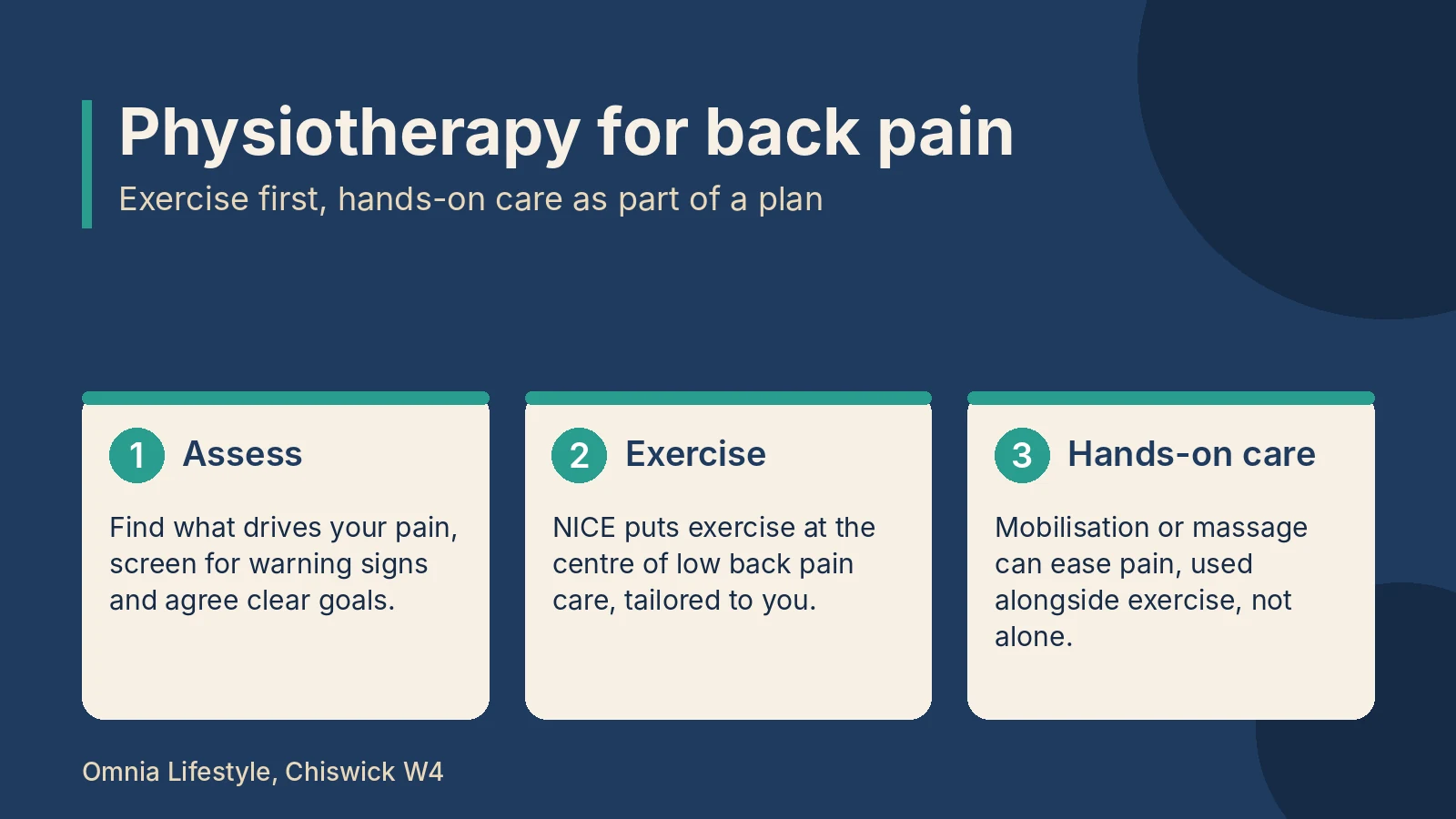
A physiotherapist looks at how your back pain started, what makes it better or worse, how you move and what you need to get back to. The NHS describes physiotherapy as a mix of exercise, manual therapy and education, and that is what a good back pain plan looks like.
- Assessment and reassurance. Most back pain is not caused by serious damage. Understanding this often reduces fear of movement, which is one of the things that keeps pain going.
- Exercise. A programme to build strength, mobility and confidence, matched to your pain level and goals. This might include walking, core and hip strengthening, mobility work and gradual return to lifting or sport.
- Manual therapy. Joint mobilisation, spinal manipulation or soft tissue massage can ease pain and stiffness in the short term so you can move and exercise more comfortably.
- Advice on daily life. Pacing, sleep positions, desk set-up and how to stay at work or return to it.
Physiotherapy for back and hip pain often overlaps, because tight or weak hip muscles change how the lower back moves. Your physiotherapist will check both. See our lower back pain exercises for the type of moves that are often included.
What NICE and the NHS say
NICE guideline NG59 covers low back pain and sciatica in people aged 16 and over. The key points are:
- Self-management at every step. Give people information about back pain and encourage them to continue normal activities.
- Exercise. NICE recommends considering a group exercise programme, which may be biomechanical, aerobic, mind and body (such as yoga or pilates) or a combination.
- Manual therapy as part of a package. Spinal manipulation, mobilisation or soft tissue techniques such as massage should only be considered alongside exercise, not on their own.
- Treatments NICE does not recommend. Belts or corsets, foot orthotics, traction, acupuncture, ultrasound, TENS and interferential therapy are not recommended for managing low back pain.
- Stratified care. NICE suggests using a tool such as STarT Back to decide whether someone needs simple advice or more intensive support such as an exercise programme with or without manual therapy.
The NHS back pain page gives similar advice: stay active, avoid long periods in bed, try back exercises and stretches, and see a GP or physiotherapist if pain has not improved after a few weeks. It notes that in many areas you can refer yourself to NHS musculoskeletal services, though waiting times vary.
What happens at your first physiotherapy session
At Omnia the first appointment lasts 70 minutes, so you are assessed and treated on the same day. Your physiotherapist will:
- Ask about your symptoms, health history, work, activity and what you want to get back to.
- Screen for warning signs that need a doctor rather than physiotherapy.
- Assess how you move, your strength, flexibility and, where relevant, nerve function in the legs.
- Explain what is likely driving your pain in plain language.
- Start treatment, which may include hands-on work and your first exercises.
- Agree a plan, including how often to come back and what to do at home.
Wear comfortable clothes you can move in. Our guide on what happens at your first physiotherapy appointment has more detail.
How many physio sessions for back pain?
There is no fixed number. Some people with a recent flare-up need only a few sessions to understand the problem, learn their exercises and build confidence. People with long-standing or recurring back pain may benefit from a longer programme spread over several weeks, with sessions further apart as they progress. The work you do between sessions matters more than the number of appointments. Your physiotherapist should review progress against goals you agree at the start, such as walking for 30 minutes, sitting through a meeting or returning to the gym. See how many physiotherapy sessions you may need.
Physiotherapy for back pain: cost
At Omnia in Chiswick:
- First appointment: 70 minutes, £99, including assessment and treatment the same day.
- Follow-up sessions: £70 for 30 minutes or £90 for 45 minutes.
- Consultation only: £50 for 30 minutes, if you want an assessment and advice without treatment.
- Home visit physiotherapy: across West London from £110.
Physiotherapy at Omnia is recognised by AXA Health, Vitality, WPA and Aviva, although policies vary, so check your cover before booking. For a wider picture, see how much physiotherapy costs in the UK.
Physiotherapy for back pain at home
What you do at home is where most of the change happens. These steps, most of them from NHS advice on back pain, can help:
- Keep moving. Continue daily activities as much as you can and avoid long periods in bed.
- Use heat or cold. A wrapped heat pack can ease stiffness and spasm; a wrapped ice pack can help with pain.
- Do your exercises little and often. Short, regular sessions tend to work better than one long session.
- Try general activity. Walking, swimming, yoga and pilates may all help.
- Ask a pharmacist about pain relief. The NHS notes that anti-inflammatory painkillers may help some people but are not suitable for everyone.
If getting to a clinic is difficult, our physiotherapists can see you at home. Read what to expect from a home visit.
Who should take extra care
- Pregnancy. Back and pelvic pain are common in pregnancy. Physiotherapy can help, but tell your physiotherapist you are pregnant and keep your midwife informed. See pelvic girdle pain in pregnancy.
- After a caesarean. The NHS advises restarting exercise only when you feel able and it is not uncomfortable, which may take about six weeks. Ask at your postnatal check, then build up gradually.
- Disc problems, for example at L4 and L5. Discs low in the spine can irritate a nerve and cause leg pain. Physiotherapy follows the same principles, with extra attention to leg symptoms. See what a slipped disc feels like.
- Osteoporosis, cancer history or recent injury. Tell your physiotherapist, as these change what is safe.
When to seek urgent help
Call 999 or go to A&E if you have back pain with:
- Pain, tingling, weakness or numbness in both legs
- Loss of feeling around your genitals or bottom
- Difficulty peeing, or being unable to control when you pee or poo
- Changes in how your genitals feel during sex
- Chest pain, or back pain after a serious accident
The first four can be signs of cauda equina syndrome, which needs hospital treatment straight away. Do not drive yourself.
Get an urgent GP appointment or call NHS 111 if you feel hot, cold, shivery or generally unwell with back pain, or you have severe pain that started suddenly or is getting worse quickly. See your GP if you have unexplained weight loss, a lump or swelling in your back, or pain that does not improve with rest or is worse at night.
Frequently asked questions
Is physiotherapy good for lower back pain?
Yes, for many people. Exercise is the main treatment NICE recommends for low back pain, and a physiotherapist can tailor it to your pain, fitness and goals. Hands-on treatment can help in the short term when it is combined with exercise. Physiotherapy cannot promise to stop all future flare-ups, but it can help you manage them with more confidence.
Do physiotherapy machines help back pain?
NICE advises against ultrasound, TENS and interferential therapy for low back pain, and against traction. Some people find heat or a TENS machine soothing at home, but these do not replace exercise. At Omnia the focus is on assessment, exercise and hands-on care, with any equipment used only where it supports that plan.
Can I see a physiotherapist without a GP referral?
Yes. You do not need a GP referral to book private physiotherapy at Omnia. On the NHS, many areas let you refer yourself to community musculoskeletal services. If you have any of the urgent warning signs above, see a doctor first rather than booking physiotherapy. Read can you self refer to physiotherapy.
Should I see a physio, osteopath or chiropractor for back pain?
All three treat back pain, and NICE groups manual therapy from any of them under the same advice: use it only as part of a package that includes exercise. Physiotherapists put particular weight on exercise and rehabilitation. Compare them in physio vs osteopath vs chiropractor.
How quickly does physiotherapy work for back pain?
Some people feel easier after one or two sessions, often because they understand the problem and move with less fear. Changes in strength and fitness take longer, usually several weeks of regular exercise. If you see no progress after a few sessions, your physiotherapist should review the plan or suggest seeing your GP.
Physiotherapy for back pain in Chiswick
Our clinic is at 8 to 9 Bedford Corner, The Avenue, Chiswick W4 1LZ, close to Turnham Green station, on bus routes 94, E3 and 272. Limited parking is available on request when booking. Physiotherapists, acupuncturists and massage therapists work under one roof, so treatments can be combined where that suits you.
Read more about back pain, see physiotherapy for sciatica if pain travels down your leg, or read our honest guide to acupuncture for back pain.
Book physiotherapy in Chiswick: first appointment £99, including assessment and treatment. Book online or call 020 4515 0000.
This article is general information, not medical advice. If you have any of the warning signs above, seek medical attention.
Ready to book?
Physiotherapy




.jpg)
.jpg)
