






Book at our Chiswick clinic
Physiotherapy
Physiotherapy is a central part of recovering from a knee replacement. The exercises you do in the first weeks and months shape how well your new knee bends, straightens and carries you. This guide is for anyone preparing for a total or partial knee replacement, or already home from hospital, who wants to understand what physio after knee replacement involves, how long it lasts and where extra support fits in.
When to see someone: if you are struggling with your home exercises, your knee is stiff, or you are not meeting the goals your hospital team set, extra physiotherapy can help. Physiotherapy at Omnia is with HCPC-registered physiotherapists, a 70-minute first appointment is £99, and home visit physiotherapy across West London starts from £110. Book online, book a home visit or call 020 4515 0000.
Quick answer
NICE recommends that a physiotherapist or occupational therapist starts rehabilitation on the day of surgery if possible, and within 24 hours, with walking, advice on daily activities and a home exercise programme. Most people then continue exercises at home, with supervised outpatient physiotherapy if they are struggling or not meeting their goals. The NHS says full recovery takes several months or longer. Always follow your surgical team's instructions; private physiotherapy should build on their plan, not replace it.
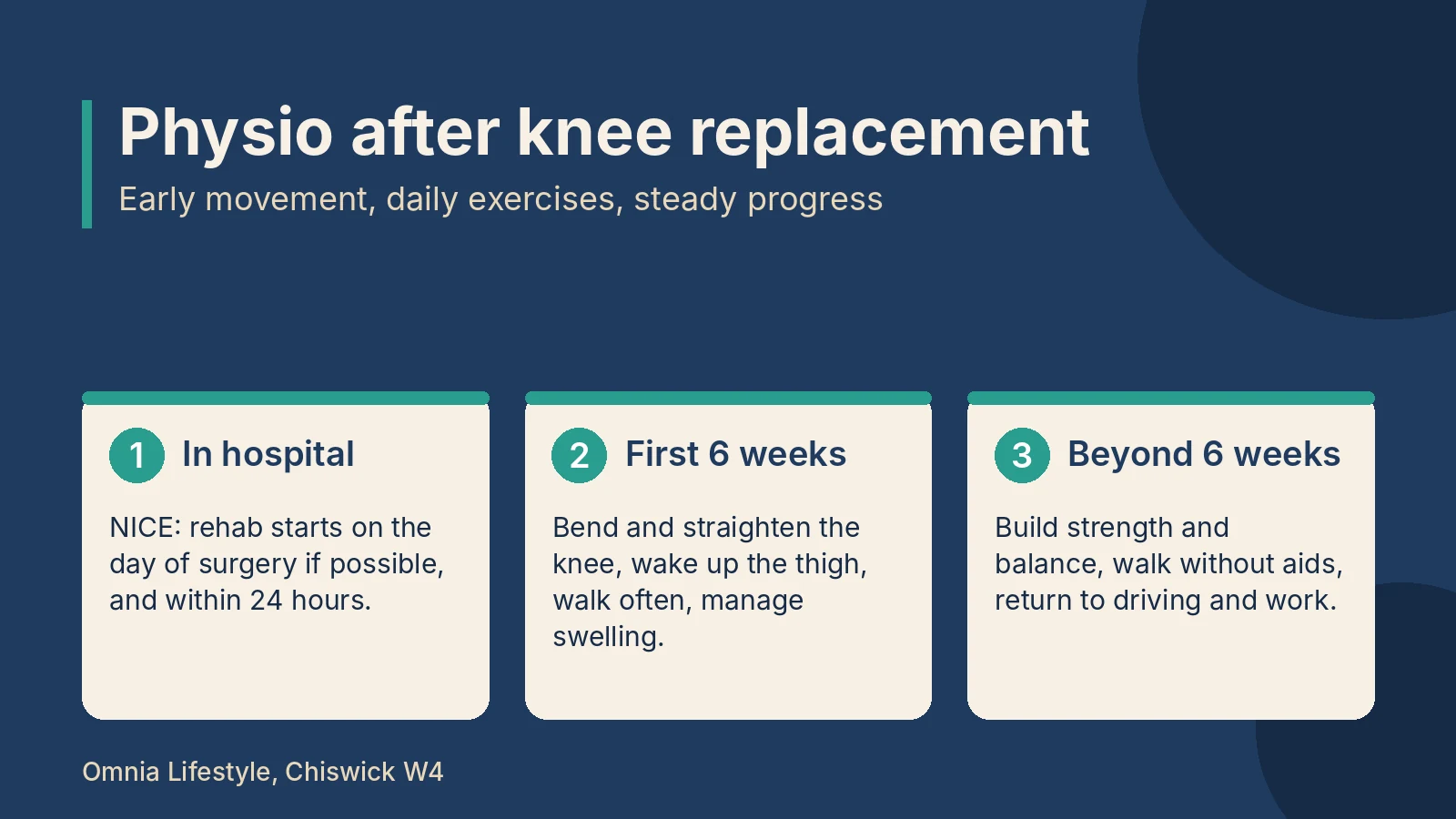
What physio after knee replacement involves
Rehabilitation usually follows three broad phases, though timings vary with your surgeon, your health and whether you had a total or partial replacement.
- In hospital. Nurses and physiotherapists help you get up and walk soon after surgery, with crutches or a walking frame. Before you go home you are taught a home exercise programme and how to manage stairs, washing and dressing. The NHS says most people stay one to four days.
- The first six weeks. The focus is bending and straightening the knee, waking up the thigh muscles, walking regularly and controlling swelling. Most people gradually need less support from walking aids as they gain confidence.
- Six weeks onwards. Once your team is happy, the focus moves to strength, balance, walking without aids, stairs and getting back to work, driving and hobbies.
Typical exercises include ankle pumps, thigh muscle tightening, heel slides, straight leg raises, knee bends in sitting and, later, sit-to-stand, step-ups and balance work. Your physiotherapist will choose and progress these for you.
What NICE and the NHS recommend
NICE guideline NG157 covers primary hip, knee and shoulder replacement. Key points for knee replacement are:
- Before surgery. People should be given advice on exercises to do before and after surgery, plus lifestyle advice such as weight management and stopping smoking, to aid recovery.
- Early rehabilitation. A physiotherapist or occupational therapist should offer rehabilitation on the day of surgery if possible, and no more than 24 hours after, including mobilisation, a home exercise programme and advice on daily activities.
- Self-directed rehabilitation. Before you leave hospital, you should be given clear goals, understand why the exercises matter, and have a point of contact for advice.
- Supervised outpatient rehabilitation. Group or individual sessions should be offered if you have difficulty with daily activities, ongoing problems with function, or find that self-directed rehabilitation is not meeting your goals.
The NHS adds that starting your exercise programme early helps long-term knee strength and movement, and advises following your hospital's own aftercare instructions.
When to start physio after knee replacement
Physiotherapy starts in hospital, usually on the day of surgery or the next day. At home, you should do the exercises your hospital team gave you from the start. Private physiotherapy can begin once you are home and settled, provided it fits with your surgeon's plan. Many people find extra help most useful in the first few weeks, when stiffness and swelling are at their worst, and again around six weeks, when they are ready to progress strength and walking. If you are unsure, check with your surgical team first.
How long does physio after knee replacement last?
The NHS says it can take several months or longer to recover fully. Recovery after a partial replacement is often quicker; for example, the NHS driving advice is shorter for a partial knee. Guidance from the NHS knee replacement recovery page includes:
- Walking aids: try walking without an aid after about six weeks, if you feel ready.
- Driving: wait at least six weeks after a total knee replacement, or three weeks after a partial one, and check with your doctor first.
- Work: usually six to 12 weeks, depending on your job.
- Follow-up: usually about six weeks after surgery.
Most people keep doing some exercises for many months. Supervised sessions often taper off as you become confident progressing on your own.
Home visit physiotherapy after knee surgery
In the early weeks, getting to a clinic can be hard: you may not be able to drive, and car journeys and stairs can be uncomfortable. Home visit physiotherapy brings the session to you, across West London, from £110. Your physiotherapist can check your exercises, assess how you manage stairs, bathroom and kitchen, suggest small changes to make home safer, and progress your programme. You can book a home visit online. Read what to expect from a home visit and who home visits are suitable for.
Later, once you can travel comfortably, clinic sessions in Chiswick give access to more space for strength and balance work.
Physio after knee replacement: cost
- Home visit physiotherapy: from £110 across West London.
- First clinic appointment: 70 minutes, £99, including assessment and treatment.
- Clinic follow-ups: £70 for 30 minutes or £90 for 45 minutes.
Physiotherapy at Omnia is recognised by AXA Health, Vitality, WPA and Aviva; policies vary, so check whether your cover includes post-operative rehabilitation. See home visit costs.
Looking after your new knee at home
- Do your exercises every day, little and often, as your team showed you.
- Manage swelling. The NHS advises keeping your leg raised as much as possible and avoiding standing for long periods.
- Wear compression stockings as advised, usually for at least six weeks.
- Do not sleep with a pillow under your knee, as this can make it harder to straighten.
- Avoid kneeling on the new knee until your doctor says it is safe, and avoid heavy lifting for three months.
- Take pain relief as prescribed so you can do your exercises.
When to seek urgent help
Call 999 or go to A&E if you have:
- Leg pain and swelling together with difficulty breathing or chest pain, which can be a sign of a blood clot in the lungs
Get an urgent GP appointment, call NHS 111 or contact your surgical team if you have:
- Throbbing or cramping pain in your calf or leg, or new swelling and redness, which can be a sign of a blood clot (DVT)
- A high temperature, or feeling hot, cold or shivery
- Oozing or pus from your wound, or redness, tenderness, swelling or pain around the knee that is getting worse
Physiotherapists stop and refer you if they see any of these signs. Ongoing stiffness or instability should also be reported to your surgical team.
Frequently asked questions
Do you need physio after a knee replacement?
Yes. NICE recommends rehabilitation starts within 24 hours of surgery, and the NHS says starting exercises early helps long-term strength and movement. Many people manage with a home exercise programme and a point of contact. Supervised physiotherapy is recommended if you are struggling with daily activities or not meeting your goals.
How soon after knee replacement should you start physio?
Usually on the day of surgery or the next day, in hospital. You then continue a home exercise programme straight away. Private physiotherapy can start once you are home, as long as it fits your surgeon's plan. If your knee is very stiff or swollen in the first few weeks, ask your team about extra support early.
What does a physiotherapist do after a knee replacement?
They help you walk safely with aids, teach and progress exercises to bend and straighten the knee and strengthen the leg, advise on swelling, stairs and daily tasks, and set goals for returning to work, driving and hobbies. They also watch for signs of complications and refer you back to your surgical team if needed.
What happens if you do not do physio after knee replacement?
Skipping exercises can leave the knee stiff and the leg weak, which can make walking, stairs and daily tasks harder. The NHS notes difficulty bending the knee and ongoing stiffness are possible problems after surgery, and that physiotherapy and exercises may help. Talk to your team early if you are finding the exercises difficult.
Physio after knee replacement in Chiswick
Our clinic is at 8 to 9 Bedford Corner, The Avenue, Chiswick W4 1LZ, close to Turnham Green station, on bus routes 94, E3 and 272. Limited parking is available on request when booking. Physiotherapists, acupuncturists and massage therapists work under one roof, so treatments can be combined where that suits you.
Read more about rehabilitation after surgery and knee pain, see physiotherapy for knee pain, or read physio after hip replacement.
Book physiotherapy in Chiswick: first appointment £99, or home visits across West London from £110. Book online or call 020 4515 0000.
This article is general information, not medical advice. If you have any of the warning signs above, seek medical attention.
Ready to book?
Physiotherapy




.jpg)
.jpg)
