






Book at our Chiswick clinic
Physiotherapy
Physiotherapy plays a big part in how well and how quickly you recover from a hip replacement. The right exercises, done regularly and safely within your surgeon's precautions, help you walk confidently, manage stairs and get back to the things you enjoy. This guide is for anyone preparing for a hip replacement or recovering at home who wants to know what physio after hip replacement involves, how long it takes and where extra support can help.
When to see someone: if you are finding your exercises hard, your walking is not improving, or you want help progressing safely, extra physiotherapy can help. Physiotherapy at Omnia is with HCPC-registered physiotherapists, a 70-minute first appointment is £99, and home visit physiotherapy across West London starts from £110. Book online, book a home visit or call 020 4515 0000.
Quick answer
NICE recommends that rehabilitation after hip replacement starts on the day of surgery if possible, and within 24 hours, with walking, a home exercise programme and advice on daily activities. Most people continue self-directed exercises at home, and NICE advises supervised outpatient physiotherapy for those struggling with daily tasks or not meeting their goals. The NHS says recovery may take several months. Follow your surgical team's precautions, which vary between hospitals and operations.
What physio after hip replacement involves
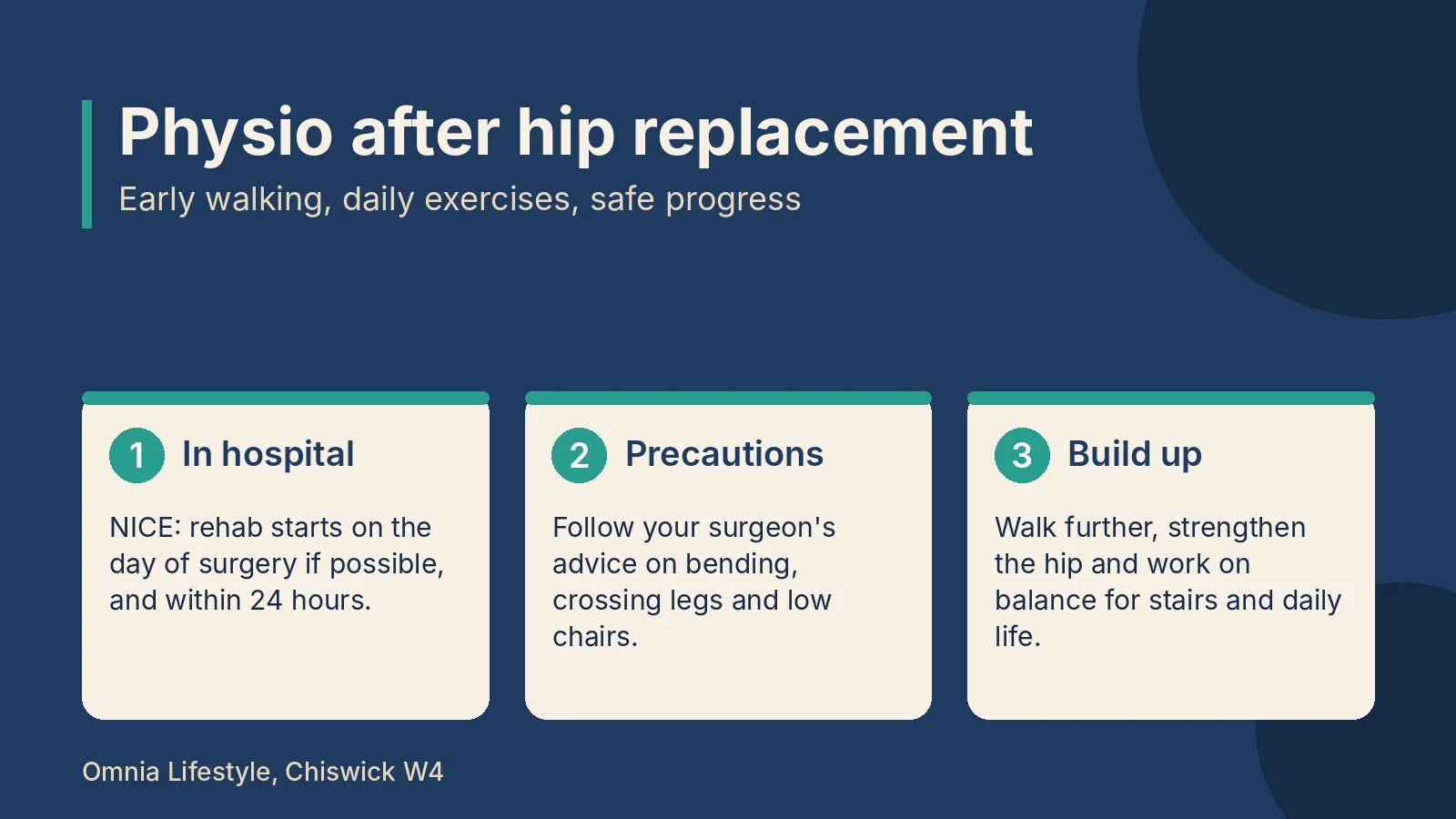
Recovery usually moves through three broad stages. Timings depend on your surgeon, the type of operation and your general health.
- In hospital. Nurses and physiotherapists help you start walking soon after surgery with crutches or a walking frame. Before you go home, a physiotherapist or occupational therapist explains how to manage daily activities and teaches your home exercise programme. The NHS says people can usually go home around one to three days after surgery.
- The first six weeks. Regular short walks, gentle exercises for the hip and leg muscles, and careful daily routines that respect your precautions. Leg and foot swelling usually improve within a few weeks.
- After your review. A follow-up appointment is usually six to 12 weeks after surgery. Once your team is happy, physiotherapy focuses on strength, balance, walking further without aids, and returning to work, driving and hobbies.
Common exercises include ankle pumps, buttock and thigh muscle squeezes, heel slides, hip abduction in lying, and later standing exercises, sit-to-stand, step-ups and balance work. Your physiotherapist will choose these to fit your surgeon's protocol.
What NICE and the NHS recommend
NICE guideline NG157 covers primary hip, knee and shoulder replacement. For hip replacement it recommends:
- Preparation before surgery. Advice on exercises to do before and after surgery, and on weight management, diet and stopping smoking, to aid recovery.
- Early rehabilitation. A physiotherapist or occupational therapist should offer rehabilitation on the day of surgery if possible, and no more than 24 hours after, including mobilisation, a home exercise programme and advice on daily activities.
- Clear goals and support. People doing self-directed rehabilitation should understand their goals, why the exercises matter, and have a point of contact.
- Supervised outpatient rehabilitation. Group or individual sessions should be offered to people who have difficulties with daily activities, ongoing problems with function, or find self-directed rehabilitation is not meeting their goals. It should also be considered for people with cognitive impairment.
The NHS adds that doing your physiotherapy exercises early on supports long-term hip strength and movement, and suggests talking to your physiotherapist if you have any problems.
Hip precautions: what to avoid after surgery
The NHS lists these common precautions after a hip replacement. Your surgical team may give different advice, so follow theirs:
- Do not sit with your legs crossed.
- Do not bend your hip more than 90 degrees, and do not bend down to touch your feet or ankles.
- Avoid low chairs, low toilet seats and chairs without arms; raised toilet seats are available.
- Avoid jumping, sudden turns and activities with a high risk of falling.
- Do not lift or move heavy objects until you are told it is safe.
- Avoid sitting still for long periods, to limit swelling.
A physiotherapist can show you how to get in and out of bed, a chair, the car and the bath within these limits.
How long does physio after hip replacement last?
The NHS says it may take several months to recover from a hip replacement, and timings vary from person to person. Useful milestones from the NHS include:
- Driving: wait at least six weeks, and check with your doctor that you are fit to drive.
- Work: go back when you feel ready, usually about six weeks, depending on your job.
- Follow-up: usually six to 12 weeks after surgery.
Many people search for exercises at two, four, six or 12 weeks. There is no single protocol that suits everyone: your physiotherapist will progress your exercises based on your surgeon's guidance, your pain, your walking and your strength. Supervised sessions usually taper as you become confident, but keeping active and doing some strengthening exercises long term is worthwhile.
Home visit physiotherapy after hip surgery
In the first weeks, low car seats and travel can be awkward with hip precautions. Home visit physiotherapy across West London, from £110, means your physiotherapist sees how you manage your own stairs, bed, chairs and bathroom, and can suggest practical changes as well as progressing your exercises. You can book a home visit online. Read what to expect from a home visit and which treatments can be done at home.
Once you can travel comfortably, clinic sessions in Chiswick are useful for strength and balance work. Our balance exercises for seniors show the kind of work that helps reduce the risk of falls.
Physio after hip replacement: cost
- Home visit physiotherapy: from £110 across West London.
- First clinic appointment: 70 minutes, £99, including assessment and treatment.
- Clinic follow-ups: £70 for 30 minutes or £90 for 45 minutes.
Physiotherapy at Omnia is recognised by AXA Health, Vitality, WPA and Aviva; policies vary, so check whether your cover includes rehabilitation after surgery. See home visit costs.
When to seek urgent help
Call 999 or go to A&E if you have:
- Leg pain and swelling together with difficulty breathing or chest pain, which can be a sign of a blood clot in the lungs
Get an urgent GP appointment, call NHS 111 or contact your surgical team if you have:
- Throbbing or cramping pain, or swelling and redness, in your hip or leg that is not improving or is getting worse, which can be a sign of a blood clot (DVT)
- A high temperature, or feeling hot, cold or shivery
- Oozing or pus from your wound, or redness, tenderness or swelling that is not settling
- New pain or swelling in the hip, or clicking or popping from the joint, which can be signs of dislocation; contact your GP or care team
If you suddenly cannot stand or put weight on the leg, or have severe hip pain after a fall or twist, get help the same day through NHS 111 or A&E. Your physiotherapist will stop and refer you if they see any of these signs.
Frequently asked questions
How long do you need physio after a hip replacement?
It varies. The NHS says recovery may take several months. Many people manage with a home exercise programme and a few supervised sessions, while others benefit from regular physiotherapy for several weeks. NICE recommends supervised outpatient rehabilitation if you are struggling with daily activities or not meeting your goals.
What physio do you need after a hip replacement?
Rehabilitation starts in hospital within 24 hours, with walking and a home exercise programme. At home, exercises strengthen the hip and thigh muscles and improve walking. Later, physiotherapy builds strength, balance and confidence for stairs, work and hobbies. Your physiotherapist should follow the precautions your surgeon gives you.
Can I get physio after hip replacement on the NHS?
Yes. NHS hospitals provide rehabilitation after hip replacement, starting in hospital and usually continuing with a home programme and a point of contact. Supervised outpatient physiotherapy is offered when needed. Some people choose private physiotherapy as well, for more frequent sessions or home visits. Tell your NHS team if you do.
What exercises should I do six weeks after a hip replacement?
By around six weeks many people are walking further and ready to progress strength and balance exercises, such as standing hip exercises, sit-to-stand, step-ups and balance work. The right exercises depend on your surgeon's advice and your progress, so check with your team or physiotherapist before adding new ones.
Physio after hip replacement in Chiswick
Our clinic is at 8 to 9 Bedford Corner, The Avenue, Chiswick W4 1LZ, close to Turnham Green station, on bus routes 94, E3 and 272. Limited parking is available on request when booking. Physiotherapists, acupuncturists and massage therapists work under one roof, so treatments can be combined where that suits you.
Read more about rehabilitation after surgery and hip pain, see physio after knee replacement, or read how to treat osteoarthritis.
Book physiotherapy in Chiswick: first appointment £99, or home visits across West London from £110. Book online or call 020 4515 0000.
This article is general information, not medical advice. If you have any of the warning signs above, seek medical attention.
Ready to book?
Physiotherapy




.jpg)
.jpg)
