




Knee pain is common in women at every age, from teenage athletes to women in their 60s and beyond. Some causes are more common in women because of differences in hip and thigh mechanics, hormones and the joints themselves. The encouraging news is that most of them respond well to the right exercise.
This guide covers the most common causes of knee pain in women, why women are affected more often, what helps, and when to get your knee checked.
Common causes of knee pain in women
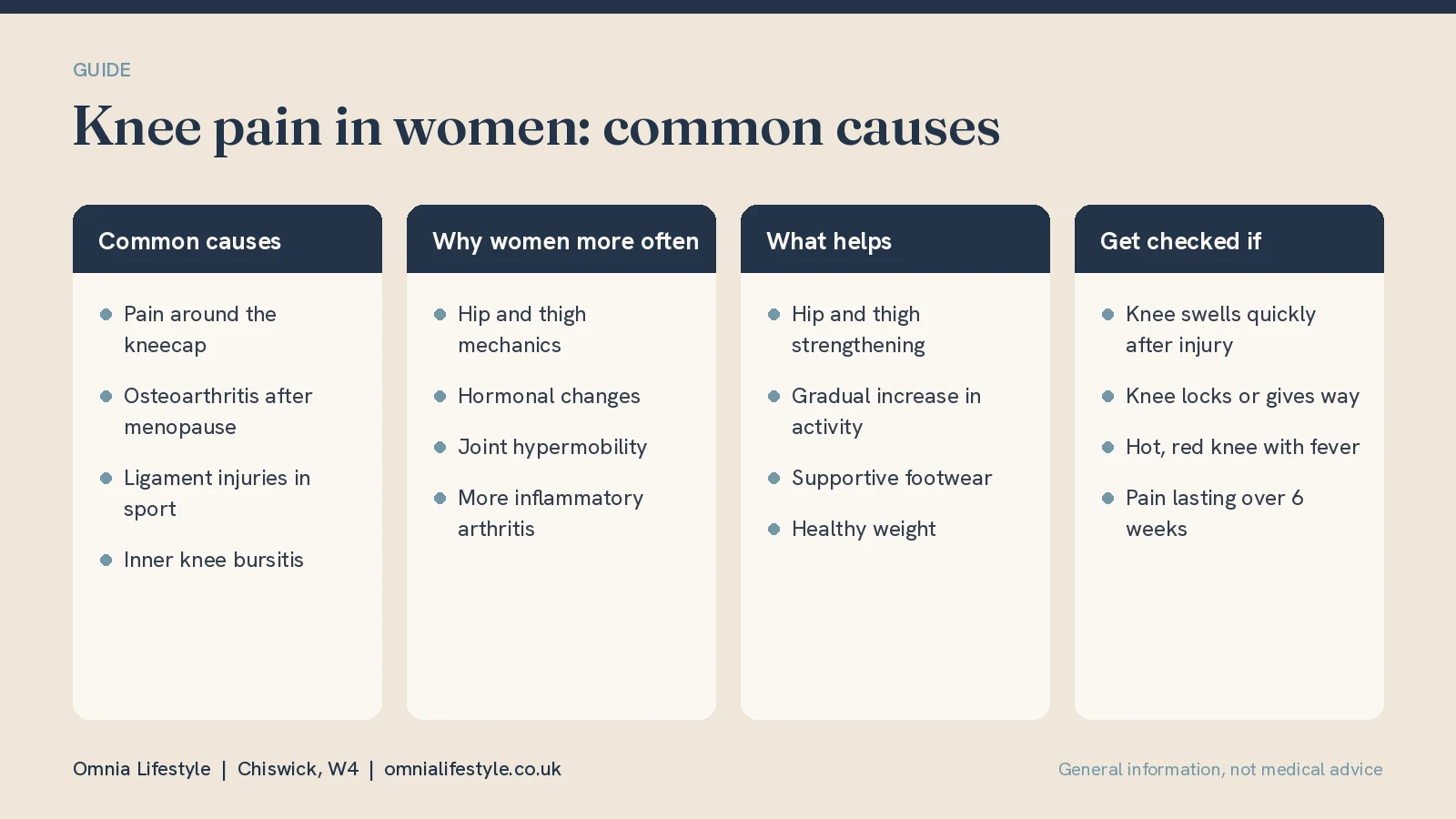
Pain around the kneecap
Patellofemoral pain is one of the most common causes of knee pain in younger and active women. It causes an ache around or behind the kneecap, worse on stairs, squatting, kneeling or after sitting for a long time. It usually responds well to hip and thigh strengthening.
Osteoarthritis
Knee osteoarthritis is more common in women than men, particularly after the menopause. It causes pain with activity, stiffness after rest that eases within about 30 minutes, and sometimes swelling.
Ligament injuries
Female athletes in sports involving cutting, jumping and landing, such as netball, football and skiing, are several times more likely than men to injure the anterior cruciate ligament (ACL). A pop, rapid swelling and the knee giving way are typical.
Inner knee bursitis
Pes anserine bursitis causes pain and tenderness on the inner side of the knee, just below the joint. It is more common in women, particularly with knee osteoarthritis or being overweight.
Other causes
- Meniscus tears from twisting, or wear in older adults
- Iliotibial band irritation on the outer knee in runners and cyclists
- Joint hypermobility, which is more common in women
- Rheumatoid arthritis, which is more common in women and usually affects several joints
Why women get knee pain more often
- Hip and thigh mechanics: differences in hip strength and how the knee moves during landing and squatting can increase load on the kneecap and ligaments.
- Hormonal changes: falling oestrogen around the menopause is linked to joint aches and osteoarthritis.
- Hypermobility: more flexible joints can be less stable.
- Inflammatory arthritis: conditions such as rheumatoid arthritis are more common in women.
What helps
- Hip and thigh strengthening, which has good evidence for kneecap pain and osteoarthritis
- Gradual increases in running, walking or training
- Supportive, cushioned footwear
- Weight management, because every kilogram lost reduces load on the knees
- Landing and agility training for sport, which reduces ACL injury risk
Get your knee checked if
- The knee swelled quickly after an injury
- The knee locks, catches or gives way
- Same day: the knee is hot, red and swollen, or you feel feverish
- You cannot put weight through the leg
- Pain has lasted more than six weeks despite rest and exercise
- Several joints are swollen or stiff in the mornings
Frequently asked questions
Why do my knees hurt on the stairs?
Stairs load the joint behind the kneecap more than walking on the flat, so pain on stairs is common with kneecap pain and osteoarthritis.
Can the menopause cause knee pain?
Yes. Falling oestrogen is linked to joint aches, and knee osteoarthritis becomes more common after the menopause.
Is it safe to exercise with knee pain?
Usually yes. The right exercise is one of the most effective treatments. Mild discomfort that settles within 24 hours is acceptable.
Should I wear a knee support?
A support can help comfort in the short term, but strengthening exercise gives the most lasting benefit.
Knee pain assessment in Chiswick
Knee pain is assessed and treated at Omnia Lifestyle in Chiswick, W4, close to Turnham Green station, on bus routes 94, E3 and 272. Limited parking is available on request when booking. Assessment finds the cause and builds a strengthening programme around it.
Read more about knee pain and osteoarthritis, see our guides to knee pain exercises, outer thigh pain and the stages of osteoarthritis, explore physiotherapy, or book an assessment.
This article is general information, not medical advice. If you have any of the warning signs listed above, seek medical attention.

.jpg)
.jpg)