





Sciatica pain can be intense, and when it flares the priority is simple: how to make it ease. The good news is that a few positions and habits bring relief for most people, and the large majority of sciatica improves within weeks.
This guide covers what sciatica feels like, how to relieve the pain quickly, what helps day to day, what to avoid, and when to get it checked.
What sciatica feels like
- Pain that travels from the buttock down the back or side of the leg, often below the knee
- Burning, shooting or electric pain rather than a dull ache
- Pins and needles or numbness in the leg, foot or toes
- Leg pain that is worse than back pain
- Pain that worsens with sitting, coughing, sneezing or bending
It usually affects one leg. A dull ache that stays above the knee is less likely to be true sciatica.
How to relieve sciatica pain quickly
Find a position that eases the leg
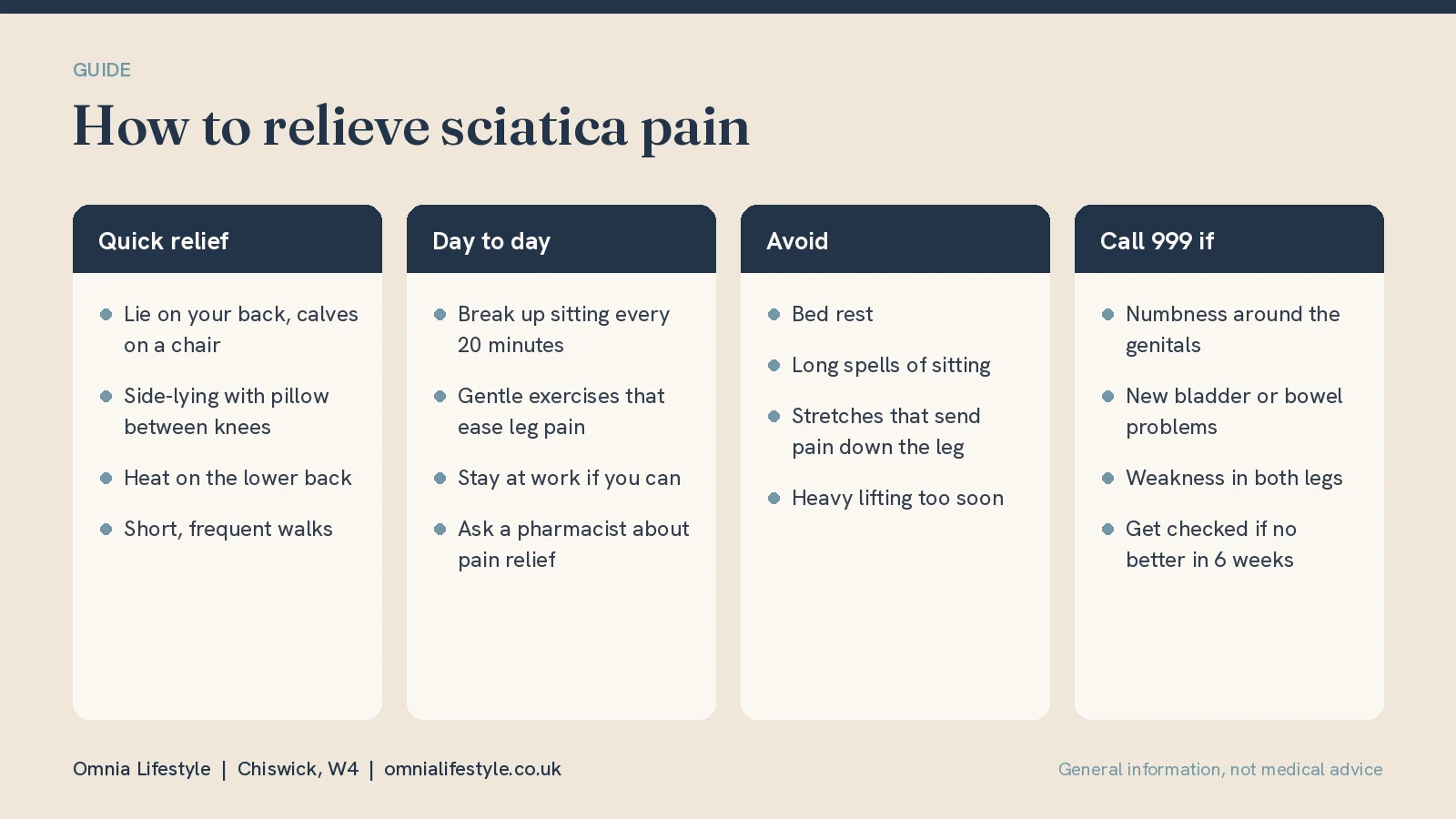
- Lie on your back with your calves resting on a chair or sofa, so your hips and knees are bent at right angles.
- Lie on your side with the painful leg on top and a pillow between your knees.
- Some people find relief lying on their front for a few minutes. Use whichever position settles the leg pain most.
Use heat
A heat pad or hot water bottle on the lower back and buttock for 15 to 20 minutes can ease muscle spasm. Some people prefer an ice pack in the first day or two.
Keep moving little and often
Short, frequent walks usually help more than long periods of sitting or lying down. Even a few minutes every hour makes a difference.
Pain relief
Speak to a pharmacist or your GP about suitable pain relief. UK guidance advises against gabapentin, pregabalin and oral steroids for sciatica, because they have not been shown to help overall.
What helps day to day
- Break up sitting every 20 to 30 minutes, and sit with your hips slightly higher than your knees
- Gentle exercises that ease your leg pain, guided by our sciatica exercises guide
- Stay at work with adjustments if you can, since staying active speeds recovery
- Sleep on your side with a pillow between your knees, or on your back with a pillow under your knees
What to avoid
- Bed rest for more than a day or two
- Long periods of sitting, especially in low, soft chairs
- Stretches that send pain further down the leg
- Heavy lifting and high-impact exercise until the pain settles
How long sciatica lasts
Most sciatica improves noticeably within four to six weeks, and most people recover within about three months. See our guide to how long sciatica lasts for a week-by-week timeline.
When to get help
Call 999 or go to A&E if you have numbness around the genitals, inner thighs or buttocks, new problems controlling your bladder or bowels, or weakness in both legs. These can be signs of cauda equina syndrome, which needs emergency treatment.
See your GP or a physiotherapist if:
- Pain is not improving after six weeks
- Numbness or weakness in the leg or foot is getting worse
- The pain is severe and not controlled
- Sciatica keeps coming back
Frequently asked questions
What is the fastest way to relieve sciatica?
Lying on your back with your calves on a chair, heat on the lower back and short, frequent walks give the quickest relief for most people.
Is it better to rest or walk with sciatica?
Walking little and often is usually better than resting. Bed rest tends to slow recovery.
Should I stretch sciatica?
Only stretches that ease your leg pain. Hamstring and toe-touch stretches often aggravate sciatica.
Can a physiotherapist help sciatica?
Yes. A physiotherapist can find the movements that settle your leg pain and build a programme around them, which often speeds recovery.
Sciatica treatment in Chiswick
Sciatica is assessed and treated at Omnia Lifestyle in Chiswick, W4, close to Turnham Green station, on bus routes 94, E3 and 272. Limited parking is available on request when booking, and home visits are available when travelling is too painful.
Read more about sciatica and slipped discs, explore physiotherapy and home visits, or book an assessment.
This article is general information, not medical advice. If you have any of the warning signs listed above, seek medical attention.



.jpg)
.jpg)