




Neck pain is very common, especially among people who spend long hours at a desk or on a phone. Most neck pain comes from tight muscles and stiff joints rather than anything serious, and it usually improves within a few days to a few weeks. Knowing what is causing it, what helps and which signs need attention makes it much easier to manage.
This guide explains the common causes of neck pain, how to relieve it at home, why your neck may hurt when you turn your head, and when neck pain can be a sign of something serious.
Quick answer
Most neck pain is caused by posture, long periods looking down at a screen, sleeping awkwardly, stress-related muscle tension or minor strains. To relieve it, keep your neck gently moving, use heat, take simple painkillers if suitable, adjust your screen and sleeping position, and do gentle stretches. Most neck pain improves within a few days to six weeks. Neck pain with fever and a stiff neck, after a significant injury, or with weakness, numbness or loss of balance needs urgent medical attention.
Common causes of neck pain
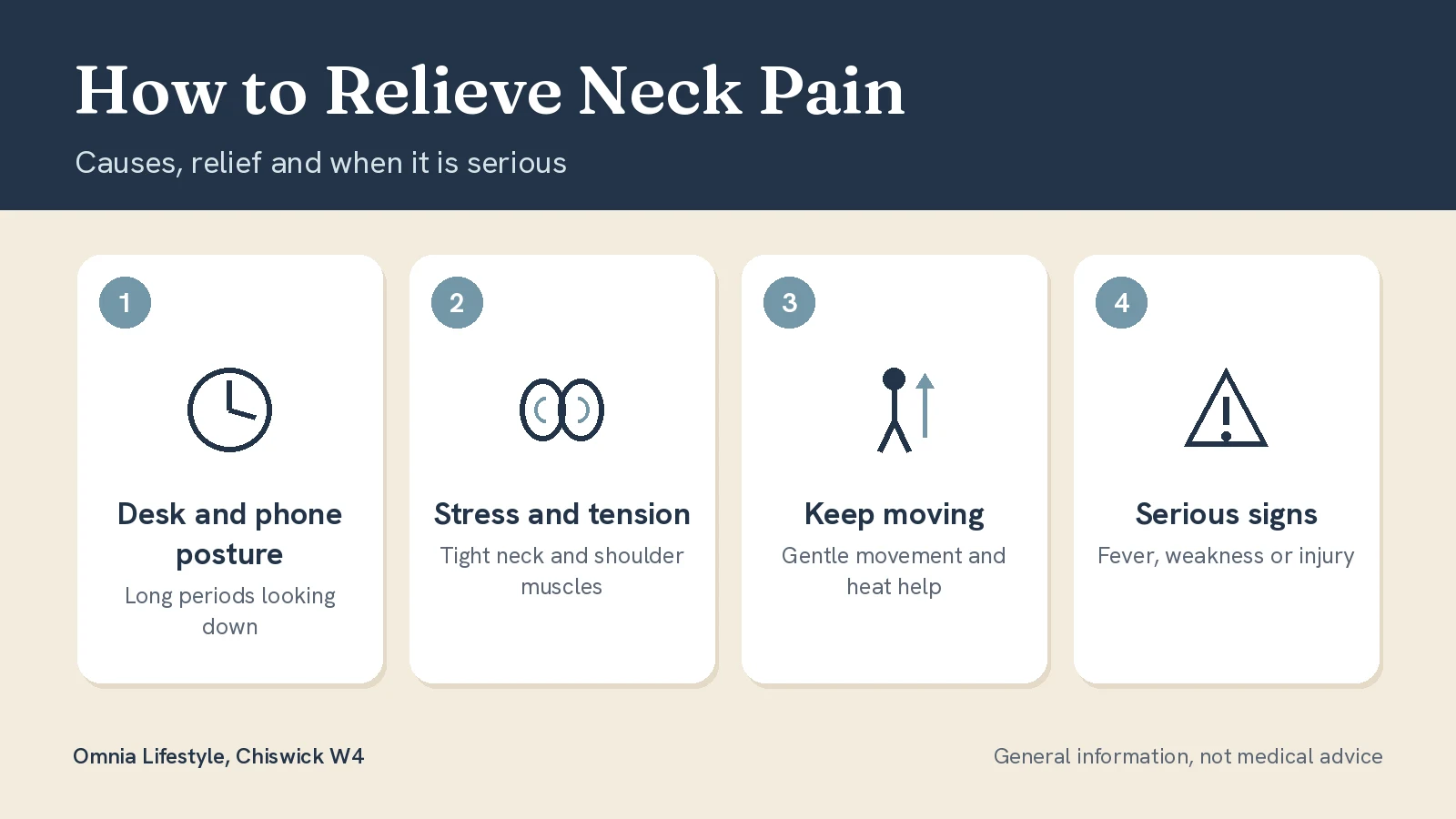
- Posture and screens. Looking down at a laptop or phone for long periods strains the neck muscles and joints.
- Sleeping awkwardly, or using too many or too few pillows
- Stress and muscle tension across the neck and shoulders
- Muscle strain from lifting, sport or a sudden movement
- Age-related changes in the neck joints and discs, known as cervical spondylosis
- A trapped nerve, which causes pain, pins and needles or numbness down the arm
- Whiplash after a car accident or sudden jolt. See how long whiplash lasts
Causes of neck pain in women
Women are more likely than men to report neck pain, often linked to desk work, carrying bags on one shoulder, muscle tension and caring responsibilities. Hormonal changes around the menopause can increase aches and stiffness. Tension in the neck and shoulders also often comes with tension headaches. See how to relieve a tension headache.
How to relieve neck pain
- Keep moving gently. Avoid holding your neck stiff. Slow movements within comfort help it recover.
- Use heat. A warm pack or shower on the neck eases muscle tension.
- Take simple painkillers such as paracetamol or ibuprofen if suitable for you, or use an anti-inflammatory gel.
- Adjust your screen to eye level and take a movement break every 30 minutes.
- Check your pillow. One supportive pillow that keeps your head level with your spine is usually best.
- Relax your shoulders and jaw several times a day.
- Do gentle stretches and strengthening. See our neck pain exercises.
Avoid wearing a neck collar unless advised by a doctor, as it can make stiffness worse.
Why does my neck hurt when I turn my head?
Pain when turning your head is usually caused by a muscle strain or a stiff joint in the neck, often after sleeping awkwardly or holding one position for a long time. This is sometimes called a crick in the neck or acute wry neck, and it usually eases within a few days to a week with gentle movement and heat. Pain that spreads down the arm with tingling suggests an irritated nerve.
Can neck pain be a sign of something serious?
Rarely. Most neck pain is mechanical and settles on its own. Neck pain can occasionally be a sign of something more serious, such as meningitis, a heart problem, an infection, a fracture or pressure on the spinal cord. These usually come with other warning signs, listed below, which are the important things to look out for.
How long does neck pain last?
Most neck pain improves within a few days to six weeks. Pain that keeps returning is often linked to sustained postures, stress or weak neck and shoulder blade muscles, and responds well to a targeted exercise plan.
When to seek medical help
Call 999 if you have:
- Neck pain with chest pain, breathlessness or pain spreading into the jaw or arm
- A stiff neck with fever, a severe headache, sensitivity to light or a rash
- Neck pain after a serious fall or accident, especially with numbness or weakness
Get same-day medical advice, from your GP or NHS 111, if:
- You have new weakness, clumsiness or numbness in your arms or legs, or problems with balance or walking
- You have a high temperature and feel unwell with neck pain
- You have new problems controlling your bladder or bowels
See your GP or a physiotherapist if:
- Pain has not improved after a few weeks
- You have pins and needles or pain spreading into the arm
- Neck pain keeps coming back
- You have unexplained weight loss or night sweats
Frequently asked questions
Should I use heat or ice for neck pain?
Heat usually helps most neck pain by relaxing tight muscles. Ice can help in the first day or two after a strain.
What is the best sleeping position for neck pain?
Sleeping on your back or side with one supportive pillow that keeps your neck level is usually best. Sleeping on your front twists the neck.
Can stress cause neck pain?
Yes. Stress increases muscle tension in the neck and shoulders and is a common cause of ongoing neck pain.
Can a massage help neck pain?
Massage can ease muscle tension and pain in the short term, and works best alongside exercise.
Neck pain treatment in Chiswick
Neck pain is assessed and treated at Omnia Lifestyle in Chiswick, W4, close to Turnham Green station, on bus routes 94, E3 and 272. Limited parking is available on request when booking. Our physiotherapists find the source of your pain, give you a short set of exercises and desk changes, and may add manual therapy, acupuncture or laser therapy to ease pain, with yoga and tai chi for tension-driven pain.
Read more about neck and shoulder pain, see neck pain exercises, what causes shoulder pain and acupuncture for neck pain, explore physiotherapy, manual therapy and acupuncture, or book an assessment.
This article is general information, not medical advice. If you have any of the warning signs listed above, seek medical attention.



.jpg)
.jpg)