

Book at our Chiswick clinic
Physiotherapy
Whiplash is a neck injury caused by a sudden jolt that throws the head forwards and backwards, most often in a rear-end car accident but also in falls and contact sports. It can be very painful, but most people recover well, especially when they keep the neck moving.
This guide explains how long whiplash usually lasts, what it feels like, what helps recovery and the warning signs that need urgent care.
How long does whiplash last?
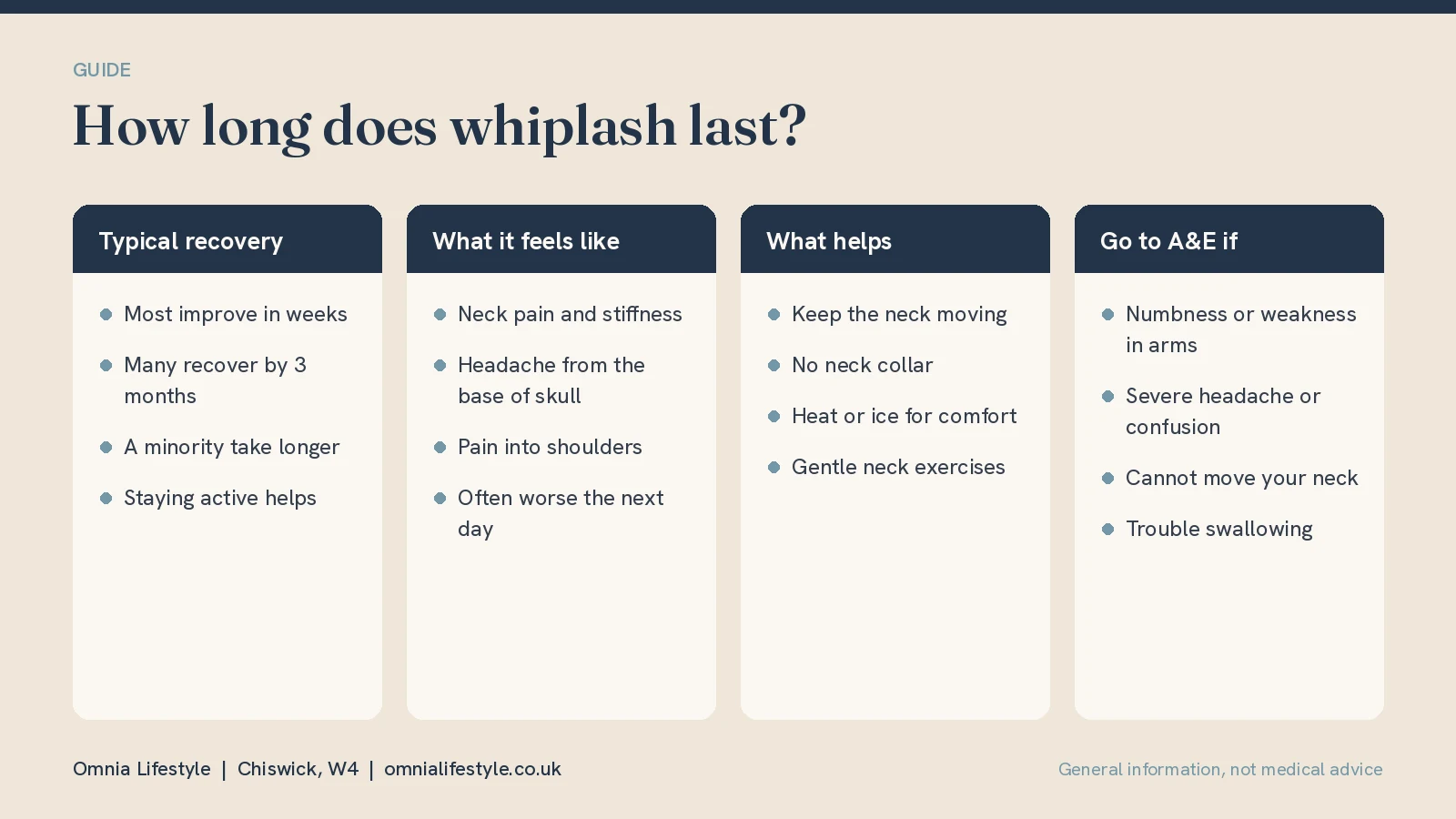
Most people with whiplash improve noticeably within a few weeks, and many recover fully within about three months. A minority have symptoms that last longer, sometimes for months. Staying active and returning to normal activities as soon as possible is linked to faster recovery.
Symptoms often feel worse the day after the injury than on the day itself, which is normal.
Whiplash recovery time: a typical timeline
Every injury is different, but most uncomplicated whiplash follows a similar pattern:
- First 24 to 48 hours. Pain and stiffness build up and often peak the day after the injury.
- First one to two weeks. Pain usually starts to ease as you keep the neck moving and return to normal activities.
- Two to six weeks. Most people notice a clear improvement in movement, pain and headaches.
- Around three months. Many people have recovered fully. If symptoms are still limiting you by six weeks, a structured exercise plan with a physiotherapist is worthwhile.
What does whiplash feel like?
- Neck pain and stiffness, often worse when turning the head
- Headache, typically starting at the base of the skull
- Pain spreading into the shoulders, upper back or arms
- Muscle spasm and tenderness in the neck
- Tiredness, difficulty concentrating or mild dizziness in some people
Symptoms usually start within a few hours to a day of the injury.
What helps whiplash recovery
- Keep the neck moving. Gentle movement within comfort speeds recovery. Neck collars are not recommended, because they slow recovery.
- Return to normal activities, including work, as soon as you can.
- Heat or ice for comfort, whichever you find more helpful.
- Pain relief discussed with a pharmacist, so you can keep moving.
- Gentle neck exercises, such as those in our neck pain exercises guide.
- Support your neck in bed with a pillow that keeps it level.
When physiotherapy helps
If pain is not improving after a couple of weeks, or is stopping you working or sleeping, physiotherapy can help restore movement, ease muscle spasm and build a graded exercise plan.
When to go to A&E or call 999
- Numbness, tingling or weakness in the arms or legs
- Severe headache, confusion or drowsiness
- You cannot move your neck at all, or the pain is severe
- Difficulty swallowing or speaking
- The injury was high-speed, involved a fall from height, or you are over 65 with significant neck pain
When to see your GP or a physiotherapist
- Pain is not improving after a few weeks
- Pain is stopping you working or sleeping
- You have ongoing headaches, dizziness or difficulty concentrating
Frequently asked questions
Can whiplash last for years?
A small number of people have long-lasting symptoms. Early, active management reduces the chance of this.
How long does a whiplash headache last?
Headaches after whiplash usually start at the base of the skull and ease as neck pain and stiffness improve, often over a few weeks. A severe headache, or one that comes with confusion, drowsiness, vomiting or problems with vision, needs urgent medical attention. See how long headaches last for more on headache patterns.
How long should I be off work for whiplash?
Many people with whiplash do not need time off, or need only a few days. Staying at work, with adjustments such as regular breaks and a well set-up screen, is linked to a quicker recovery than resting at home. If your job involves driving or heavy lifting, you may need longer or lighter duties until you can move your neck freely.
Why is whiplash worse the next day?
Muscle spasm and inflammation build up over the first 24 to 48 hours, so stiffness and pain often peak the next day.
Should I wear a neck brace for whiplash?
No. Collars and braces are not recommended, as keeping the neck moving leads to a faster recovery.
Can I drive with whiplash?
Only when you can turn your head fully and safely to check your blind spots and react quickly.
Whiplash treatment in Chiswick
Whiplash and neck injuries are assessed and treated at Omnia Lifestyle, 8 to 9 Bedford Corner, The Avenue, Chiswick W4 1LZ, close to Turnham Green station, on bus routes 94, E3 and 272. Limited parking is available on request when booking.
- Whiplash physiotherapy in Chiswick: initial assessment and treatment, 70 minutes, £99, with an HCPC-registered physiotherapist, then follow-ups from £70. Recognised by AXA Health, Aviva, WPA and Vitality.
- MSK therapy: physiotherapist-led hands-on treatment for neck stiffness and spasm, with a graded exercise plan.
- Deep tissue massage: from £65 for 30 minutes, for lingering muscle tension once the acute stage has passed.
- Acupuncture: traditional acupuncture, 60 minutes, £80.
Read more about whiplash and neck and shoulder pain, see our neck pain exercises, explore physiotherapy and acupuncture, or book an assessment.
This article is general information, not medical advice. If you have any of the warning signs listed above, seek medical attention.
Ready to book?
Physiotherapy