



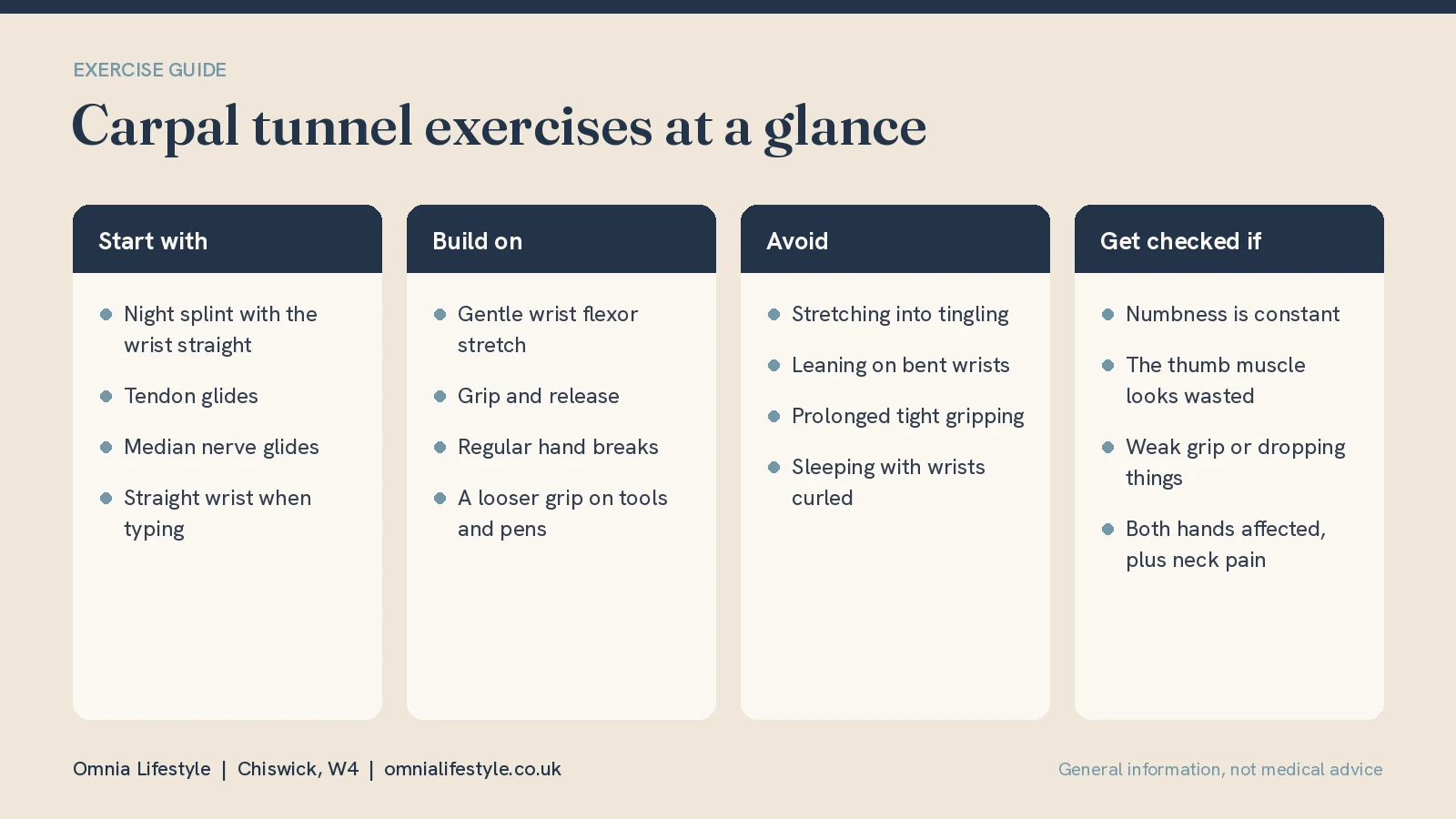


Carpal tunnel syndrome causes tingling, numbness and pain in the hand, usually in the thumb, index and middle fingers, and often worst at night. It happens when the median nerve is squeezed as it passes through a narrow channel at the front of the wrist. Mild and moderate cases often improve with simple measures, and exercises can play a useful part alongside them.
This guide explains the exercises that help, how to use a wrist splint properly, what to avoid, and the signs that mean you should be assessed rather than wait.
What carpal tunnel syndrome is
The carpal tunnel is formed by the small bones of the wrist and a tough band of tissue across the front of them. The median nerve runs through it alongside the tendons that bend the fingers. When the space becomes crowded, for example through swelling of the tendon linings or fluid retention, pressure on the nerve rises and its signals are disrupted.
Typical symptoms are tingling, numbness or burning in the thumb, index finger, middle finger and half of the ring finger, often waking you at night and eased by shaking the hand. Some people notice a weaker grip or drop things. It is more common in women, between the ages of 40 and 60, during pregnancy, and in people with diabetes, an underactive thyroid or rheumatoid arthritis, and in work involving repeated forceful gripping or vibrating tools.
What the evidence supports
A night splint comes first. Wearing a wrist splint that holds the wrist straight overnight, for around four weeks or more, has the strongest evidence among the non-surgical options. The wrist naturally curls during sleep, which raises pressure in the tunnel, and the splint prevents this.
Exercises are a useful addition. Tendon and nerve gliding exercises aim to help the tendons and the nerve move freely through the tunnel. The research on them is limited and mixed, but they are low risk, and many people find they ease symptoms when combined with splinting and changes to how they use their hands.
Other options exist if these are not enough. A steroid injection can reduce symptoms for weeks to months, and surgery to release the tunnel is considered when symptoms are severe, persistent or causing weakness. Carpal tunnel syndrome that starts in pregnancy often improves after the baby is born.
A guide to intensity: exercises should feel easy and should not bring on tingling. If they do, reduce the range of movement or stop that exercise.
Everyday changes that help
- Keep your wrist straight when typing, using a mouse or holding a phone, rather than bent up or down for long periods.
- Loosen your grip on pens, tools and steering wheels, and use thicker handles where you can.
- Take short breaks from repetitive hand tasks to shake out and stretch your hands.
- Avoid sleeping with your wrists curled under your pillow or chin. A night splint solves this.
- Limit vibrating tools and take regular breaks when you have to use them.
Exercises to start with
Tendon glides
Hold your hand up with the wrist straight and move slowly through five positions, holding each for three seconds:
- Straight hand, fingers pointing up.
- Hook fist, bending the top two joints of the fingers while keeping the knuckles straight.
- Full fist, with the thumb resting across the fingers.
- Tabletop, bending at the knuckles with the fingers kept straight.
- Straight fist, bending at the knuckles and middle joints so the fingertips rest on the base of the palm.
Repeat the sequence five to 10 times, three times a day.
Median nerve glide
Move slowly through these positions, holding each for three to five seconds, and stop at the first point where you feel tingling:
- Make a loose fist with your thumb outside the fingers and your wrist straight.
- Straighten your fingers and thumb, keeping the thumb beside the index finger.
- Bend your wrist back, keeping the fingers straight.
- Turn your palm to face you.
- Gently move your thumb out to the side.
Repeat five times, two or three times a day. The aim is gentle movement of the nerve, not a stretch.
Exercises to add as symptoms settle
Wrist flexor stretch
Hold your arm out in front with the palm facing up. Use the other hand to ease the wrist and fingers gently back until you feel a mild stretch in the forearm. Hold for 15 to 20 seconds and repeat three times. Keep it gentle and stop if it brings on tingling.
Grip and release
Squeeze a soft ball or rolled-up sock gently for three seconds, then open the hand fully and spread the fingers. Repeat 10 times. This keeps the hand strong without prolonged gripping.
What to avoid
- Forcing stretches into tingling or numbness. Pressing on an irritated nerve does not desensitise it.
- Leaning your weight on bent wrists, for example in some yoga positions, until symptoms have settled.
- Prolonged, tight gripping without breaks.
- Ignoring constant numbness. Symptoms that no longer come and go need assessment.
When to seek medical attention
Seek urgent medical attention if:
- Numbness or weakness came on suddenly after an injury to the wrist, or with rapid swelling
- Numbness or weakness affects the face, or an arm and leg on the same side
See your GP or a physiotherapist promptly if:
- Numbness is constant rather than coming and going
- The muscle at the base of your thumb looks flatter or wasted
- You are dropping things or your grip is noticeably weaker
- Symptoms affect both hands and you also have neck pain, unsteady walking or clumsiness
- Symptoms have not improved after several weeks of splinting and exercises
Long-term pressure on the nerve can cause lasting weakness and numbness, so persistent or worsening symptoms should not be left.
What an assessment adds
Several conditions mimic carpal tunnel syndrome, including a trapped nerve in the neck and problems with other nerves in the arm. Assessment confirms which nerve is involved and where, tests sensation and thumb strength, and checks for signs that need a GP referral for nerve conduction studies. It also looks at how you use your hands at work and at home, and sets a programme combining splinting, exercises and activity changes.
Frequently asked questions
How long do carpal tunnel exercises take to work?
Many people notice some improvement within four to six weeks when exercises are combined with a night splint. If there is no change after that, a review is worthwhile.
Do wrist splints help carpal tunnel?
Yes. A splint that keeps the wrist straight at night is one of the best-supported non-surgical treatments. Choose one that holds the wrist in a neutral position rather than bent back.
Can carpal tunnel syndrome go away on its own?
Mild cases sometimes do, especially when the cause is temporary, such as pregnancy. Persistent symptoms usually need active management.
Is typing bad for carpal tunnel?
Typing alone is not a strong cause, but long periods with the wrist bent can aggravate symptoms. Wrist position and regular breaks matter more than the activity itself.
Is it carpal tunnel or a trapped nerve in the neck?
They can feel similar. Neck-related symptoms often come with neck pain or affect different fingers. An assessment tells them apart.
Does acupuncture help carpal tunnel syndrome?
Some small trials suggest acupuncture may ease symptoms in mild to moderate cases, but the evidence is limited. It is best used alongside splinting and exercises.
Carpal tunnel assessment in Chiswick
Hand and wrist symptoms are assessed at Omnia Lifestyle in Chiswick, W4, close to Turnham Green station, on bus routes 94, E3 and 272. Limited parking is available on request when booking. Assessment confirms whether carpal tunnel syndrome is the cause and sets a plan to settle the symptoms.
Read more about carpal tunnel syndrome and neck and shoulder pain, see our guide to tennis elbow exercises, explore physiotherapy and acupuncture, or book an assessment.
This article is general information, not medical advice. If you have any of the warning signs listed above, seek medical attention.



.jpg)
.jpg)