


Book at our Chiswick clinic
Physiotherapy
A back spasm can stop you in your tracks. One moment you are lifting a bag or getting out of the car, the next your lower back locks tight and every movement hurts. Backache spasms and a pulled back muscle are among the most common reasons people struggle to work, sleep or even stand up straight, but most settle well with the right early care.
This guide explains what back spasms and back strain are, the symptoms to expect, how to fix lower back strain in the first few days, which medicines and remedies help, and the warning signs that need urgent medical attention.
Quick answer
Backache spasms are sudden, involuntary tightening of the back muscles, often after a pulled muscle or strain in the lower back. Most improve within a few days to six weeks. Keep moving gently rather than resting in bed, use heat or cold packs, and take anti-inflammatory painkillers such as ibuprofen if they are suitable for you. Gradually return to normal activity. Call 999 or go to A&E if you have numbness around your bottom or genitals, or problems controlling your bladder or bowels.
What are backache spasms?
A back spasm is a sudden, strong contraction of the muscles alongside the spine that does not release straight away. It can feel like a cramp, a tight knot or a band of pain across the lower back. Spasms are usually the body protecting an area that has been strained or irritated: the muscles clamp down to limit movement.
Common features of a back spasm include:
- Sudden, gripping pain, often in the lower back, that comes in waves
- Stiffness that makes it hard to bend, twist or straighten up
- Visible or palpable tightness in the muscles either side of the spine
- Pain that eases with gentle movement and returns with sudden actions such as coughing or sneezing
Spasms can be frightening, but on their own they are rarely a sign of serious damage.
Severe lower back strain and a pulled back muscle
A back strain is an overstretch or small tear in a muscle or tendon in the back. A sprain affects the ligaments that hold the spine together. In everyday use, people describe both as a pulled muscle in the lower back, and the treatment is very similar.
Strains range from mild to severe:
- Mild strain: aching and tightness, but you can carry on with most activities.
- Moderate strain: sharper pain, muscle spasm and difficulty bending or lifting.
- Severe lower back strain: intense pain and spasm that can make walking, sitting or getting out of bed very difficult for the first few days.
Even a severe acute lower back strain usually improves steadily. How intense the pain feels does not always match the size of the injury.
Muscle strain in the back: symptoms
Typical symptoms of a pulled back muscle include:
- Pain in the lower back that started during or soon after a particular movement, or the next morning
- Back muscles that hurt to touch and feel tender or knotted
- Pain that is worse when you move, bend or lift and better when you rest in a comfortable position
- Muscle spasm and stiffness, especially after sitting still or first thing in the morning
- Aching that may spread into the buttocks
Muscle pain usually stays in the back and buttocks. Pain that travels below the knee, with pins and needles or numbness in the leg, suggests an irritated nerve rather than a simple muscle strain and is worth having assessed.
What causes back muscle pain and spasms?
- Lifting, especially while twisting, or lifting something heavier than you are used to
- Sudden awkward movements, such as reaching, catching a fall or bending quickly
- Unaccustomed activity, such as gardening, moving house or a new exercise class
- Long periods of sitting or staying in one position, which leave muscles stiff and less ready for load
- Stress, poor sleep and tiredness, which increase muscle tension and sensitivity to pain
Sometimes a spasm starts with no obvious trigger. This is common and does not mean something serious has happened. If your back muscles hurt all over after exercise, rather than in one spot after a movement, see why your muscles ache for other causes of general muscle soreness.
How to fix lower back strain: the first few days
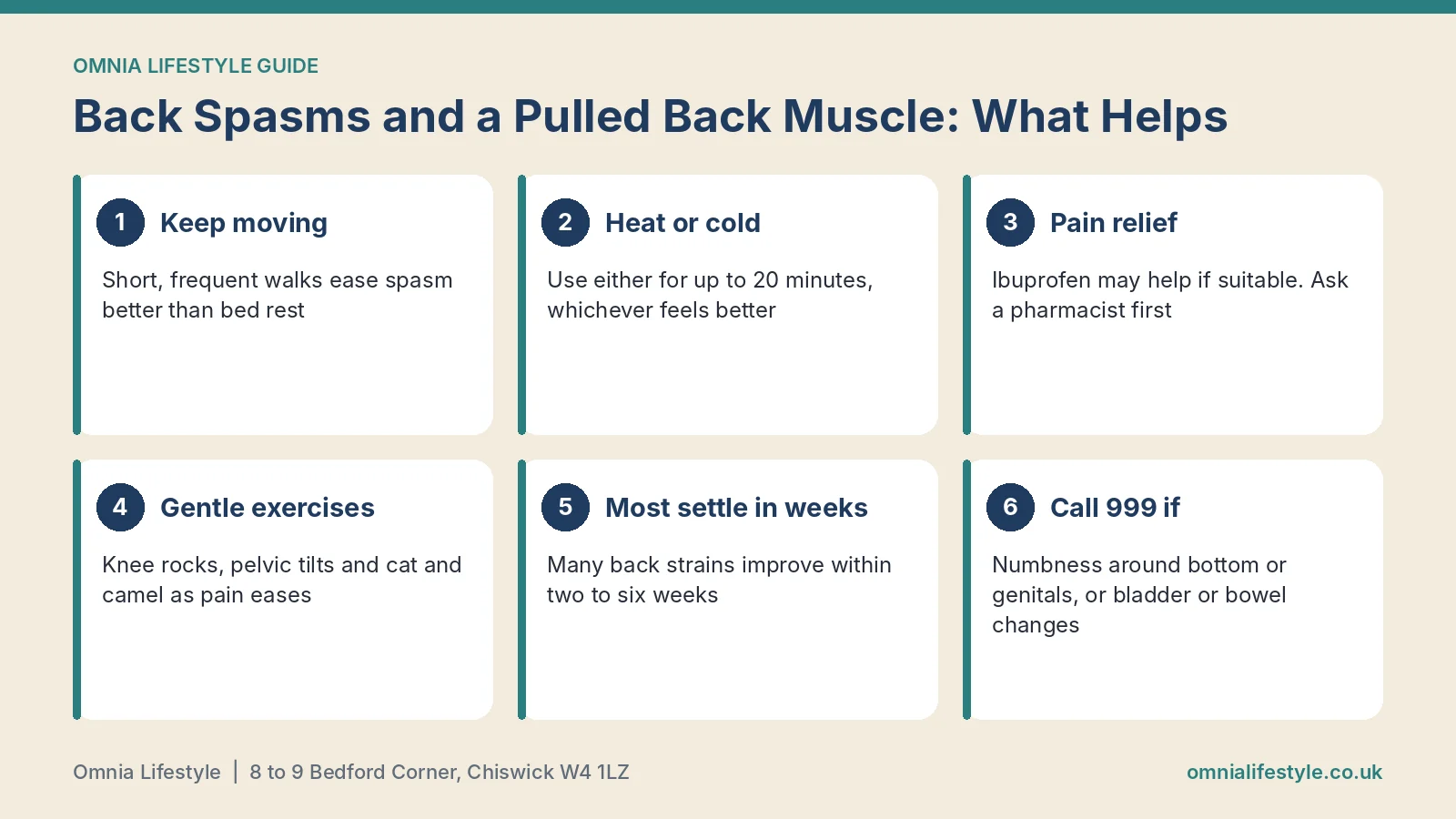
The most helpful thing you can do is keep moving within comfort. Bed rest for more than a day or so tends to make stiffness and spasm worse and can slow recovery.
- Stay as active as you can. Walk short distances often, even if slowly. Change position regularly rather than sitting for long periods.
- Find comfortable positions. Lying on your side with a pillow between your knees, or on your back with a pillow under your knees, often eases spasm.
- Use heat or cold. A heat pack or warm bath can relax tight muscles. A cold pack wrapped in a towel may help in the first day or two. Use whichever feels better, for up to 20 minutes at a time.
- Move gently. Small, pain-free movements such as knee rocking while lying on your back help muscles relax.
- Avoid heavy lifting and sudden twisting for a few days, but do not avoid all movement.
- Return to normal activities gradually, including work, as soon as you can. Staying at work or returning early is linked with better recovery for most people.
Back muscle pain relief: medicines and remedies
Best medicine for back strain
NHS guidance suggests anti-inflammatory painkillers, such as ibuprofen, for back pain if they are suitable for you. They are not right for everyone, for example if you have stomach ulcers, asthma that is made worse by anti-inflammatories, kidney or heart problems, or are pregnant. Ask a pharmacist which medicine is safe for you.
- Paracetamol on its own is not usually recommended for back pain, as it is unlikely to help much.
- Anti-inflammatory gels rubbed into the painful area may help some people.
- If over-the-counter options are not enough, a GP may suggest other medicines. A short course of a muscle relaxant is occasionally prescribed for severe spasm, but these are not suitable for long-term use.
- Stronger painkillers, such as codeine, are not usually recommended for back pain because of side effects and the risk of dependence.
Back muscle pain remedy options at home
- Heat: a hot water bottle, heat pad or warm shower before moving
- Gentle walking several times a day
- Good sleep, using pillows to support a comfortable position
For a wider look at non-drug approaches, see how to relieve back pain naturally.
Exercises for sore back muscles
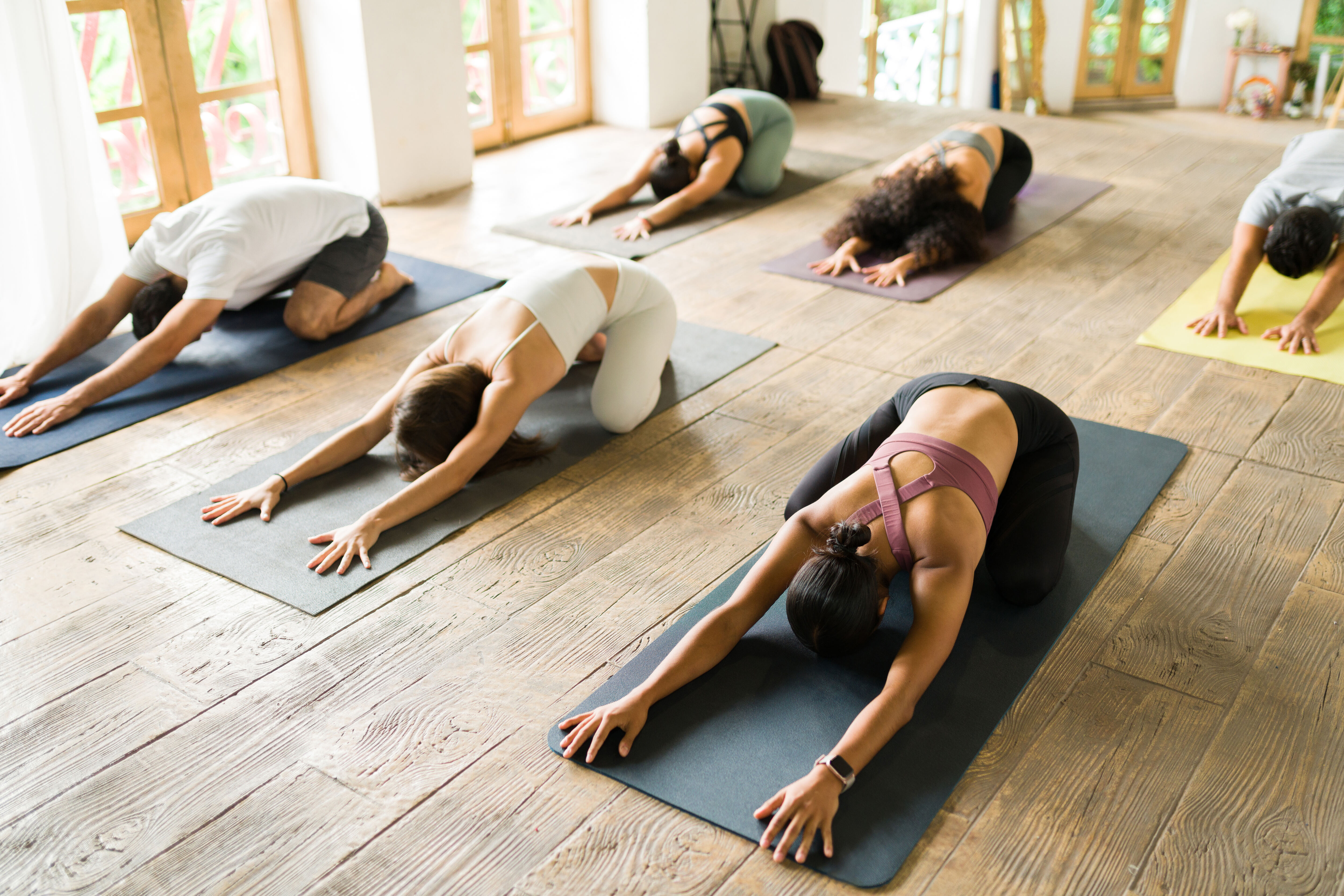
Once the worst of the spasm has eased, usually within a few days, gentle exercise helps restore movement and confidence. Start with small, comfortable movements:
- Knee rocks: lie on your back with knees bent and let them sway slowly from side to side.
- Knee to chest: lying on your back, bring one knee gently towards your chest and hold for a few breaths.
- Pelvic tilts: gently flatten and arch your lower back against the floor.
- Cat and camel: on hands and knees, slowly round and then gently arch your back.
Some discomfort is normal, but stop any movement that causes sharp or increasing pain. Our lower back pain exercises guide covers a full progression from early movement to strengthening.
When to seek medical help
Call 999 or go to A&E if you have back pain with:
- Numbness or tingling around your bottom or genitals
- Difficulty peeing, or loss of control of your bladder or bowels
- Weakness or numbness in both legs, or unsteadiness on your feet that is getting worse
- Chest pain, or pain between the shoulder blades with breathlessness
- Pain that started after a serious accident, such as a car crash or a bad fall
These can be signs of cauda equina syndrome or another serious problem that needs emergency treatment.
Get urgent advice from your GP or NHS 111 if:
- You have a high temperature or feel generally unwell with back pain
- You have unexplained weight loss, or a history of cancer
- The pain is severe and constant, is worse at night, or does not ease with rest
- You have pain, numbness or weakness travelling down one leg that is getting worse
See your GP if:
- Back pain has not improved after a few weeks of home treatment
- It is stopping you doing day-to-day activities or work
- Spasms keep coming back
- You are struggling to cope with the pain
Back muscle aches treatment: how a physiotherapist helps
Most back strains get better on their own, but assessment can help if pain is severe, slow to settle or keeps returning. A physiotherapist will:
- Ask how the pain started and check for any warning signs that need medical review
- Assess how your back moves and whether a nerve is involved
- Explain what is happening and what to expect
- Use hands-on techniques, such as soft tissue work and gentle mobilisation, to ease spasm in the short term
- Set an exercise plan to restore movement, then build strength and confidence for lifting, sport and work
NICE guidance recommends exercise as the core treatment for low back pain, with manual therapy and massage used alongside exercise rather than on their own. Massage, such as sports massage or deep tissue massage, can ease tight, sore back muscles while you rebuild movement.
Preventing back spasms from coming back
- Keep regularly active, with a mix of walking and strength exercise
- Build up gradually when starting new sports or heavy jobs such as gardening
- Lift with the load close to your body and avoid twisting while lifting
- Break up long periods of sitting with short walks or stretches
Frequently asked questions
How long does a back strain take to heal?
Most pulled back muscles improve noticeably within a few days and settle within two to six weeks. Severe strains can take longer, and staying gently active usually speeds recovery.
My strained lower back means I cannot walk. What should I do?
Severe spasm can make walking very hard for a day or two. Rest in a comfortable position, use heat and suitable painkillers, and try short, slow walks as soon as you can. If you also have numbness around your bottom or genitals, leg weakness or bladder or bowel problems, call 999.
Is heat or ice better for back spasms?
Heat is often more soothing for muscle spasm, while a cold pack can help in the first day or two. Use whichever gives you more relief.
Why do my back muscles hurt without an injury?
Sore back muscles can come from long periods of sitting, unaccustomed exercise, stress or poor sleep. Pain that is persistent, worsening or comes with feeling unwell should be checked by a GP.
Can a pulled muscle in the lower back cause thigh pain?
Back strain can refer an ache into the buttock and upper thigh. Pain below the knee, or with numbness or pins and needles, is more likely to come from a nerve and should be assessed.
Back spasm treatment in Chiswick
Back spasms and back strains are assessed and treated at Omnia Lifestyle, 8 to 9 Bedford Corner, The Avenue, Chiswick W4 1LZ, close to Turnham Green station, on bus routes 94, E3 and 272. Limited parking is available on request when booking. Assessment checks for warning signs, identifies what is driving the pain and sets a practical plan to get you moving again.
Read more about back pain causes and recovery, see our lower back pain exercises, explore physiotherapy in Chiswick, or book an assessment.
This article is general information, not medical advice. If you have any of the warning signs listed above, seek medical attention.
Ready to book?
Physiotherapy

.jpg)
.jpg)