

Book at our Chiswick clinic
Acupuncture
Hay fever affects around one in five people in the UK, and for many it makes spring and summer miserable. There is no permanent cure, but the right combination of treatments, started at the right time, controls symptoms well for most people.
This guide explains how to stop hay fever symptoms fast, how to reduce your exposure to pollen, when each pollen season runs, and the longer-term options.
Quick answer
The quickest way to relieve hay fever is a non-drowsy antihistamine tablet, which works within about an hour, combined with a daily steroid nasal spray for a blocked nose and antihistamine eye drops for itchy eyes. Reducing your pollen exposure, by keeping windows closed, wearing wraparound sunglasses and showering after being outdoors, helps these treatments work better. If pharmacy treatments do not control your symptoms, see your GP.
How to stop hay fever symptoms fast
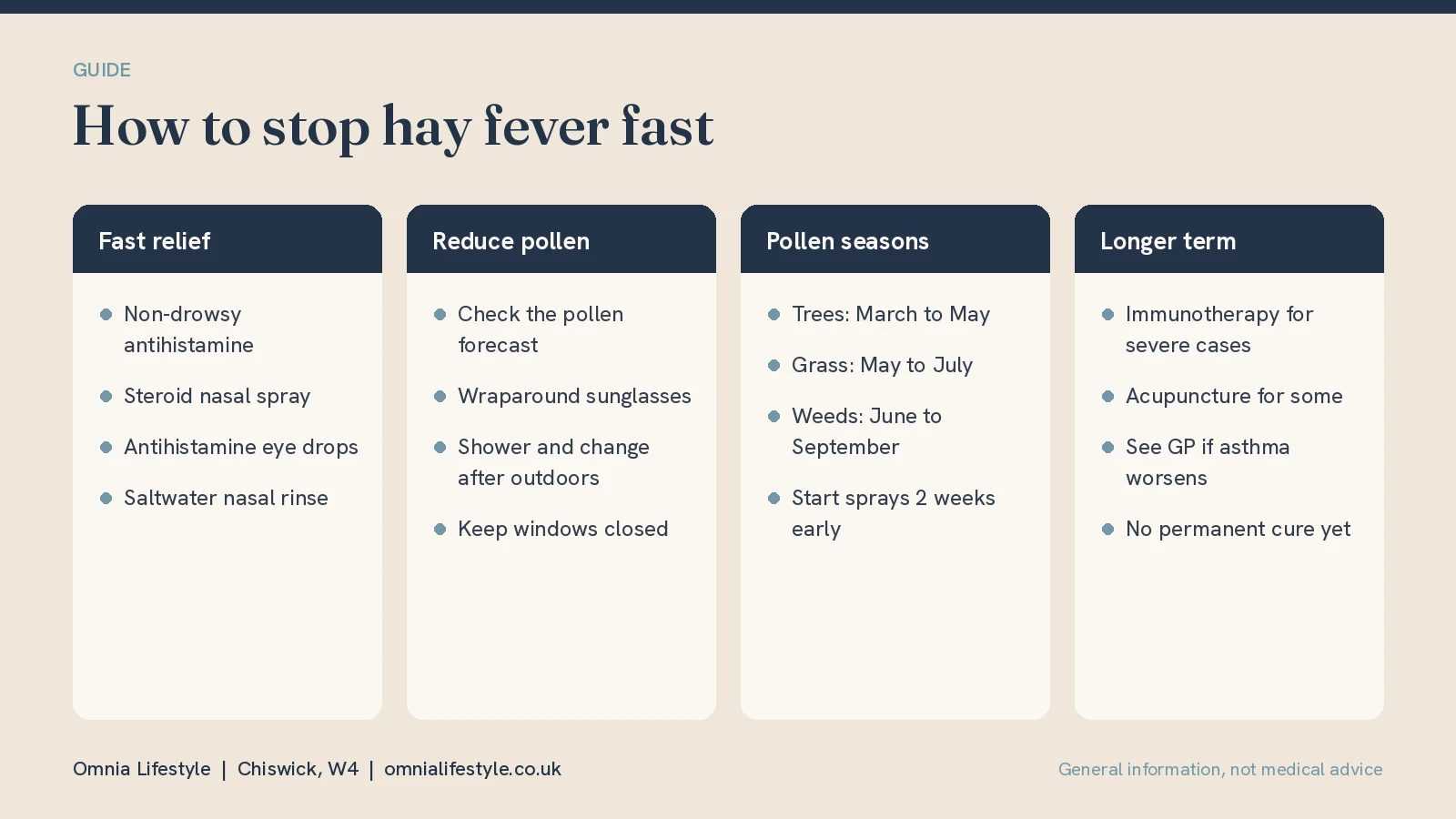
- Non-drowsy antihistamine tablets, such as cetirizine, loratadine or fexofenadine, ease sneezing, itching and a runny nose within an hour or so
- A steroid nasal spray is the most effective treatment for a blocked nose, but takes a few days to work fully, so use it every day
- Antihistamine eye drops for itchy, watery eyes
- A saltwater nasal rinse to wash pollen out of the nose
A pharmacist can advise which suits you, especially if you are pregnant, take other medicines or have other conditions.
How to reduce pollen exposure
- Check the pollen forecast and plan outdoor activities for lower-pollen days
- Wear wraparound sunglasses
- Put a little petroleum jelly around your nostrils to trap pollen
- Shower and change your clothes after being outdoors
- Keep windows closed, especially in the early morning and evening
- Avoid drying washing outside on high-pollen days
- Vacuum regularly and dust with a damp cloth
How to ease hay fever at night
- Shower and wash your hair before bed to remove pollen
- Keep bedroom windows closed, as pollen levels are often high in the evening
- Change pillowcases often, and do not dry bedding outside on high-pollen days
- Use your steroid nasal spray every day as directed, and try a saltwater rinse before bed if your nose feels blocked
- Keep pets that have been outdoors out of the bedroom, as pollen collects in their fur
If a blocked nose is still disturbing your sleep, ask a pharmacist or your GP whether your treatment needs changing.
When is hay fever season?
- Tree pollen: roughly late March to mid May
- Grass pollen: mid May to July, the most common cause of hay fever
- Weed pollen: late June to September
Start your nasal spray about two weeks before your usual season begins for the best effect.
How long does hay fever last?
Symptoms last as long as you are exposed to the pollen you react to, which can be several weeks or months each year. Some people find hay fever improves as they get older, while others develop it for the first time as adults.
Can hay fever be cured permanently?
There is no permanent cure. For people with severe hay fever that does not respond to standard treatment, allergen immunotherapy, given as tablets or injections over around three years by a specialist, can reduce symptoms for years afterwards.
Some people also try acupuncture, and some trials suggest a modest benefit for hay fever symptoms alongside usual treatment.
When to see your GP
- Symptoms are not controlled with pharmacy treatments
- Hay fever is making your asthma worse, such as wheezing or breathlessness
- You are pregnant or breastfeeding and need advice on treatment
- Symptoms are affecting your sleep, work or exams
Call 999 if you are struggling to breathe, or if you have asthma symptoms that are not helped by your reliever inhaler.
Frequently asked questions
What is the fastest way to stop hay fever?
A non-drowsy antihistamine tablet works within an hour or so. Add a steroid nasal spray daily for a blocked nose.
What is the most effective hay fever relief?
For most people, combining treatments works best: a daily steroid nasal spray, a non-drowsy antihistamine tablet, and eye drops if needed, ideally started before the pollen season and used every day rather than only on bad days. If these do not control severe symptoms, a GP can refer you to a specialist to discuss immunotherapy.
Does a nasal spray help hay fever?
Yes. A steroid nasal spray is the most effective treatment for a blocked, runny nose caused by hay fever, but it needs to be used every day and takes a few days to work fully. Decongestant nasal sprays clear a blocked nose quickly but should only be used for up to a week, because longer use can make congestion worse.
Can you develop hay fever as an adult?
Yes. Hay fever can start at any age, including in adulthood.
Does local honey help hay fever?
There is no good evidence that local honey prevents or treats hay fever.
Can hay fever make you feel tired?
Yes. Disrupted sleep from a blocked nose and the allergic reaction itself can both cause tiredness.
Hay fever support in Chiswick
Omnia Lifestyle offers acupuncture alongside your usual hay fever treatment at our clinic at 8 to 9 Bedford Corner, The Avenue, Chiswick W4 1LZ, close to Turnham Green station, on bus routes 94, E3 and 272. Limited parking is available on request when booking. A 60-minute acupuncture session is £80.
If you are not sure what is triggering your symptoms, an allergy blood test (from £179) is available without a GP referral. An Omnia practitioner goes through the results with you, and you receive a written report to share with your GP.
Read more about hay fever and asthma, explore acupuncture, or book an appointment.
This article is general information, not medical advice. If you have breathing difficulties, seek medical attention.
Ready to book?
Acupuncture