


Book at our Chiswick clinic
Acupuncture
Chinese herbal medicine is one of the main branches of Traditional Chinese Medicine (TCM), alongside acupuncture and Tui Na massage. Practitioners combine several herbs into a formula chosen for your individual pattern of symptoms. Interest in it is growing in the UK, but so are questions about safety, evidence and where to find someone qualified.
This guide explains how Chinese herbal medicine works, what the evidence says for common uses such as eczema and weight loss, possible side effects and how to use it safely.
Quick answer
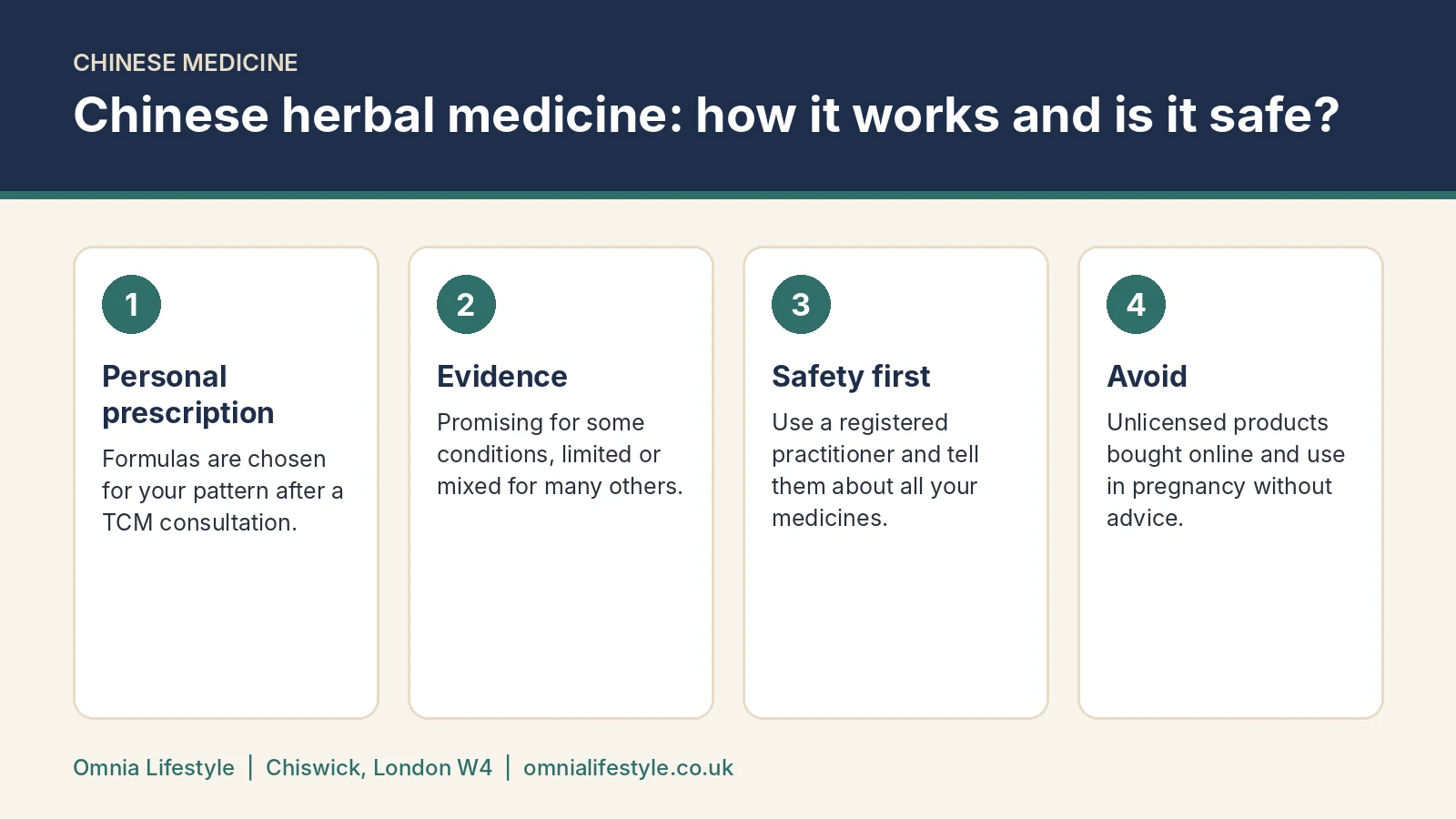
Chinese herbal medicine uses combinations of plant-based ingredients, given as granules, tablets, teas or creams, prescribed after a TCM consultation. Evidence is promising for some conditions and limited or mixed for many others. It can be used safely when prescribed by a qualified, registered practitioner who knows about all your medicines. Avoid unlicensed products bought online, and do not use herbs in pregnancy, while breastfeeding or alongside prescription medicines without professional advice.
What is Chinese herbal medicine?
Chinese herbal medicine has been developed over more than 2,000 years. The traditional materia medica (the reference list of medicinal substances) includes hundreds of herbs, roots, barks, seeds and flowers, such as ginseng, liquorice root, ginger, astragalus and chrysanthemum. Herbs are rarely used alone. Instead, a practitioner combines several into a formula, with each herb chosen to work on part of your pattern and to balance the others.
How does Chinese herbal medicine work?
In TCM theory, symptoms come from imbalances in the body, described in terms such as heat, cold, damp, deficiency and stagnation. Your practitioner identifies your pattern from your symptoms, history, tongue and pulse, then prescribes a formula to correct it. Two people with the same diagnosis, for example eczema, may receive quite different formulas.
From a scientific point of view, many herbs contain active compounds with measurable effects on inflammation, the immune system, hormones or digestion. This is also why they need to be treated with the same respect as any other medicine.
How herbs are taken
- Granules or powders dissolved in hot water, the most common form in UK clinics.
- Tablets or capsules of classic formulas.
- Raw herbs boiled into a tea (decoction) at home.
- Creams, washes and ointments for skin conditions.
Prescriptions are usually given for one or two weeks at a time and reviewed as symptoms change.
What is Chinese herbal medicine used for?
- Skin conditions such as eczema, acne and psoriasis
- Digestive problems such as bloating and irritable bowel symptoms
- Menstrual problems, menopause symptoms and fertility support, see acupuncture for menopause
- Sleep, stress and fatigue
- Colds, coughs and recurring infections
Chinese herbal medicine for eczema
Eczema is one of the most common reasons people try Chinese herbal medicine. Some small trials, including early UK studies in children, reported improvement in itching and redness. However, a Cochrane review found there was not enough reliable evidence to confirm that Chinese herbs are effective for eczema, and some participants had changes in liver blood tests. If you try herbs for eczema, keep using your emollients and prescribed treatments, tell your GP and choose a practitioner who will monitor you, including blood tests where appropriate.
Chinese herbal medicine for weight loss
There is no good evidence that Chinese herbs cause meaningful weight loss on their own. Slimming products sold online as Chinese herbal remedies have been found to contain hidden pharmaceutical drugs that are banned in the UK. A practitioner may support digestion, appetite or energy as part of a wider plan, but weight management still depends on diet, activity, sleep and, where needed, medical support. See Kapha diet plan for a food-based approach from Ayurveda.
Is Chinese herbal medicine safe?
Used correctly, under a qualified practitioner, serious problems are uncommon. But herbs are not automatically safe because they are natural. The main risks are:
- Interactions with medicines such as blood thinners (for example warfarin), immunosuppressants, diabetes and blood pressure medicines, and the contraceptive pill.
- Liver or kidney problems, which are rare but have been reported with some herbs. Aristolochia, which can damage the kidneys, is banned in the UK.
- Contamination with heavy metals, pesticides or undeclared drugs in poor-quality, unlicensed products.
- Allergic reactions.
Chinese herbal medicine side effects
Most people have no side effects. When they occur, they are usually mild, such as an upset stomach, loose stools, bloating or a bitter taste. Stop taking the herbs and contact your practitioner if you feel unwell. Seek medical help straight away for yellowing of the skin or eyes, dark urine, a rash with swelling, or difficulty breathing.
How to use Chinese herbs safely
- Choose a qualified practitioner who belongs to a professional body such as the Association of Traditional Chinese Medicine (ATCM) or the Register of Chinese Herbal Medicine (RCHM).
- Tell them about every medicine, supplement and health condition you have, and tell your GP you are taking herbs.
- Do not take herbs in pregnancy or while breastfeeding unless your practitioner and doctor agree.
- Avoid unlicensed products bought online. Over-the-counter herbal medicines in the UK should carry a THR (Traditional Herbal Registration) mark.
- Reputable practitioners do not use endangered species.
- Keep to the prescribed dose and attend reviews.
Chinese herbal medicine doctor near me: what to look for
Herbal practitioners are not statutorily regulated in the UK, so membership of a professional body is important. Look for formal training in Chinese medicine, professional insurance, a full consultation before any prescription, clear written instructions and willingness to work alongside your GP. Ask where the herbs come from and how they are quality tested.
Frequently asked questions
How long does Chinese herbal medicine take to work?
For acute problems such as a cold, people may notice changes within days. For long-standing conditions, a course of several weeks to a few months is common, with regular reviews.
Can I take Chinese herbs with my prescription medicines?
Sometimes, but only after your practitioner has checked for interactions. Never stop a prescribed medicine without speaking to your doctor.
Do Chinese herbs taste bad?
Many formulas taste bitter or earthy. Granules and tablets are easier to take than raw herb teas.
Can Chinese herbal medicine be combined with acupuncture?
Yes. Many TCM practitioners combine the two, as they are based on the same diagnosis.
Chinese herbal medicine in Chiswick, London
Our Traditional Chinese Medicine doctors at Omnia Lifestyle are members of professional bodies including the ATCM and the British Acupuncture Council. Every prescription follows a full consultation and a check of your medicines and health history. We are at 8 to 9 Bedford Corner, The Avenue, Chiswick W4 1LZ, close to Turnham Green station, on bus routes 94, E3 and 272. Limited parking is available on request when booking.
- TCM consultation, 30 minutes: £50
- Chinese herbal medicine, 7-day prescription: £50
Explore acupuncture and Chinese medicine and Tui Na massage, or book an appointment.
This article is general information, not medical advice. Always speak to your GP or pharmacist before taking herbal medicines alongside other treatment, and seek medical attention if you have any of the warning signs listed above.
Ready to book?
Acupuncture


.jpg)
.jpg)