


Book at our Chiswick clinic
Acupuncture
Lying awake at 3am, mind racing, watching the clock: insomnia is exhausting, and it affects around a third of adults in the UK at some point. If sleep tablets are not for you, or you have tried everything else, you may be wondering whether acupuncture for insomnia is worth trying.
This guide explains what the research shows, how acupuncture may help sleep and anxiety, which points are used, how many sessions you need, and how it fits alongside the treatments with the strongest evidence.
Quick answer
Acupuncture may improve sleep quality for some people with insomnia, and many people find sessions calming. Research reviews suggest benefit compared with no treatment and, in some trials, compared with sham acupuncture, but the overall quality of evidence is low to moderate. CBT for insomnia (CBT-I) and good sleep habits remain first-line treatment, and acupuncture is best used alongside them. A typical course is one session a week for four to six weeks, then a review. At Omnia in Chiswick a 60-minute session is £80.

Does acupuncture help insomnia? What the research shows
A number of systematic reviews have looked at acupuncture for insomnia. They generally report improvements in sleep quality scores, such as the Pittsburgh Sleep Quality Index, compared with no treatment or usual care, and some trials show benefit over sham acupuncture. However, many studies are small, short and from a limited number of countries, so researchers rate the evidence as low to moderate quality.
In plain terms: acupuncture is a reasonable option to try for sleep, it is low risk when done by a trained practitioner, and many people find it helps them feel calmer. It is not a guaranteed cure, and it works best as part of a wider plan. NICE does not currently include acupuncture in its insomnia recommendations, which focus on sleep hygiene and CBT-I.
How acupuncture may help sleep
- It settles the stress response. Many people with insomnia are stuck in a state of alertness. Acupuncture appears to shift the nervous system towards rest, and most people find sessions deeply relaxing.
- It may influence sleep chemistry. Some studies suggest changes in melatonin and other neurotransmitters involved in sleep, although this research is early.
- It eases physical discomfort. Pain, tension headaches and restless muscles keep many people awake. Treating these can make sleep easier.
- It gives you a regular, calm hour. For people whose minds will not switch off, the session itself is a chance to reset.
Acupuncture for insomnia and anxiety
Insomnia and anxiety often feed each other: worry keeps you awake, and poor sleep makes anxiety worse. Acupuncture is commonly used for both together. Research on acupuncture for anxiety shows similar patterns to sleep, with promising but limited evidence. If anxiety is a big part of your sleep problem, talking therapy is the most effective treatment, and acupuncture can sit alongside it. See can acupuncture help anxiety and how to cope with anxiety.
Which acupuncture points are used for insomnia?
Your practitioner chooses points for your pattern of sleep problems, for example difficulty falling asleep, waking at night or waking too early. Commonly used points include Shenmen (HT7) on the wrist crease, Anmian behind the ear, Yintang between the eyebrows, Sanyinjiao (SP6) on the lower leg and Neiguan (PC6) on the inner forearm. In Traditional Chinese Medicine, your pulse, tongue, digestion and stress levels also help shape the plan.
How many sessions do you need?
Most people start with one session a week for four to six weeks. Keep a simple sleep diary during this time: when you go to bed, how long it takes to fall asleep, how often you wake and how rested you feel. If your sleep is improving, sessions are spaced out. If there is no change after around six sessions, it is reasonable to stop and focus on other approaches.
What else helps insomnia
- CBT for insomnia (CBT-I). The most effective long-term treatment, available through the NHS, apps and private therapists.
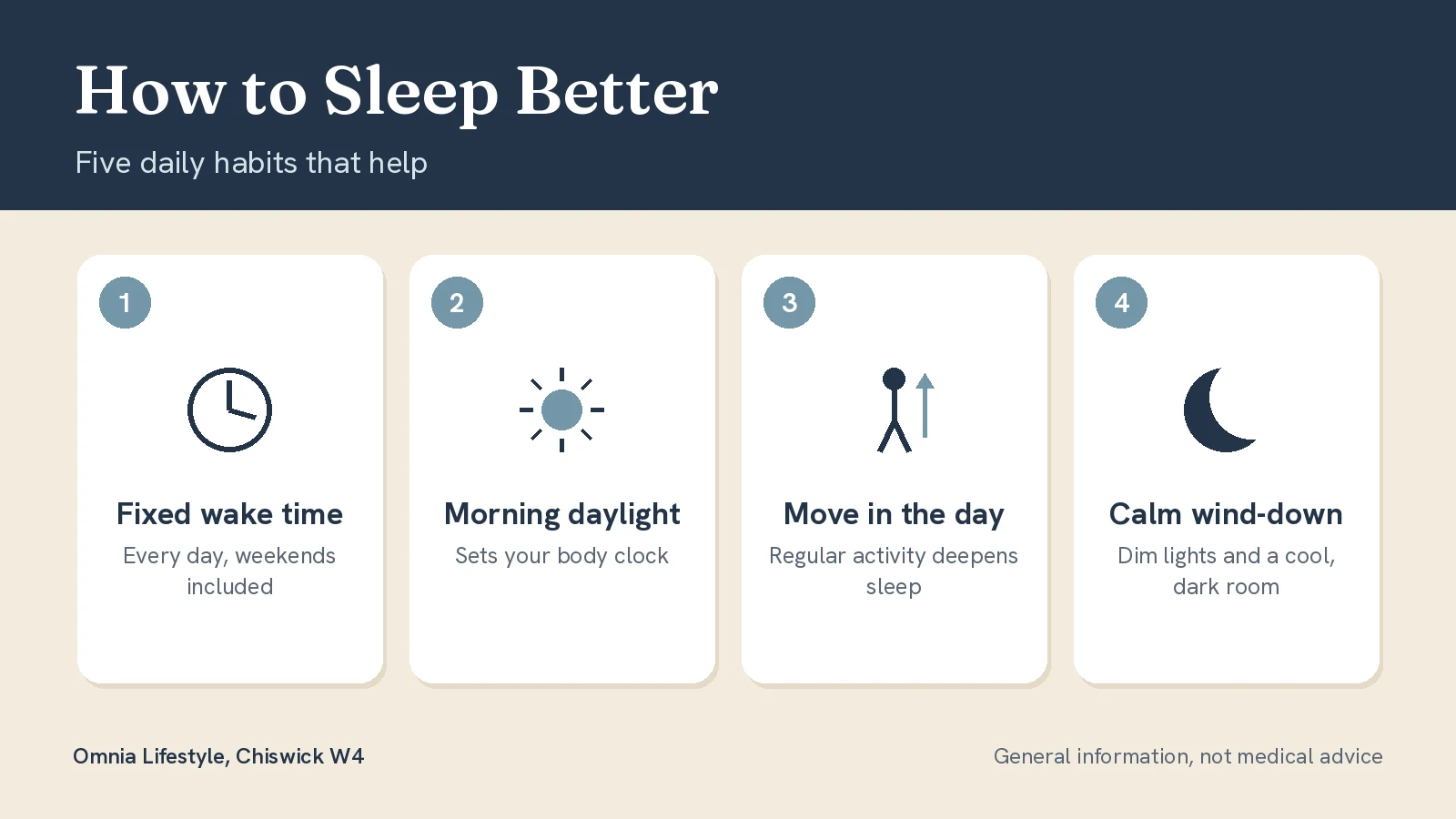
- A consistent wake time, even after a poor night.
- Getting out of bed if you have been awake for around 20 minutes, and returning when sleepy.
- Less caffeine after midday and less alcohol, which fragments sleep.
- Morning daylight and regular exercise, which strengthen your body clock.
For more, read what is insomnia, why you might not be able to sleep and five daily habits that improve sleep.
Acupuncture for insomnia in pregnancy
Sleep often becomes difficult in pregnancy. Acupuncture can be used in pregnancy by an experienced practitioner, but some points are avoided, so always tell your practitioner you are pregnant. See acupuncture in pregnancy.
When to see your GP
- Insomnia has lasted more than a few weeks and is affecting your daily life
- You snore loudly, stop breathing or gasp at night, which can be signs of sleep apnoea
- You feel low, hopeless or anxious most of the time
- You have restless legs, night sweats or pain that wakes you
- You are falling asleep during the day, especially when driving
If you feel unable to keep yourself safe, call 999 or Samaritans on 116 123, day or night.
Frequently asked questions
Will I sleep better after the first session?
Some people sleep well the night after a session, often because they feel relaxed. Lasting change usually takes several weeks.
Can acupuncture replace sleeping tablets?
Do not stop prescribed medication without talking to your GP. Acupuncture can be used alongside medication, and some people find it helps them reduce their reliance on it with medical support.
Is acupuncture for sleep problems safe?
Yes, when performed by a trained practitioner using single-use sterile needles. Mild tiredness or small bruises are the most common side effects.
What do reviews say about acupuncture for insomnia?
Many people describe feeling calmer and sleeping more deeply, while others notice little change. A sleep diary is the best way to judge your own response.
Acupuncture for insomnia in London
Acupuncture for insomnia and sleep problems is available at Omnia Lifestyle, 8 to 9 Bedford Corner, The Avenue, Chiswick W4 1LZ, close to Turnham Green station, on bus routes 94, E3 and 272. Limited parking is available on request when booking. Our doctor-led Traditional Chinese Medicine team sees patients from Chiswick, Hammersmith, Ealing, Acton and across London.
Read more about poor sleep and insomnia and stress and anxiety, explore acupuncture in London and Shirodhara for sleep, or book an appointment.
This article is general information, not medical advice. If you have any of the warning signs listed above, speak to your GP.
Ready to book?
Acupuncture



.jpg)
.jpg)