




Tension-type headaches are the most common kind of headache. They are often called stress headaches, because stress, tiredness and tight neck and shoulder muscles so often set them off. They are uncomfortable and draining but rarely serious, and there is a lot you can do both to ease one now and to have fewer in future.
This guide explains what a tension headache feels like, how to relieve it quickly, how to use painkillers safely and how to stop tension headaches coming back.
Quick answer
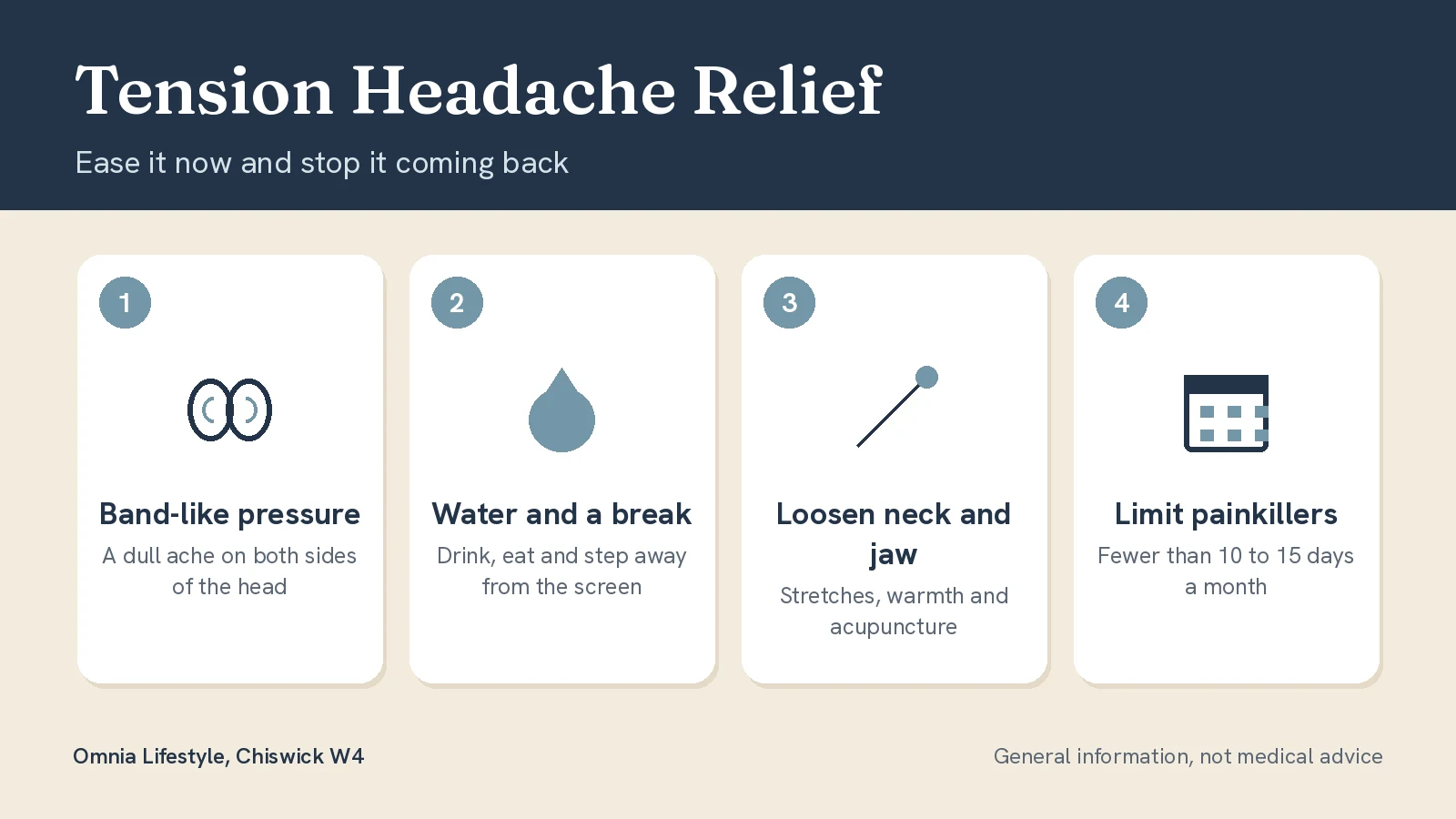
To relieve a tension headache, drink a glass of water, eat if you have skipped a meal, step away from screens, get some fresh air and gently stretch your neck and shoulders. Warmth on the neck, a massage and relaxing your jaw often help. Paracetamol, ibuprofen or aspirin can be taken occasionally, but using them on many days a month can cause more headaches. If tension headaches are frequent, regular sleep, screen breaks, exercise, treating neck tension and, for some people, a course of acupuncture can reduce how often they happen.
What does a tension or stress headache feel like?
- A dull, pressing or tight ache, often described as a band around the head
- Pain on both sides of the head, across the forehead, temples or the back of the head
- Tight, tender muscles in the neck, shoulders or scalp
- Mild to moderate pain that usually lets you carry on with your day
- No vomiting, and usually no strong sensitivity to light or sound
Throbbing, one-sided pain with nausea or light sensitivity is more typical of migraine. For the differences and other headache types, see what causes headaches.
How to relieve a tension headache now
- Drink water and eat. Dehydration and low blood sugar are common triggers.
- Take a screen break. Look into the distance, blink and move away from the desk for ten minutes.
- Get fresh air and move. A short, gentle walk often eases tension.
- Apply warmth. A warm pack or shower on the neck and shoulders relaxes tight muscles. Some people prefer a cool flannel on the forehead.
- Massage. Gently rub the temples, the base of the skull and the tops of the shoulders.
- Relax your jaw. Let your teeth part and your tongue rest on the floor of your mouth.
- Breathe slowly. Breathe in for four and out for six for a few minutes to calm the stress response.
- Rest in a quiet room if you can, and avoid alcohol until the headache has gone.
Gentle stretches for tension headaches
- Chin tucks. Sit tall and gently draw your chin straight back, as if making a double chin. Hold for five seconds and repeat ten times.
- Side neck stretch. Tilt your ear towards your shoulder until you feel a gentle stretch. Hold for 20 to 30 seconds each side.
- Shoulder rolls. Roll your shoulders slowly backwards ten times, then let them drop.
- Upper back opener. Clasp your hands behind your head, keep your elbows wide and gently lift your chest.
Stretches should feel comfortable. Stop if they make your pain worse or cause pins and needles. For more, see our neck pain exercises.
Using painkillers safely
Paracetamol, ibuprofen or aspirin can help a tension headache, especially if taken early. Aspirin should not be given to anyone under 16, and ibuprofen is not suitable for everyone, so check with a pharmacist if you have stomach, kidney, heart or asthma problems or are pregnant. Codeine-based painkillers are not recommended for tension headaches.
Taking simple painkillers on 15 or more days a month, or codeine-based painkillers on 10 or more days a month, can cause medication overuse headache, a daily headache that keeps itself going. If you find yourself reaching for painkillers most days, speak to your GP.
How to stop tension headaches coming back
Tension-type headaches on fewer than 15 days a month are called episodic. Headaches on 15 or more days a month for more than three months are called chronic tension-type headache and deserve a proper plan.
- Keep a headache diary for a few weeks, noting sleep, food, drink, stress, screen time and painkillers
- Keep regular sleep, meals and fluids
- Set up your desk so your screen is at eye level, and take a break every 30 to 45 minutes
- Exercise regularly, including strength work for the neck and upper back
- Manage stress with relaxation, yoga, tai chi or talking to someone
- Check your eyes, as uncorrected eyesight can contribute
- Address teeth grinding and jaw clenching. See easing TMJ jaw pain
NICE guidance says a course of up to ten acupuncture sessions over five to eight weeks can be considered to prevent chronic tension-type headache. Physiotherapy and manual therapy can help where neck and shoulder tension are part of the picture. For frequent headaches, your GP may also discuss a preventive medicine such as low-dose amitriptyline.
When to seek medical help
Call 999 if you have:
- A sudden, severe headache that peaks within about five minutes, often described as the worst headache ever
- A headache with weakness, numbness, drooping of the face, slurred speech, confusion or loss of vision
- A headache with fever, a stiff neck and a rash, or a fit
- A headache after a head injury with vomiting, drowsiness or confusion
Get same-day medical advice, from your GP or NHS 111, if:
- You are over 50 and have a new headache with scalp tenderness or jaw pain when chewing
- You have a headache with a painful red eye and blurred vision
- You are pregnant and have a severe headache with vision problems or sudden swelling of the face, hands or feet
See your GP if:
- Headaches are frequent, getting worse or have changed in character
- A headache is worse when you cough, strain or lie down, or wakes you from sleep
- You are taking painkillers for headaches on many days each month
Frequently asked questions
How long does a tension headache last?
A tension headache can last from 30 minutes to several days, although most settle within a few hours. See how long headaches last.
Can massage help a tension headache?
Yes. Massage of the neck, shoulders and scalp often eases tension headaches, and many people find regular massage reduces how often they happen.
Can you have tension headaches every day?
Yes. Chronic tension-type headache happens on 15 or more days a month. Painkiller overuse is a common reason, so speak to your GP.
Does stress cause tension headaches?
Stress is one of the most common triggers, through muscle tension, poor sleep and skipped meals. See how to cope with anxiety.
Headache support in Chiswick
Headaches are assessed and treated at Omnia Lifestyle in Chiswick, W4, close to Turnham Green station, on bus routes 94, E3 and 272. Limited parking is available on request when booking. We take a full headache history, check your neck, jaw and shoulders, and may combine acupuncture, physiotherapy and manual therapy, asking you to keep your GP involved where medication is part of your care.
Read more about headaches and migraines, see what causes headaches, how long headaches last and acupuncture for neck pain, explore acupuncture, physiotherapy, manual therapy and yoga, or book an appointment.
This article is general information, not medical advice. If you have any of the warning signs listed above, seek medical attention.


.jpg)
.jpg)