



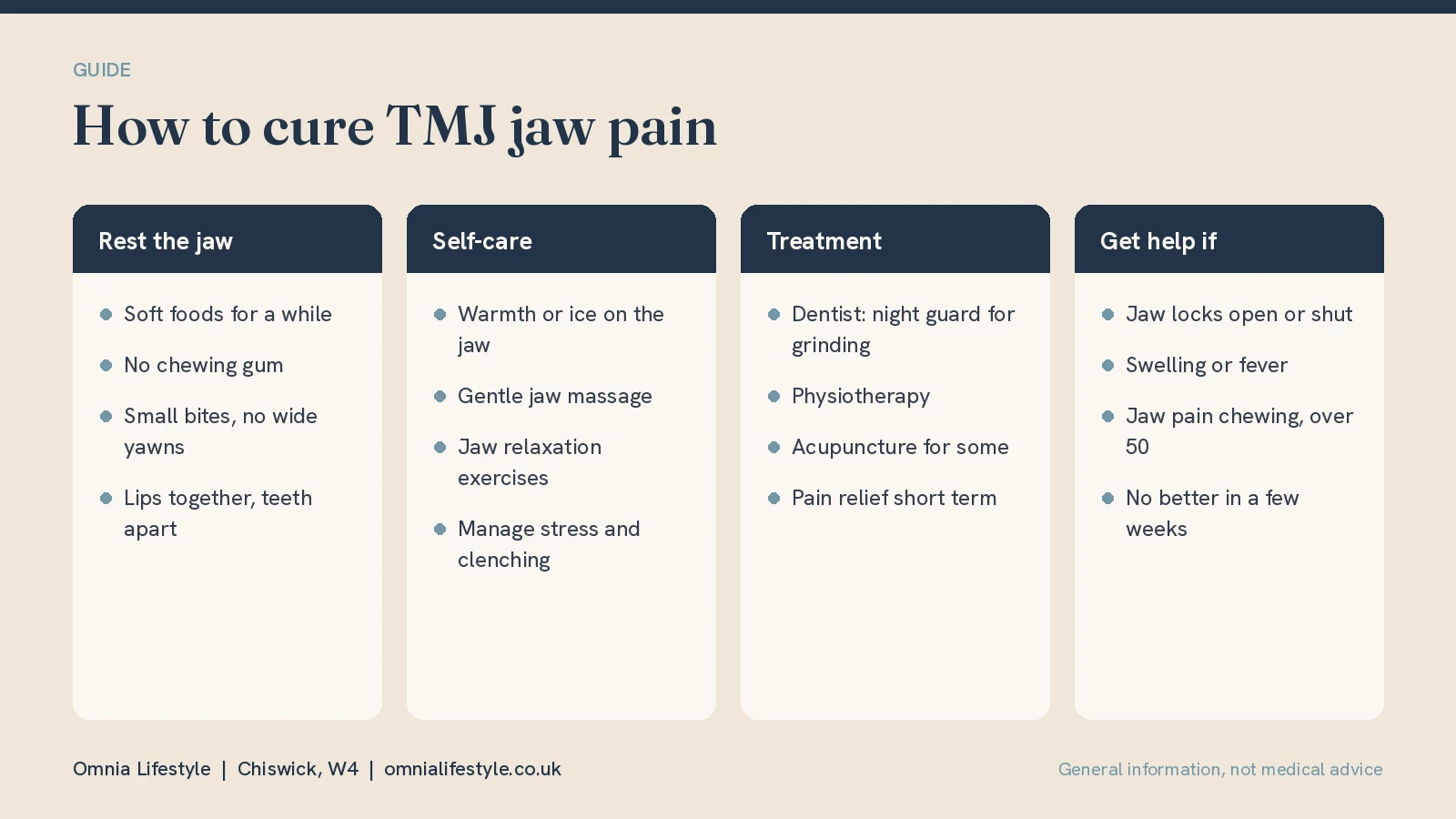


Jaw pain from the temporomandibular joint, usually called TMJ or TMD, is very common. It can cause jaw ache, clicking, headaches and difficulty chewing. The reassuring news is that most TMJ problems settle with simple self-care, and many people never have lasting trouble.
This guide explains how to ease TMJ pain, what treatments help, whether it can be cured for good, and when to get it checked.
What TMJ is
The temporomandibular joints connect your lower jaw to your skull, just in front of each ear. TMJ problems can come from the jaw muscles, the joint itself or both. Common contributors include clenching or grinding the teeth, stress, an injury to the jaw and habits such as chewing gum or biting nails.
Common symptoms
- Pain in the jaw, face, temple or around the ear
- Clicking, popping or grating when you open your mouth
- Difficulty opening the mouth fully
- Headaches, often at the temples
- A tired or aching jaw, especially in the morning
How to ease TMJ pain at home
Rest the jaw
- Eat softer foods for a while and cut food into small pieces
- Avoid chewing gum, tough or chewy foods and biting nails
- Support your jaw when yawning to avoid opening too wide
- Keep your teeth apart and your lips together when resting
Soothe the muscles
- Apply warmth, or ice wrapped in a cloth, to the jaw for 10 to 15 minutes
- Gently massage the jaw muscles in small circles
- Try gentle jaw relaxation exercises, opening and closing slowly within comfort
Reduce clenching
Many people clench their jaw without noticing, especially when stressed or concentrating. Checking in during the day, relaxing the jaw and managing stress can make a real difference.
Treatments that help
- A dental night guard from your dentist if you grind or clench at night
- Physiotherapy for jaw and neck muscle tension, posture and exercises
- Acupuncture, which some studies suggest can ease TMJ pain in the short term
- Pain relief for a short period, discussed with a pharmacist
- Psychological support where stress is a major driver
Injections and surgery are only considered for a small number of people with persistent problems.
Can TMJ be cured permanently?
Many TMJ problems settle completely within weeks or months with self-care. For some people, symptoms come and go, often flaring at times of stress. Managing clenching, stress and jaw habits is the best way to keep it from returning.
When to get help
- Your jaw locks open or shut
- There is swelling, fever or you feel unwell
- You are over 50 and have new jaw pain when chewing with headaches or vision changes, which needs same-day medical advice
- Pain is not improving after a few weeks of self-care
- Pain is affecting eating, sleeping or work
Face pain does not always come from the jaw. See what can be mistaken for trigeminal neuralgia.
Frequently asked questions
How long does TMJ take to heal?
Many cases improve within a few weeks to a few months with self-care.
What is the fastest way to relieve TMJ pain?
Rest the jaw with softer food, apply warmth, gently massage the muscles and avoid clenching.
Does jaw clicking mean I have TMJ?
Painless clicking is common and usually harmless. Clicking with pain or locking is worth having checked.
Can stress cause TMJ?
Stress often leads to clenching and grinding, which are common drivers of TMJ pain.
TMJ jaw pain support in Chiswick
Jaw pain is assessed and treated at Omnia Lifestyle in Chiswick, W4, close to Turnham Green station, on bus routes 94, E3 and 272. Limited parking is available on request when booking.
Read more about TMJ jaw pain and neck and shoulder pain, explore acupuncture and physiotherapy, or book an appointment.
This article is general information, not medical advice. If you have any of the warning signs listed above, seek medical attention.



.jpg)
.jpg)