





Fibromyalgia can take a long time to diagnose. There is no single blood test or scan that shows it, symptoms vary from day to day, and several other conditions look similar. Many people see several doctors over months or years before they get an answer.
This guide explains how fibromyalgia is diagnosed in the UK, which tests are used to rule out other conditions, and how to prepare for your appointment so it is as useful as possible.
What doctors look for
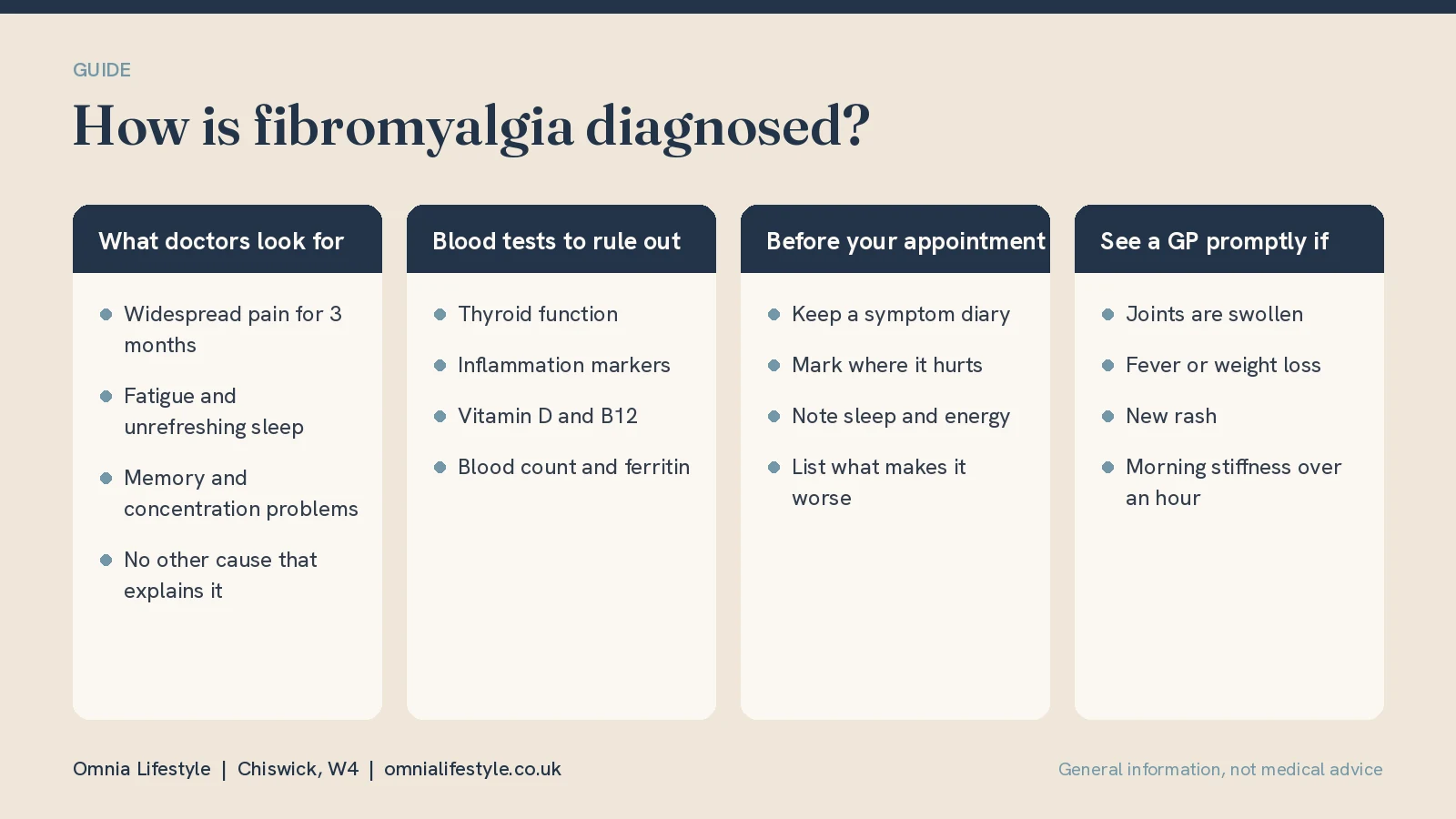
Fibromyalgia is diagnosed from your symptoms and an examination. Current diagnostic criteria focus on:
- Widespread pain affecting several areas of the body, on both sides and above and below the waist
- Symptoms lasting at least three months
- Fatigue and unrefreshing sleep, often with difficulty concentrating or remembering, sometimes called fibro fog
- No other condition that better explains the symptoms
Older approaches relied on counting tender points on the body. Today doctors look at the overall pattern of pain and other symptoms instead.
Who diagnoses fibromyalgia?
Many GPs make the diagnosis themselves. Others refer to a rheumatologist, particularly if another joint or autoimmune condition needs ruling out. There is no need to wait for a specialist before starting self-management, exercise and support.
Blood tests used to rule out other conditions
Blood tests do not show fibromyalgia, but they help exclude conditions that cause similar pain and tiredness. They commonly include:
- Full blood count and ferritin to check for anaemia and low iron
- Thyroid function, because an underactive thyroid causes aches and fatigue
- Inflammation markers (CRP and ESR), which are raised in inflammatory arthritis and polymyalgia rheumatica
- Vitamin D, calcium and B12
- Liver and kidney function
- Muscle enzymes (CK), especially if you take a statin
Antibody tests, such as rheumatoid factor or ANA, are usually only done if there are signs of an autoimmune condition, such as swollen joints or a rash.
Conditions that can look like fibromyalgia
- Underactive thyroid
- Rheumatoid arthritis, lupus and other autoimmune conditions
- Polymyalgia rheumatica, in people over 50
- Low vitamin D or iron
- ME/CFS, which overlaps with fibromyalgia but centres on exhaustion after exertion
- Sleep disorders such as sleep apnoea
- Side effects of medicines, including statins
Fibromyalgia can also occur alongside these conditions, so having one does not rule out the other.
How to prepare for your appointment
- Keep a symptom diary for two to four weeks: where it hurts, how bad it is, and how you slept.
- Mark the painful areas on a simple body outline.
- Note what makes it better or worse, such as activity, stress, weather or poor sleep.
- List other symptoms, such as headaches, bowel changes, low mood or sensitivity to noise and temperature.
- Bring a list of medicines and any previous test results.
After the diagnosis
A diagnosis is often a relief, because it explains symptoms and opens the door to the right support. UK guidance on chronic primary pain recommends exercise programmes, psychological therapies and, as an option, a course of acupuncture. Many common painkillers are not recommended for this type of pain, so it is worth discussing medication with your GP.
When to see a GP promptly
See a GP promptly rather than assuming it is fibromyalgia if you have swollen or warm joints, morning stiffness lasting more than an hour, fever, unexplained weight loss, a new rash, or new weakness. These can point to other conditions that need specific treatment.
Frequently asked questions
Is there a test for fibromyalgia?
No. Fibromyalgia is diagnosed from symptoms and examination, with blood tests used to rule out other causes.
How long does it take to get a diagnosis?
It varies widely. A clear symptom diary and a GP who is familiar with the condition can speed things up considerably.
Can fibromyalgia show on an MRI?
No. Scans are usually normal. They are only used when another problem needs ruling out.
Can I be diagnosed with fibromyalgia and another condition?
Yes. Fibromyalgia often occurs alongside osteoarthritis, rheumatoid arthritis, lupus and other long-term conditions.
Fibromyalgia support in Chiswick
Omnia Lifestyle supports people living with fibromyalgia alongside their GP or rheumatologist, at our clinic in Chiswick, W4, close to Turnham Green station, on bus routes 94, E3 and 272. Limited parking is available on request when booking. Blood tests can be arranged if some have not yet been done, and results are shared with your GP.
Read more about fibromyalgia and fatigue, see whether fibromyalgia is an autoimmune disease, explore blood tests, acupuncture and tai chi, or book an appointment.
This article is general information, not medical advice. If you have any of the warning signs listed above, seek medical attention.



.jpg)
.jpg)