



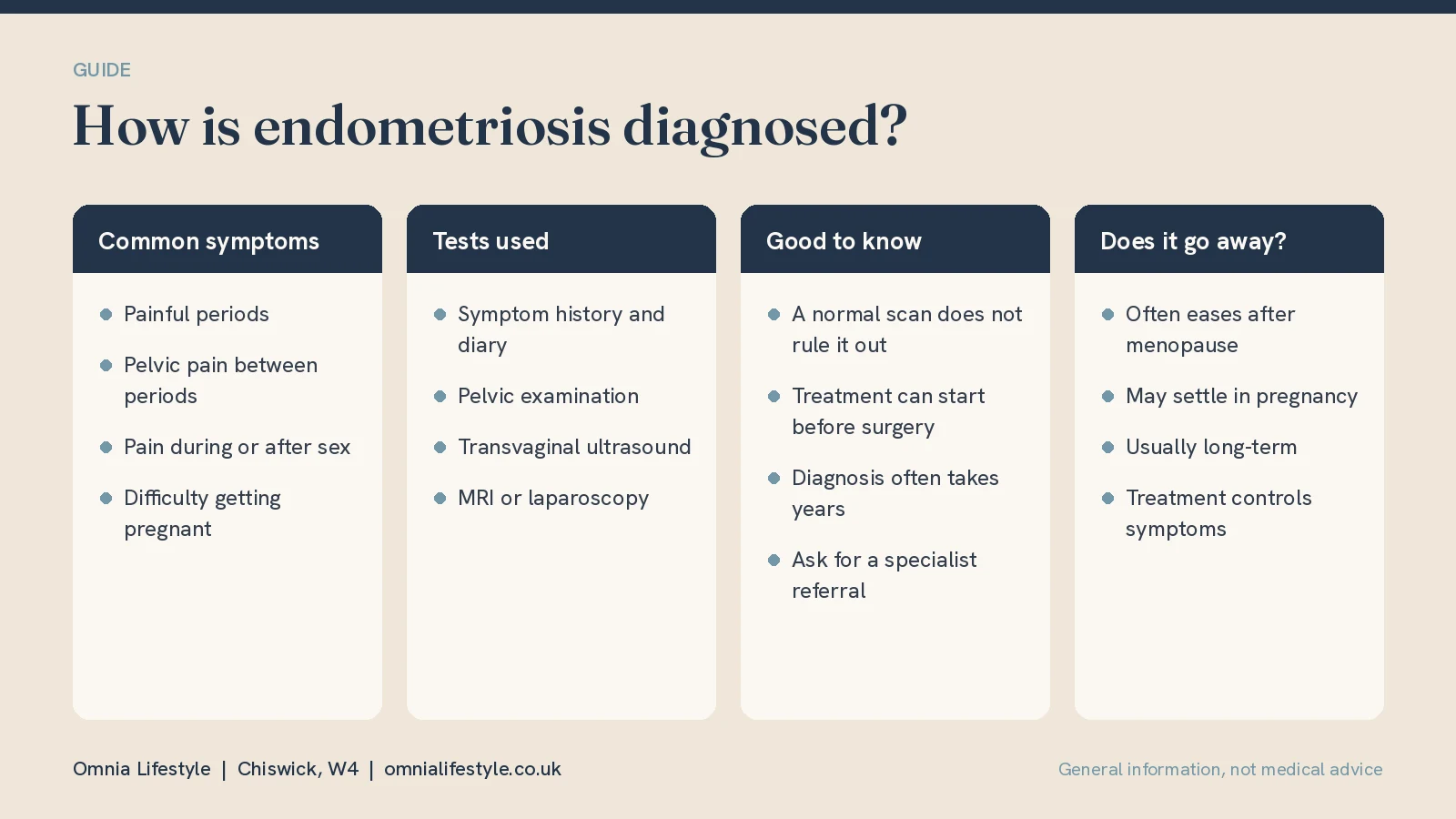


Endometriosis is a common condition in which tissue similar to the lining of the womb grows elsewhere, usually in the pelvis. It can cause severe pain and fertility problems, yet in the UK it takes on average around eight to nine years from first symptoms to a diagnosis. Knowing how diagnosis works helps you get answers sooner.
This guide explains the symptoms that should prompt a check, the tests used to diagnose endometriosis, and whether it goes away.
Symptoms of endometriosis
- Painful periods that stop you doing normal activities
- Pelvic pain at other times of the month
- Pain during or after sex
- Pain when passing urine or opening your bowels, especially during your period
- Difficulty getting pregnant
- Tiredness, bloating and heavy periods
Symptoms vary a lot, and the amount of pain does not always match how much endometriosis is present.
How endometriosis is diagnosed
Your symptom history
Diagnosis starts with a detailed history. A symptom diary covering pain, bleeding, bowel and bladder symptoms and how they relate to your cycle is one of the most useful things you can bring.
Examination
Your GP may offer an abdominal and pelvic examination, if you are comfortable with this, to check for tenderness or other findings.
Ultrasound
A transvaginal ultrasound can show endometriosis cysts on the ovaries and some deeper endometriosis. A normal scan does not rule endometriosis out, because smaller patches often do not show on scans.
MRI
An MRI scan may be used to look for deep endometriosis, often before surgery is planned.
Laparoscopy
Keyhole surgery, called a laparoscopy, lets a surgeon look directly inside the pelvis and take samples. It remains the most definitive way to diagnose endometriosis, and endometriosis can sometimes be treated at the same time.
Treatment can start before a firm diagnosis
UK guidance allows GPs to start pain relief and hormonal treatment when endometriosis is suspected, without waiting for surgery. If symptoms continue despite treatment, or if fertility is a concern, you can ask to be referred to a gynaecologist or a specialist endometriosis centre.
Tips to speed up diagnosis
- Keep a symptom diary for two to three cycles
- Describe how pain affects your daily life, work and sleep
- Mention bowel, bladder and pain during sex, not just period pain
- Ask directly whether endometriosis could be the cause
- Ask for a referral if treatment is not helping
Does endometriosis go away?
Endometriosis is usually a long-term condition. Symptoms often ease after menopause, when oestrogen levels fall, and some people find symptoms settle during pregnancy, although they may return afterwards. Treatments such as hormonal therapy and surgery can control symptoms well for many people.
When to seek help
- Period pain stops you working, studying or sleeping
- Painkillers do not help
- You have pain during sex or pain opening your bowels
- You have been trying to conceive for a year without success, or six months if you are over 35
- Seek urgent help for sudden severe pelvic pain, pain with fever, or pelvic pain if you might be pregnant
Frequently asked questions
Can a blood test diagnose endometriosis?
No. There is currently no reliable blood test for endometriosis.
Can a normal ultrasound rule out endometriosis?
No. Ultrasound can miss smaller patches, so symptoms still matter even if a scan is normal.
Can you have endometriosis without painful periods?
Yes. Some people have pelvic pain at other times, pain during sex or fertility problems as the main symptoms.
Is endometriosis the same as adenomyosis?
They are related but different. In adenomyosis, similar tissue grows into the muscle wall of the womb. The two often occur together.
Endometriosis support in Chiswick
Omnia Lifestyle supports people living with endometriosis alongside their GP and gynaecologist, at our clinic in Chiswick, W4, close to Turnham Green station, on bus routes 94, E3 and 272. Limited parking is available on request when booking.
Read more about endometriosis, period pain and fertility, see how to stop period pain fast and acupuncture and fertility, explore acupuncture, or book an appointment.
This article is general information, not medical advice. If you have any of the warning signs listed above, seek medical attention.



.jpg)
.jpg)