


Book at our Chiswick clinic
LPG Endermologie
Cellulite is one of the most common things people notice about their skin, and one of the most misunderstood. It is often blamed on toxins, poor circulation or being out of shape, yet slim, fit people have it too. Understanding what cellulite actually is, and what causes it, makes it much easier to see through the myths and choose what is worth doing.
This guide explains what cellulite means, what it looks like, what causes it, why women get it far more often than men, why it tends to appear on the thighs and bottom, and when skin changes are worth showing to a GP.
Quick answer
Cellulite is the dimpled, orange-peel texture of skin most often seen on the thighs, bottom and hips. It happens when fat under the skin pushes up against the skin while fibrous bands that tether the skin to deeper tissue pull down. Its main causes are skin structure, hormones such as oestrogen, genes and age, with weight gain, fluid retention and low muscle tone making it more visible. It affects most women after puberty, is not a disease and is not caused by toxins.
What is cellulite? The meaning in plain English
Cellulite is a change in the surface of the skin, not a different type of fat. Under the skin, fat sits in small pockets separated by bands of connective tissue called septae. These bands run from the skin down to the muscle layer and hold everything in place. When the fat pockets bulge upwards and the bands stay tight, the skin is pulled into small dips between raised areas. That uneven, quilted look is what we call cellulite.
The word comes from French, where it was first used to describe this texture in the 1920s. Medically it is sometimes called gynoid lipodystrophy or simply described as a normal variation of skin. It is very common: most estimates suggest around eight or nine in ten women develop some cellulite after puberty.
What does cellulite look like?
Cellulite can range from barely visible to obvious dimpling. Clinicians sometimes describe it in grades:
- Mild: the skin looks smooth when you stand or lie down, but dimples appear when you pinch or squeeze it.
- Moderate: dimples are visible when you stand but mostly disappear when you lie down.
- More pronounced: dimpling and ridges are visible whether you are standing or lying down.
Lighting, posture, skin hydration and even the time of day change how cellulite looks, which is why it can seem worse in a changing room mirror than at home.
Cellulite is not cellulitis
The names are similar but the conditions are completely different. Cellulite is harmless. Cellulitis is a skin infection that makes an area of skin red or darker than usual, hot, swollen and painful, and it can make you feel unwell. Cellulitis needs prompt medical treatment, usually with antibiotics, so it is important not to confuse the two. The warning signs are listed further down this page.
What causes cellulite?
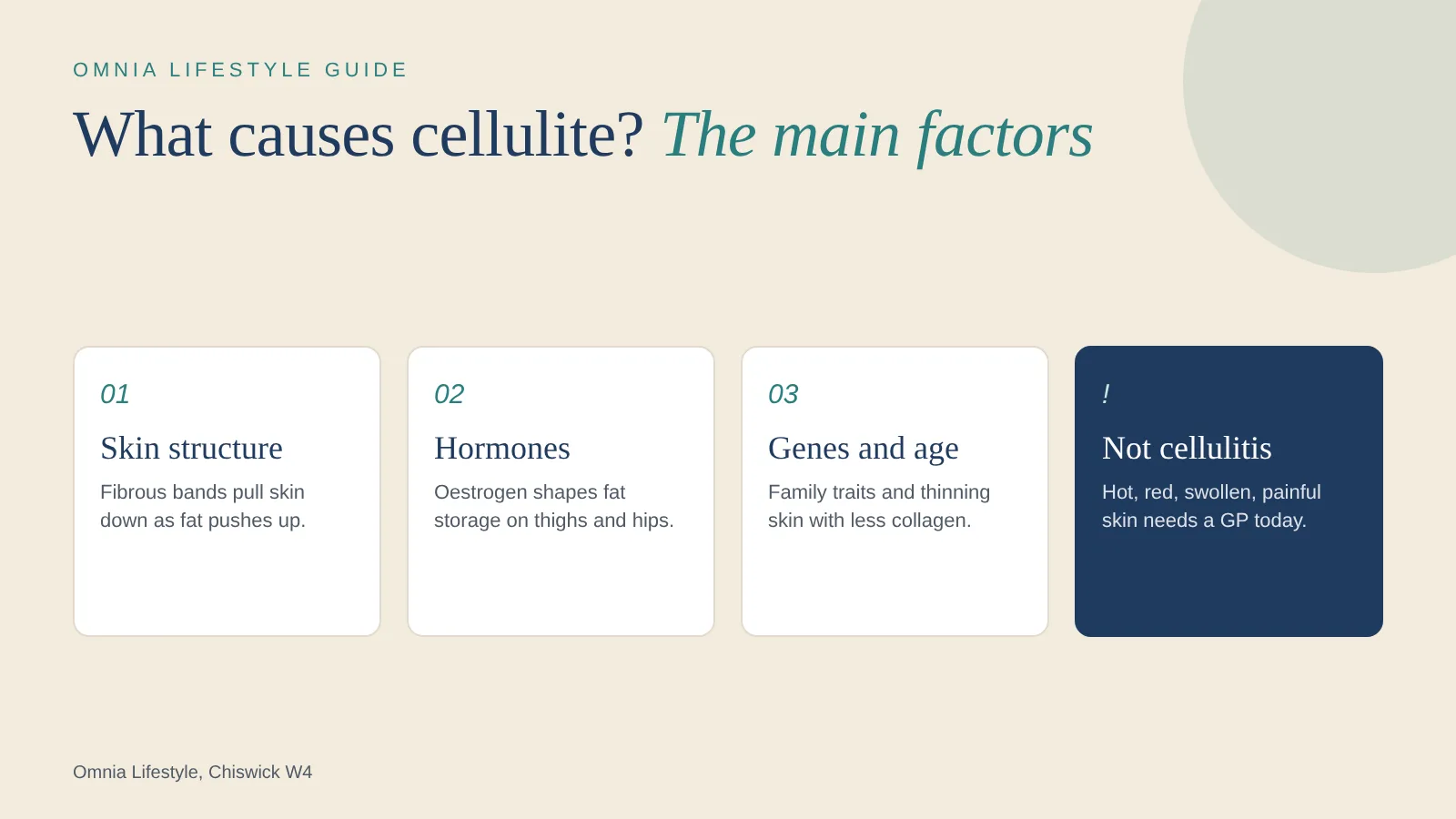
There is no single cause. Cellulite develops from a mix of factors you cannot change and factors that make it more or less noticeable.
1. Skin and connective tissue structure
This is the main reason cellulite forms. The way the fibrous bands are arranged, how thick the outer skin layer is and how tightly the skin is tethered all decide whether underlying fat shows through as dimples.
2. Hormones
Oestrogen influences where the body stores fat and how connective tissue behaves. This is why cellulite usually appears after puberty and can change during pregnancy and around the menopause, when hormone levels shift.
3. Genes
Cellulite often runs in families. Your genes influence your skin structure, where you store fat, your circulation and how your connective tissue ages, so some people are simply more prone to it than others.
4. Age and thinning skin
Collagen, the protein that keeps skin firm, gradually declines with age. As the skin becomes thinner and less elastic, the pattern beneath it shows through more easily, so cellulite can become more visible over time.
5. Body fat and weight changes
Gaining weight increases the size of the fat pockets pushing against the skin, which can make dimples deeper. Rapid weight loss can leave skin looser and also make cellulite more noticeable. Body fat is a factor, but it is not the whole story.
6. Fluid retention and circulation
Extra fluid in the tissues, for example after long periods of sitting or standing, in hot weather or before a period, can make the skin look puffier and the dimpling more obvious. This changes the appearance rather than causing cellulite in the first place.
7. Lifestyle factors
Low muscle tone in the thighs and bottom, long periods of inactivity and smoking, which damages collagen, can all make cellulite more visible. Tight clothing is often blamed, but there is no good evidence that it causes cellulite.
Why do women get cellulite and not men?
Men can get cellulite, but it is much less common. Studies of skin structure suggest three main reasons:
- Different band patterns: in women, the fibrous bands under the skin tend to run straight up and down, so fat pockets can bulge upwards between them. In men, the bands tend to run in a criss-cross pattern that holds fat more evenly.
- Thinner skin: the outer layers of skin are on average thinner in women, especially on the thighs, so changes underneath show through more easily.
- Hormones: oestrogen encourages fat storage on the hips, thighs and bottom, while testosterone does not.
When men do develop cellulite, it is sometimes linked to low testosterone or hormone treatment, so it can be worth mentioning to a GP if it appears suddenly alongside other changes.
What causes cellulite on the thighs and bottom?
The thighs, bottom and hips are where women naturally store more fat, partly because of oestrogen. Fat stored here tends to sit in larger pockets, the skin is relatively thin and the bands run vertically, so this is where cellulite shows first. Cellulite can also appear on the stomach and upper arms.
If both legs are getting larger out of proportion to the rest of your body, feel heavy or painful, or bruise easily, this may be lipoedema rather than cellulite. Lipoedema is a long-term condition that a GP should assess. Our guide to lipoedema vs lymphoedema explains the differences.
Why do some people have cellulite and others do not?
Two people of the same weight and fitness can have very different skin, because genes, hormones and skin structure matter more than body size. That is why slim people can have obvious cellulite while some people carrying more weight have very little. If you feel you suddenly have much more cellulite than before, common reasons include weight change, a period of inactivity, pregnancy, hormonal changes or simply noticing it more in certain light.
What foods cause cellulite?
No single food causes cellulite. A diet that leads to weight gain can make it more visible, and very salty food can increase fluid retention and puffiness for a while. A balanced diet with plenty of vegetables, fruit, whole grains, protein and water supports healthy skin and weight, but it will not remove cellulite on its own. Detox teas, cleanses and so-called anti-cellulite diets do not change the structure under the skin.
Is cellulite a sign of being unhealthy?
No. Cellulite is a normal feature of skin in most women and is not a sign of poor health, toxins or poor fitness. Treatment is a personal choice, not a medical need. If you would like to improve how it looks, the most useful steps are strength training for the legs and bottom, steady weight management where relevant and, if you want a treatment, approaches that work on the skin and tissue over a course. Our guide on how to get rid of cellulite sets out what genuinely helps and what does not.
When to see a GP about skin changes
Call 999 or go to A&E if you have:
- Red or darker, hot, swollen, painful skin with a high temperature, fast breathing or heartbeat, or confusion, which can be serious cellulitis or sepsis
- A swollen leg together with sudden breathlessness or chest pain
Get an urgent GP appointment or contact NHS 111 if:
- An area of skin becomes red or darker, hot, swollen and painful, which could be cellulitis
- One leg, especially the calf, becomes swollen, warm and painful, which can be a sign of a blood clot
See your GP if:
- Your legs are enlarging out of proportion to the rest of your body, ache or bruise easily
- You notice dimpling, puckering or an orange-peel texture on the skin of a breast, which should always be checked
- Swelling in your legs or ankles keeps coming back or does not go down overnight
How we help in Chiswick
At Omnia Lifestyle we are honest that no treatment removes cellulite permanently. What we can do is assess your skin and goals, measure progress objectively and offer treatments that improve how the skin looks and feels over a course, alongside advice on strength training and lifestyle.
- Cellulite treatment with LPG in Chiswick: treatment on the Cellu M6 Infinity mobilises the skin and the tissue beneath it. You can start with a 60-minute Discovery Session for £99, and our article on what the research says about LPG for cellulite explains what to expect.
- Manual lymphatic drainage: gentle massage to reduce fluid retention that makes dimpling more obvious, from £65 for 30 minutes.
- Body Ballancer compression therapy: from £45 for 30 minutes, often used alongside other treatments.
- Styku 3D body scan: £50, to track changes in shape and measurements rather than relying on photos alone.
Read more about cellulite reduction or book an appointment.
Frequently asked questions
Is cellulite just fat?
Not exactly. Cellulite involves normal fat, but the dimpled look comes from how that fat sits against the skin and the fibrous bands holding the skin down. That is why losing fat does not always remove cellulite.
At what age does cellulite start?
Cellulite most often appears after puberty, as hormones change where the body stores fat. It can become more noticeable during pregnancy, around the menopause and with age as skin loses collagen.
Does losing weight get rid of cellulite?
For people carrying extra weight, gradual weight loss often makes cellulite less noticeable. It rarely removes it completely, and very fast weight loss can leave skin looser and dimpling more obvious.
Can men get cellulite?
Yes, but much less often than women because of differences in skin structure and hormones. Cellulite that appears suddenly in a man is worth mentioning to a GP.
Does drinking water get rid of cellulite?
Staying well hydrated supports healthy skin, but drinking extra water beyond your normal needs will not remove cellulite.
Can cellulite go away on its own?
Cellulite does not usually disappear on its own, although it can look better or worse with changes in weight, fitness, fluid retention and skin condition.
Cellulite advice and treatment at Omnia Lifestyle
If you would like a straightforward conversation about your skin, what is realistic and which approach suits you, our team can help. Omnia Lifestyle is at 8 to 9 Bedford Corner, The Avenue, Chiswick W4 1LZ, close to Turnham Green station, on bus routes 94, E3 and 272. Limited parking is available on request when booking.
This article is general information, not medical advice. If you have any of the warning signs listed above, seek medical attention.
Ready to book?
LPG Endermologie



.jpg)
.jpg)