


Book at our Chiswick clinic
Manual Lymphatic Drainage
Swelling after liposuction is normal, and for many people it is the most frustrating part of recovery. It can make the treated area feel tight, firm and uncomfortable, and it hides the result for weeks. Manual lymphatic drainage, a very gentle specialist massage, is widely recommended by surgeons to help the body clear that fluid.
This guide explains why swelling happens, what lymphatic drainage can and cannot do after liposuction, when to start, how many sessions most people need, and the signs that mean you should contact your surgeon instead.
Quick answer
Lymphatic drainage after liposuction is a light, rhythmic massage that helps move excess fluid out of the treated area. Most surgeons who recommend it suggest starting a few days to two weeks after surgery, once they are happy with healing. A typical plan is one to three sessions a week for four to eight weeks, alongside your compression garment. It eases swelling and tightness but does not remove fat or replace your surgeon's aftercare.
Why swelling happens after liposuction
Liposuction disrupts the tissue under the skin, including many of the tiny lymph vessels that normally carry fluid away. Fluid collects in the treated area while those vessels recover, which is why swelling usually peaks in the first one to two weeks. It then settles gradually, although some swelling can persist for three months or more, and the final shape is often not clear until around three to six months.
Your lymphatic system has no pump of its own. It relies on movement, breathing and gentle pressure on the skin to move fluid, and after surgery all of those are reduced. That is where manual lymphatic drainage and compression come in.
What lymphatic drainage can help with
- Swelling and puffiness in the treated area and the areas that drain it
- Tightness and discomfort, which many people notice easing after a session
- Firmness and lumpiness as tissue heals, where gentle work can help the area soften over time
- Bruising, which may settle sooner as circulation improves
The research on lymphatic drainage after liposuction specifically is limited, and much of the support for it comes from clinical experience and surgeons' recommendations rather than large trials. It is best seen as a gentle, low-risk way to support recovery alongside your surgeon's plan, not as a treatment that changes the result of the operation.
What it will not do
Lymphatic drainage reduces fluid, not fat. It will not remove additional fat, correct uneven results or replace your compression garment. It also does not treat infection, blood clots or fluid collections, which need your surgical team. See lymphatic drainage before and after for honest expectations.
When to start
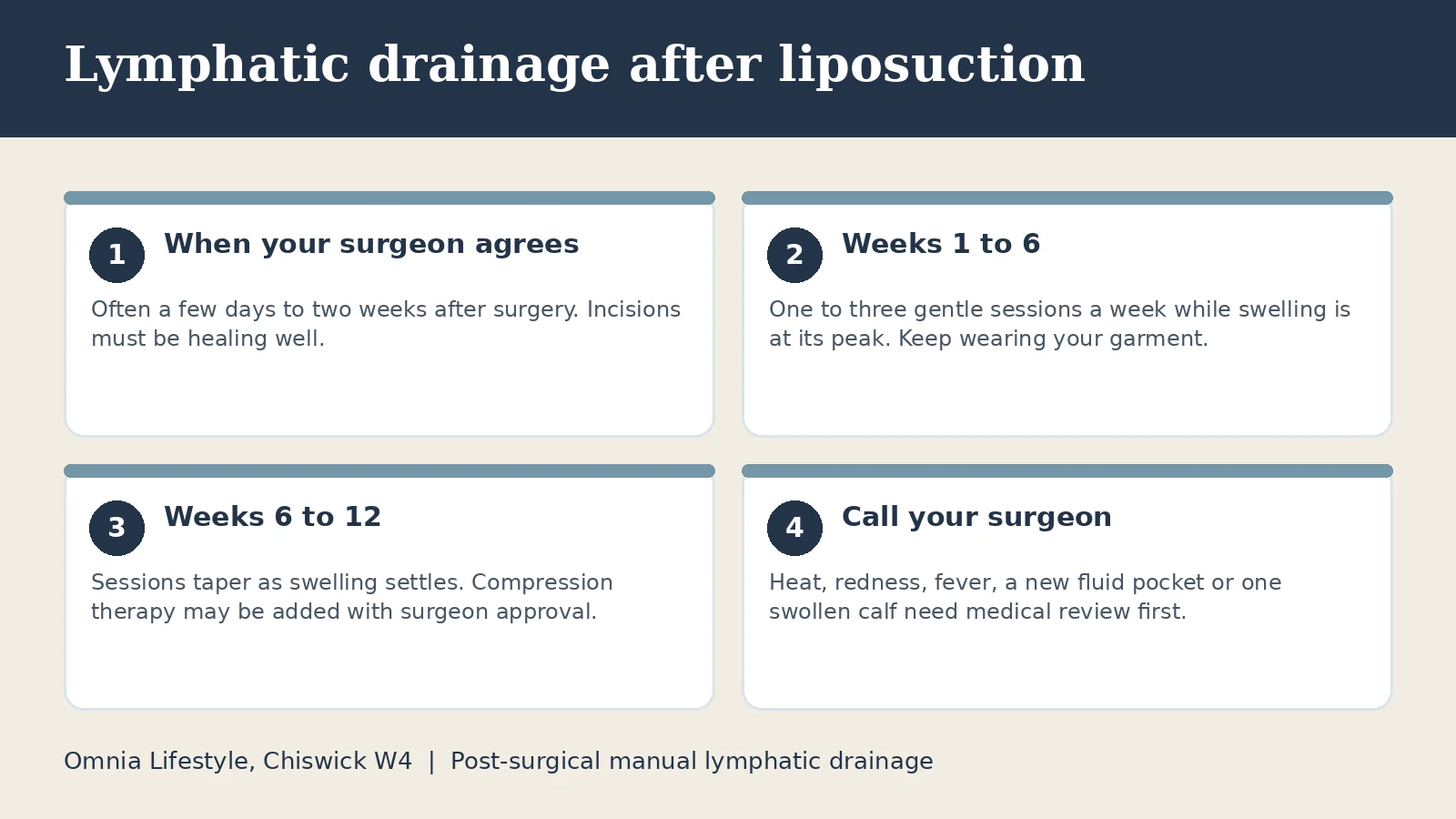
Always follow your surgeon's advice. Many surgeons suggest starting a few days to two weeks after surgery, and some prefer to wait longer for larger procedures. Before your first session we ask for your operation date, the areas treated and any instructions from your surgeon. Work is kept away from incisions until they have healed, and pressure is always light.
How many sessions?
- Weeks 1 to 6: one to three sessions a week while swelling is at its peak
- Weeks 6 to 12: sessions taper as swelling settles, often to once a week or fortnightly
- After three months: occasional sessions only if swelling persists
Larger procedures, or liposuction combined with a tummy tuck or other surgery, may need more. Your therapist adjusts the plan as you progress.
What a session is like
Lymphatic drainage feels nothing like a sports or deep tissue massage. The pressure is feather-light, because lymph vessels sit just beneath the skin. Your therapist first works on the main lymph node areas, such as the neck, armpits and groin, then uses slow, rhythmic strokes to guide fluid from the treated area towards them. Sessions usually last 60 minutes, most people find them very relaxing, and many need the toilet more often afterwards as fluid clears.
Compression garments and other treatments
Keep wearing your compression garment exactly as your surgeon advises. Lymphatic drainage works alongside it, not instead of it. Once your surgeon agrees, Body Ballancer compression therapy can be added to support drainage across whole limbs, and later in recovery LPG Endermologie is sometimes used to help smooth the tissue.
When to contact your surgeon instead
Do not book lymphatic drainage, and contact your surgical team, if you notice:
- Increasing redness, heat or pain around the treated area or an incision
- Fever or feeling generally unwell
- A new soft, fluid-filled swelling, which may be a seroma
- Discharge from a wound, or a wound that opens
Seek urgent medical help for swelling, pain or warmth in one calf, which can be a sign of a blood clot, and call 999 for chest pain or sudden breathlessness.
Helping yourself at home
- Walk little and often from the first days, as your surgeon allows
- Wear your compression garment as instructed
- Drink plenty of water
- Try gentle breathing and the early moves in our lymphatic drainage exercises guide, once your surgeon agrees
Frequently asked questions
Does lymphatic drainage hurt after liposuction?
It should not. The pressure is very light, and your therapist adjusts it around tender areas. Discomfort is a reason to ease off, not push on.
Can I do lymphatic drainage on myself?
Gentle self-massage can help between sessions once your surgeon agrees, and your therapist can show you simple techniques. A trained therapist can work more systematically, particularly in hard-to-reach areas such as the back and flanks.
Is it the same after a tummy tuck or BBL?
The principles are the same, but the timing and positioning differ, especially where there are larger incisions or areas you should not lie on. Always share your surgical instructions before booking.
How long does each session last?
Usually 60 minutes, sometimes 90 for several treated areas. The lighter, less swollen feeling typically lasts a day or more, and builds over a course. See how long lymphatic drainage lasts.
How much does it cost?
At Omnia, lymphatic drainage massage starts from £65. See how much lymphatic drainage massage costs for UK prices and what affects them.
Post-surgical lymphatic drainage in Chiswick
Manual lymphatic drainage is delivered at Omnia Lifestyle, 8 to 9 Bedford Corner, The Avenue, Chiswick W4 1LZ, close to Turnham Green station, on bus routes 94, E3 and 272. Limited parking is available on request when booking. Our therapists are trained in post-surgical lymphatic care, and post-operative sessions are timed with your surgeon's guidance.
Read more about lymphatic drainage massage in London, read about lymphatic drainage in pregnancy, compare it with compression therapy and LPG Endermologie, or book a session.
This article is general information, not medical advice. Always follow your surgeon's aftercare instructions, and seek medical help for any of the warning signs above.
Ready to book?
Manual Lymphatic Drainage



.jpg)
.jpg)