


Book at our Chiswick clinic
Manual Lymphatic Drainage
Many women spend years being told their heavy, painful legs are simply down to weight, only to discover they have lipoedema. Others are told they have lymphoedema when the picture is more complicated. The two conditions sound alike and can look similar, but they are different, and the difference matters for treatment.
This guide explains what lipoedema is, the symptoms in the legs, its causes and stages, how it differs from lymphoedema, and the lipoedema treatment options available in the UK.
Quick answer
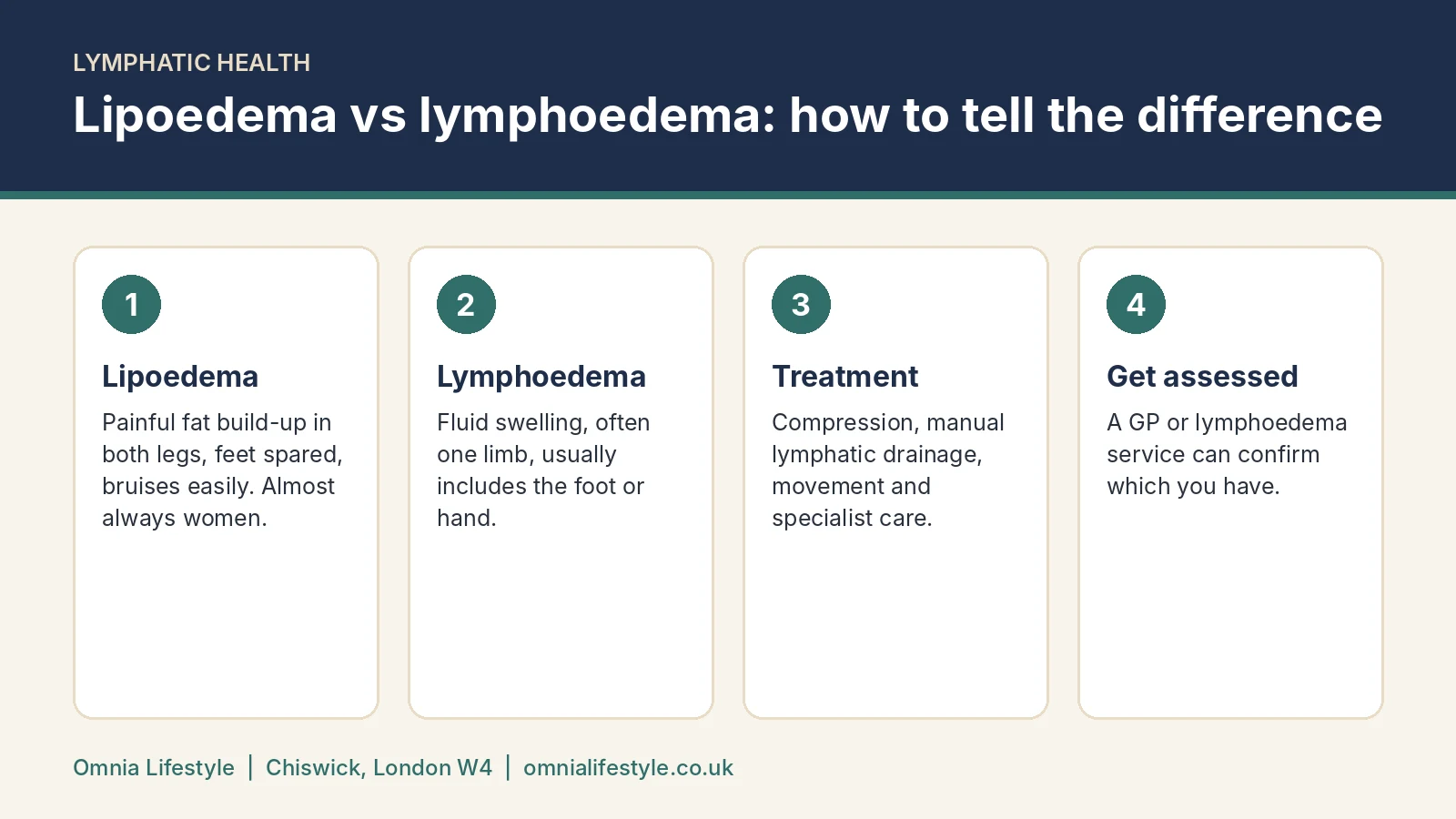
Lipoedema is a long-term condition in which fat builds up in an abnormal way, usually in both legs and sometimes the arms, almost always in women. The legs are often painful and bruise easily, and the feet are spared. Lymphoedema is swelling caused by fluid that the lymphatic system cannot drain, often in one limb, and it usually includes the foot or hand. Lipoedema treatment in the UK focuses on compression, movement, manual lymphatic drainage for comfort, weight management and, for some, specialist surgery.
What is lipoedema?
Lipoedema (spelled lipedema in the US) is a chronic disorder of fat tissue. Fat collects symmetrically on the hips, buttocks, thighs and lower legs, and sometimes the upper arms, out of proportion to the rest of the body. It is not caused by overeating, and the affected fat does not respond well to diet and exercise, which is one reason so many women go undiagnosed for years. It is thought to affect a significant number of women in the UK, although exact figures are uncertain because it is under-recognised.
Lipoedema symptoms
- Symmetrical enlargement of both legs, and sometimes both arms
- Feet and hands spared, often with a cuff or ring of fat just above the ankle
- Pain, tenderness or aching in the affected areas
- Easy bruising
- Heavy, tired legs, often worse at the end of the day or in hot weather
- Skin that feels cooler and softer, sometimes with a nodular texture underneath
- A slimmer upper body compared with the lower body
Lipoedema legs: what they look like
Lipoedema legs typically look column-shaped, with fat that ends sharply at the ankles and spares the feet. Knees often have pads of fat on the inner side. As the condition progresses, the skin may become uneven and lumpy. Because it affects both legs equally, it looks very different from lymphoedema, which often affects one leg more than the other.
Lipoedema causes
The exact cause is not known. It almost always affects women and often starts or worsens at times of hormonal change, such as puberty, pregnancy or menopause, which suggests hormones play a part. It often runs in families, so genes are likely to be involved. It is not caused by lifestyle, although weight gain can make symptoms worse.
Stages of lipoedema
- Stage 1: smooth skin surface with enlarged fat underneath
- Stage 2: uneven skin with larger nodules of fat
- Stage 3: large lobes of fat and tissue, particularly around the thighs and knees
In later stages, the lymphatic system can become overloaded, causing lipo-lymphoedema, where both conditions are present.
Lipoedema vs lymphoedema: the key differences
- What builds up: lipoedema is abnormal fat; lymphoedema is fluid.
- Who it affects: lipoedema affects women almost exclusively; lymphoedema affects anyone.
- Pattern: lipoedema is symmetrical in both legs; lymphoedema often affects one limb or is uneven.
- Feet and hands: spared in lipoedema; usually involved in lymphoedema.
- Pain and bruising: common in lipoedema; less typical in lymphoedema.
- Pitting: pressing the skin in lymphoedema often leaves a dent; this is less common in early lipoedema.
- Common causes: lipoedema is linked to hormones and genes; lymphoedema is often linked to lymph node removal, cancer treatment, infection or a lymphatic problem from birth.
Read more about lymphoedema and LPG Endermologie for lymphoedema comfort.
How lipoedema is diagnosed
There is no single test. Diagnosis is based on your history and an examination by a GP, lymphoedema specialist or vascular specialist. Scans may be used to rule out other causes. If you think you have lipoedema, ask your GP for a referral to a lymphoedema service, and take a description of your symptoms and family history with you.
Lipoedema treatment in the UK
There is no cure, but treatment can ease pain, heaviness and swelling, and slow progression.
- Compression garments. Made-to-measure or flat-knit garments reduce discomfort and support the tissues.
- Movement. Low-impact exercise such as walking, swimming, aqua aerobics and cycling helps circulation and lymph flow.
- Manual lymphatic drainage. MLD does not remove lipoedema fat, but many women find it eases heaviness, tenderness and any fluid that has built up, particularly where lymphoedema is also present.
- Intermittent pneumatic compression. Machine-based compression, such as the Body Ballancer, can help move fluid and is used by some women for comfort.
- Weight management. Lipoedema fat does not respond much to dieting, but avoiding weight gain prevents symptoms worsening.
- Emotional support. Living with an under-recognised condition can be hard. Charities such as Lipoedema UK offer information and community.
Lipoedema surgery
Specialist liposuction, using techniques designed to protect the lymphatic vessels, can reduce lipoedema fat and pain for some women. NICE guidance says the evidence on its effectiveness is limited, and it should only be done in specialist settings. It is rarely available on the NHS. Anyone considering surgery should see a specialist and understand that compression is usually still needed afterwards. See lymphatic drainage after liposuction.
When to see your GP
- You think you may have lipoedema or lymphoedema and have not been assessed
- Swelling in one leg, especially with pain, warmth or redness, which can be a blood clot and needs same-day care
- Red, hot, painful skin with fever, which can be cellulitis and needs urgent treatment
- Sudden swelling with breathlessness, which needs a 999 call
Frequently asked questions
Can lipoedema go away with diet?
No. Lipoedema fat does not respond well to diet and exercise, although a healthy weight helps prevent symptoms getting worse.
Does lymphatic drainage help lipoedema?
MLD does not remove lipoedema fat, but many women find it eases heaviness, tenderness and swelling, particularly alongside compression.
Is lipoedema the same as cellulite?
No. Cellulite is common and harmless. Lipoedema is a medical condition with pain, easy bruising and a typical pattern of fat.
Can men get lipoedema?
It is extremely rare in men.
Lymphatic support in Chiswick
Omnia Lifestyle offers manual lymphatic drainage, Body Ballancer compression therapy and LPG Endermologie at 8 to 9 Bedford Corner, The Avenue, Chiswick W4 1LZ, close to Turnham Green station, on bus routes 94, E3 and 272. Limited parking is available on request when booking. Omnia is the only clinic in London offering all three under one roof. These treatments support comfort and do not replace specialist medical care for lipoedema or lymphoedema. MLD starts at £65, Body Ballancer at £45, and LPG Endermologie with a £99 Discovery Session.
Explore lymphatic drainage massage in London, Body Ballancer compression therapy and lymphatic drainage options compared, or book an appointment.
This article is general information, not medical advice. If you have any of the warning signs listed above, seek medical attention.
Ready to book?
Manual Lymphatic Drainage


.jpg)
.jpg)