


Book at our Chiswick clinic
Manual Lymphatic Drainage
Swollen ankles are very common, especially at the end of a long day, after a flight or in hot weather. Most of the time the cause is harmless and the swelling goes down with simple steps. Sometimes, though, swollen ankles and feet are a sign of something that needs checking, so it helps to know the difference.
This guide explains the common causes of swollen ankles, remedies that work, swollen ankles in pregnancy and in older people, and when to worry.
Quick answer
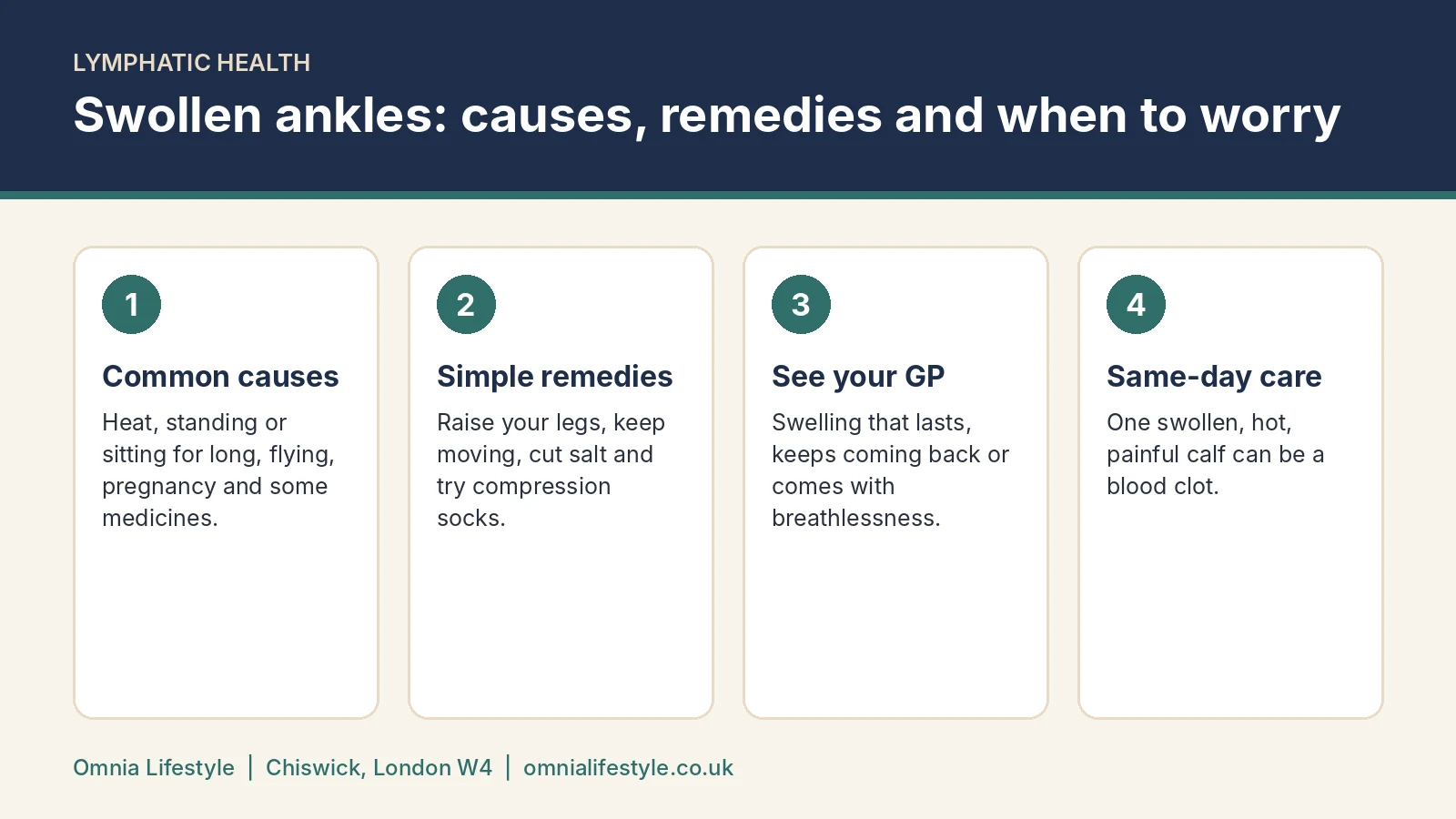
Swollen ankles are usually caused by fluid building up in the lower legs, often from standing or sitting for long periods, heat, flying, pregnancy, being overweight or some medicines. Raising your legs, moving regularly, cutting down on salt and wearing compression socks usually help. See your GP if swelling lasts more than a few days, keeps coming back or affects your daily life. Get same-day medical help if one leg is suddenly swollen, red, hot or painful, and call 999 if you are short of breath or have chest pain.
Common causes of swollen ankles
- Standing or sitting for long periods. Gravity pulls fluid down, and without the calf muscles pumping it back up, it collects around the ankles.
- Hot weather. Blood vessels widen in the heat, so more fluid leaks into the tissues.
- Flying and long journeys. Hours of sitting still, often with legs bent, cause swollen ankles after flying.
- Pregnancy. Hormones, extra fluid and pressure from the baby make swollen ankles common, especially later in pregnancy.
- Being overweight. Extra weight puts more pressure on the veins in the legs.
- Medicines. Some blood pressure tablets (particularly amlodipine and similar), anti-inflammatory painkillers, steroids, some diabetes medicines and hormone treatments can cause swelling.
- Injury. A sprain or strain causes local swelling. See when to worry about a sprained ankle.
- Too much salt, which makes the body hold on to water.
Medical causes of swollen ankles and feet
- Venous insufficiency. Weak valves in the leg veins let blood pool, often with varicose veins and skin changes.
- Lymphoedema. The lymphatic system cannot drain fluid properly, often after surgery or cancer treatment. See lymphoedema.
- Lipoedema. Painful fat build-up in both legs that typically spares the feet. See lipoedema vs lymphoedema.
- Heart, kidney or liver problems. These can cause fluid to build up in both legs, sometimes with breathlessness or tiredness.
- A blood clot (DVT). Usually one swollen, painful, warm calf. This needs same-day care.
- Infection (cellulitis). Red, hot, painful, spreading skin, often with fever.
- Arthritis and gout. Swollen, painful joints. See what gout feels like.
Swollen ankles remedies
- Raise your legs above the level of your heart for 20 to 30 minutes a few times a day, for example on cushions on the sofa.
- Keep moving. Walk regularly and do ankle pumps and calf raises, especially if you sit for work.
- Compression socks. Graduated compression stockings help many people. Check with your GP or pharmacist first if you have diabetes, poor circulation or skin problems.
- Cut down on salt and processed food.
- Stay hydrated. Drinking normally helps; cutting back on water does not reduce swelling.
- Avoid tight clothing and shoes around the calves and ankles.
- Lose weight if you are overweight.
- Ask about your medicines. If swelling started after a new tablet, speak to your GP or pharmacist. Do not stop medicines without advice.
Our lymphatic drainage exercises show a ten-minute routine that helps fluid drain from the legs.
Swollen ankles in hot weather
Swelling in the heat is very common and usually harmless. Keep cool, raise your legs, move regularly, and splash or soak your feet in cool water. If swelling does not settle overnight, or you feel unwell, speak to your GP.
Swollen ankles after flying
On long flights, walk the aisle every hour or two, do ankle circles and calf pumps in your seat, avoid alcohol, drink water and consider flight socks. Mild swelling should settle within a day or two. One leg that is swollen, painful or warm after a long journey can be a blood clot and needs urgent assessment.
Swollen ankles in pregnancy
Mild swelling of the ankles and feet is normal in pregnancy, especially in the evening and in hot weather. Rest with your feet up, avoid standing for long periods and wear comfortable shoes. Contact your midwife or maternity unit urgently if swelling comes on suddenly in your face, hands or feet, especially with a headache, vision problems or pain below the ribs, as this can be a sign of pre-eclampsia. See lymphatic drainage in pregnancy.
Swollen ankles in elderly people
Swollen ankles in older people, including elderly women, are often linked to reduced mobility, medicines, venous problems or heart and kidney conditions. Because the causes can be more serious, new or worsening swelling in an older person should always be checked by a GP, especially if it comes with breathlessness, tiredness or weight gain.
When to worry about swollen ankles
Call 999 if swelling comes with:
- Chest pain or tightness
- Sudden breathlessness, or coughing up blood
Get same-day help from your GP or NHS 111 if:
- One leg is swollen, especially with pain, warmth or redness in the calf
- The skin is red, hot and spreading, or you have a fever
- You are pregnant with sudden swelling, headache or vision problems
- Swelling started after a fall or injury and you cannot put weight on the foot
See your GP if:
- Swelling has not improved after three days of self-care
- Swelling keeps coming back or is getting worse
- You have heart, kidney or liver disease or diabetes
- You are also breathless when lying flat or more tired than usual
Frequently asked questions
What is the fastest way to reduce swollen ankles?
Lie down with your legs raised above your heart, do ankle pumps and keep cool. Most simple swelling improves within hours.
Should I drink more water for swollen ankles?
Drink normally. Drinking less does not reduce swelling, and dehydration can make it worse.
Can lymphatic drainage help swollen ankles?
Manual lymphatic drainage and compression therapy can help fluid-related swelling once a serious cause has been ruled out, and are particularly useful for lymphoedema and swelling after surgery.
Are swollen ankles a sign of heart problems?
They can be, particularly if both ankles swell and you are breathless or tired. Most swollen ankles have simpler causes, but it is worth a GP check if you are unsure.
Help for swollen ankles in Chiswick
Once your GP has ruled out a medical cause, manual lymphatic drainage and Body Ballancer compression therapy can help ease fluid-related swelling and heavy legs. Both are available at Omnia Lifestyle, 8 to 9 Bedford Corner, The Avenue, Chiswick W4 1LZ, close to Turnham Green station, on bus routes 94, E3 and 272. Limited parking is available on request when booking. MLD starts at £65 and Body Ballancer at £45.
Explore lymphatic drainage massage in London and Body Ballancer compression therapy, see how to improve lymphatic drainage in your legs, or book an appointment.
This article is general information, not medical advice. If you have any of the warning signs listed above, seek medical attention.
Ready to book?
Manual Lymphatic Drainage


.jpg)
.jpg)