






Book at our Chiswick clinic
Manual Lymphatic Drainage
Swelling is a normal part of healing after an operation, but it can feel tight, heavy and slow to go. This guide is for anyone recovering from surgery, from a tummy tuck, BBL or caesarean to a knee replacement or lymph node removal, who wants to know whether lymphatic drainage massage could help, when it is safe to start and when it is better to wait.
When to see someone: once your surgeon is happy for you to start, manual lymphatic drainage in Chiswick is £65 for 30 minutes, and we ask about your operation and healing before any treatment. Book online or call 020 4515 0000.
Quick answer
Manual lymphatic drainage (MLD) is a very light, rhythmic massage that encourages fluid to move out of swollen tissue. After surgery it can ease swelling, tightness and discomfort for some people, and some surgeons suggest it after cosmetic procedures. Research on MLD after surgery is limited, so treat it as a gentle support alongside your compression garment and movement, not a treatment in its own right. Only start when your surgeon agrees, and never with signs of infection or a blood clot.
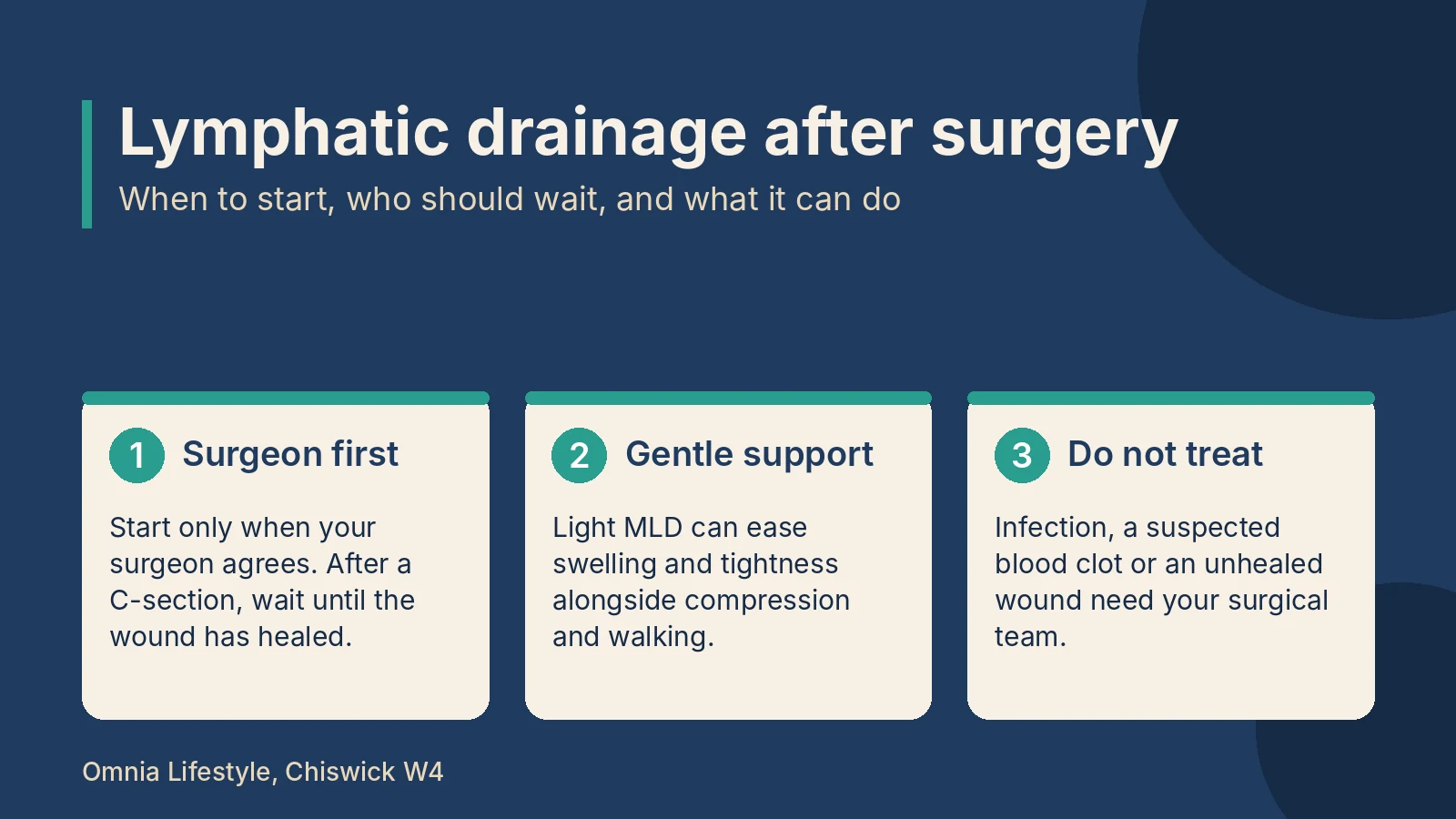
What lymphatic drainage after surgery can and cannot do
Surgery disturbs the tissue under the skin, including the tiny lymph vessels that normally carry excess fluid away. While those vessels recover, fluid collects in and around the operated area. That is why swelling usually builds over the first days, then settles slowly over weeks. Your lymphatic system has no central pump like the heart. It relies largely on movement, breathing and gentle pressure on the skin, and all of these are reduced while you rest after an operation.
Most post-operative swelling settles on its own with time, your compression garment and gradually getting moving again. Lymphatic drainage is an optional extra that some people find helps them feel more comfortable during that process.
- It can ease puffiness and tightness, help the area feel softer and more comfortable, and give you a calm, guided point in your recovery each week.
- It cannot remove fat, change the result of your operation, heal a wound faster than your body allows, or replace your surgeon's aftercare and compression garment.
- It does not treat infection, a blood clot or a fluid collection. These need your surgical team.
The honest position is that much of the support for MLD after cosmetic surgery comes from surgeons' experience rather than large trials. For lymphoedema, MLD is one part of specialist care that also includes compression, skin care and exercise.
When to do lymphatic drainage after surgery
Always follow your surgeon's advice. Before your first session we ask for the date and type of operation, the areas treated and any written instructions you were given. As a general guide:
- Cosmetic body surgery. Some surgeons suggest starting within the first few weeks, once they are happy with early healing. Larger or combined procedures may need a longer wait.
- Caesarean section. Wait until your wound has fully healed, and usually until after your 6-week postnatal check.
- Knee and other orthopaedic surgery. Your physiotherapy exercises come first. MLD is sometimes added later for swelling that is slow to settle, with your surgical team's agreement.
- Lymph node removal. Treatment should be guided by your cancer or lymphoedema team, not started on your own.
Work always stays away from incisions until they have closed and healed, and pressure is always light.
Lymphatic drainage after a tummy tuck, BBL or liposuction
After a tummy tuck, the NHS says you will usually wear a corset or tummy-control pants for about 6 weeks to support healing and reduce swelling, and need 4 to 6 weeks off work and exercise. Lymphatic drainage after surgery on the stomach is gentle work that guides fluid away from the abdomen towards the lymph nodes in the groin and armpits, avoiding the scar line until it has healed.
After a BBL, the areas treated, how you are positioned and whether the buttocks are worked on at all are agreed with your surgeon, since many clinics give specific instructions about pressure and sitting. Omnia offers medical MLD, not the firmer Brazilian lymphatic drainage method. If you have had liposuction, our separate guide to lymphatic drainage after liposuction covers timing and a week-by-week plan in detail.
Lymphatic drainage after a C-section
Swollen ankles, a puffy tummy and heaviness are common in the weeks after birth. Gentle MLD on the legs may help once you feel ready, and work on the abdomen should wait until the caesarean wound has fully healed and you have had your postnatal check. The NHS advises staying mobile with gentle activity, such as a daily walk, after a caesarean, so keep that going whether or not you have treatment. See our guide to swollen ankles for other causes and remedies.
Lymphatic drainage after knee surgery
NICE guidance on joint replacement (NG157) focuses on rehabilitation with a physiotherapist or occupational therapist, starting soon after surgery, plus a home exercise programme. The NHS advises keeping the leg raised to help swelling and wearing compression stockings, usually for at least 6 weeks. These come first. Lymphatic drainage after knee surgery can be added for stubborn swelling once your team agrees, but it is not a substitute for your exercises. Read physio after knee replacement for what that rehabilitation involves.
Lymphatic drainage after lymph node removal or breast surgery
Removing or treating lymph nodes, for example during breast cancer surgery, raises the risk of lymphoedema, a long-term swelling of the arm, leg or another area. The NHS says your treatment team should tell you if you are at risk and monitor you afterwards. If swelling develops, ask your GP or surgical team about referral to an NHS lymphoedema service, where specialist MLD, compression and skin care are planned together. We are happy to work alongside that plan, but we will not replace it. Read more about lymphoedema.
What happens at a session, how many you need and cost
Your first visit starts with a consultation about your operation, healing, medicines and any swelling or pain. You then lie comfortably, with only the area being treated uncovered. Your therapist starts by clearing the lymph nodes in the neck, armpits or groin, then uses slow, light, stretching strokes to guide fluid towards them. It should feel soothing, never painful. Afterwards some people say they feel lighter.
After cosmetic surgery, many people have one to three sessions a week while swelling is at its peak, then taper as it settles. After orthopaedic surgery, fewer sessions alongside physiotherapy are usually enough. Your therapist will suggest a plan and review it as you heal.
At Omnia in Chiswick, manual lymphatic drainage is £65 for 30 minutes, £90 for 60 minutes and £105 for 90 minutes. Body Ballancer compression therapy is £45 for 30 minutes or £60 for 60 minutes, and is sometimes used later in recovery, once your surgeon agrees, alongside or instead of manual work.
How to encourage lymphatic drainage after surgery at home
- Wear your compression garment exactly as your surgeon advised.
- Walk little and often. Movement is the main pump for lymph and also lowers the risk of blood clots.
- Breathe deeply. Slow breathing from the tummy helps move lymph through the trunk.
- Raise swollen legs when resting, as the NHS advises after knee replacement.
- Gentle exercises. Our lymphatic drainage exercises suit later recovery, once your surgeon clears you for activity.
Who should wait, and when to seek urgent help
Lymphatic drainage is not suitable, and we will not treat, if you have an active infection, an untreated or suspected blood clot (DVT), an unhealed or leaking wound in the area, or heart failure that is not under control. Tell us if you are being treated for cancer, have kidney problems or take blood thinners, so treatment can be planned safely.
Contact your surgeon, GP or NHS 111 straight away if you have:
- A wound that becomes more red, painful or swollen, or leaks pus or foul-smelling fluid
- A high temperature, or you feel hot, cold or shivery
- Severe pain, or swelling that is getting worse rather than better
- Throbbing or cramping pain, warmth or swelling in one leg
Call 999 or go to A&E if leg pain or swelling comes with breathlessness or chest pain, as this can mean a blood clot has reached the lungs. Do not book a massage for any of these symptoms.
Frequently asked questions
Why is lymphatic drainage important after surgery?
Surgery damages small lymph vessels, so fluid collects in the tissue while they recover. Lymphatic drainage is not essential for everyone, and most swelling settles on its own with time, compression and movement. Some people find MLD eases tightness and discomfort, and some surgeons suggest it after cosmetic body procedures. It supports recovery rather than changing the result of your operation.
How soon after surgery can I have lymphatic drainage?
It depends on the operation and your surgeon. After cosmetic procedures, some surgeons suggest starting within the first few weeks once early healing looks good. After a caesarean, wait until the wound has healed and usually until after your postnatal check. After lymph node removal, follow your cancer or lymphoedema team. Always get your surgeon's agreement first.
Does lymphatic drainage after surgery work?
Many people say they feel less tight and puffy after a session, and some surgeons recommend it after cosmetic procedures. The research is limited, though, and much of the support comes from clinical experience. It is best seen as a gentle, low-risk addition to compression and movement. Read does lymphatic drainage massage work for the wider evidence.
Can lymphatic drainage after surgery be done at home?
Your surgeon or therapist may show you simple self-massage once your wounds have healed. In the early weeks, the most useful things you can do at home are wearing your compression garment, walking regularly and breathing deeply. Avoid firm rubbing or massage tools near incisions, and check with your surgeon before starting any self-treatment on the operated area.
Is lymphatic drainage safe after lymph node removal?
It can be, when it is planned by people who know your history. After lymph node removal, MLD is usually part of specialist lymphoedema care with compression and skin care. Speak to your treatment team first, and get help quickly if the limb becomes red, hot or more swollen, as infection such as cellulitis needs prompt treatment.
Lymphatic drainage after surgery in Chiswick
Our clinic is at 8 to 9 Bedford Corner, The Avenue, Chiswick W4 1LZ, close to Turnham Green station, on bus routes 94, E3 and 272. Limited parking is available on request when booking. Our MLD therapists work alongside our physiotherapists, which helps when recovery needs both.
See lymphatic drainage in London to compare MLD, compression and LPG, read about rehabilitation, or learn the difference between Brazilian lymphatic drainage and MLD.
Book manual lymphatic drainage in Chiswick: 30 minutes £65, 60 minutes £90, 90 minutes £105. Book online or call 020 4515 0000.
This article is general information, not medical advice. If you have any of the warning signs above, seek medical attention.
Ready to book?
Manual Lymphatic Drainage




.jpg)
.jpg)
