


Book at our Chiswick clinic
Ayurveda
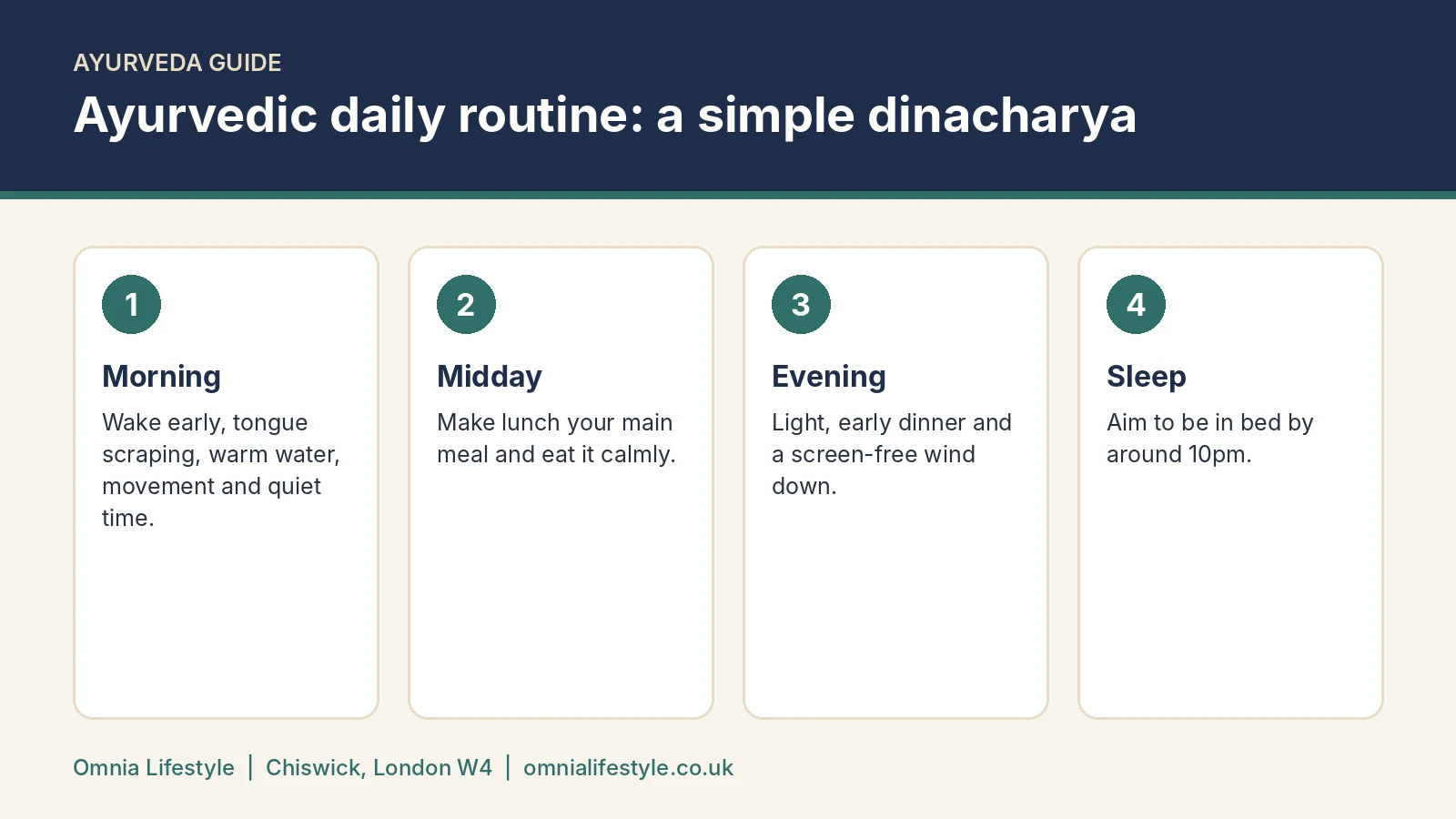
In Ayurveda, how you live each day matters as much as what you eat. Dinacharya, the Ayurvedic daily routine, is a set of simple habits that follow the natural rhythm of the day: waking early, cleansing, moving, eating your main meal at midday and winding down early in the evening. The aim is steady energy, good digestion and better sleep.
This guide gives a simple, practical Ayurvedic daily routine you can start this week, explains the reasoning behind each step and shows how to adapt it for Vata, Pitta and Kapha.
Quick answer
A simple Ayurvedic daily routine is: wake early, ideally around sunrise; scrape your tongue and brush your teeth; drink a glass of warm water; move your body; take a few minutes for breathing or meditation; eat your main meal at lunchtime; have a light, early dinner; switch off screens and be in bed by around 10pm. Start with two or three habits and build from there.
What is dinacharya?
Dinacharya comes from the Sanskrit words dina (day) and acharya (conduct or practice). Classical Ayurvedic texts describe it as the foundation of good health. The idea is that the body works best with regular rhythms, and that each part of the day is governed by one of the three doshas:
- Kapha time, 6 to 10am and 6 to 10pm: steady and heavy, good for exercise in the morning and winding down at night.
- Pitta time, 10am to 2pm and 10pm to 2am: digestion is strongest at midday, and the body repairs itself overnight.
- Vata time, 2 to 6am and 2 to 6pm: light and active, good for waking early and for creative work in the afternoon.
Modern research on circadian rhythms supports several of these ideas, such as regular sleep times, morning light and eating earlier in the day.
Ayurvedic morning routine
- Wake early. Ideally before or around sunrise, when Vata energy makes it easier to feel alert.
- Empty the bladder and bowels without straining.
- Scrape your tongue. Use a stainless steel or copper tongue scraper from back to front five to ten times to remove the coating, then brush your teeth.
- Oil pulling (optional). Swish a tablespoon of sesame or coconut oil around your mouth for a few minutes and spit it into the bin, not the sink. It does not replace brushing.
- Drink warm water. A glass of warm water, plain or with a little lemon or ginger, to wake up digestion.
- Self-massage (abhyanga). Massage warm oil into your skin for five to ten minutes before showering. Sesame oil suits Vata, coconut oil suits Pitta and a light oil or dry brushing suits Kapha.
- Move. Walking, yoga or exercise at around half your maximum effort, so you finish energised, not exhausted.
- Breathing or meditation. Five to fifteen minutes of slow breathing, pranayama or quiet sitting.
- Breakfast. Something warm and simple, such as porridge or stewed fruit, if you are hungry.
Midday: make lunch your main meal
Ayurveda places the largest meal of the day at lunchtime, when Pitta, the fire of digestion, is strongest. Eat sitting down, without screens, and stop when you are around three-quarters full. A short, easy walk of 10 to 15 minutes after eating supports digestion.
Afternoon
The Vata time of the afternoon suits focused or creative work. If you feel a slump, a warm herbal tea and a few minutes outside are better choices than sugar or more coffee.
Ayurvedic evening and night routine
- Light, early dinner. Ideally by around 7pm, and smaller than lunch, such as soup, dal or cooked vegetables with grains.
- Wind down. Dim the lights and switch off screens an hour before bed.
- Calm the senses. A warm bath, gentle stretching, reading or warm milk with nutmeg or turmeric.
- Foot massage. Rubbing warm oil into the soles of the feet is a traditional aid to sleep.
- Bed by around 10pm. Going to sleep during the heavy Kapha time makes falling asleep easier. Staying up past 10pm can bring a second wind that keeps you awake.
Struggling with sleep? See acupuncture for insomnia and our guide to Shirodhara on the Ayurveda treatment page.
Ayurvedic daily routine for Vata, Pitta and Kapha
- Vata: regularity is the most important thing. Keep fixed times for waking, meals and bed, choose warm, cooked food, gentle exercise such as yoga or walking, and daily sesame oil self-massage. See the Vata diet plan.
- Pitta: avoid overheating and overworking. Exercise in the cooler part of the day, never skip meals, use coconut oil for self-massage and leave time to relax. See the Pitta diet plan.
- Kapha: get moving early. Wake before 6am, exercise more vigorously, keep breakfast light or skip it if not hungry, try dry brushing and avoid daytime naps. See the Kapha diet plan.
Not sure of your dosha? Read What is your dosha?
Ayurvedic daily routine for weight loss
Ayurveda views weight gain mainly as a Kapha imbalance with slow digestion. Helpful routine changes include waking before 6am, exercising in the morning, eating your largest meal at lunchtime, avoiding snacking between meals, having an early, light dinner and not eating late at night. Warm water and ginger tea through the day are traditional supports. These habits are sensible, but lasting weight loss still depends on your overall diet, activity and sleep, so speak to your GP if you have a medical condition.
How to start: a simple one-week plan
- Days 1 to 2: warm water on waking and tongue scraping.
- Days 3 to 4: add a fixed bedtime of around 10pm and no screens for the last hour.
- Days 5 to 6: make lunch your main meal and dinner lighter and earlier.
- Day 7: add five minutes of self-massage or breathing practice.
Small steps you can keep are better than a perfect routine you abandon after a week.
Frequently asked questions
Do I have to wake up at 4am?
No. Classical texts recommend waking well before sunrise, but for most people today, waking at a regular time between 6 and 7am is a realistic and helpful goal.
Is oil pulling safe?
It is generally safe for adults, but it is not a replacement for brushing, flossing or dental care. Do not swallow the oil.
Can I follow an Ayurvedic routine if I work shifts?
Yes, by keeping the principles: regular sleep and meal times within your shift pattern, a main meal at the start of your active day and a calm wind-down before sleep.
Is there a printable Ayurvedic daily routine?
The quick answer and one-week plan above work well as a printable checklist. Your Ayurvedic doctor can also give you a personal written routine after a consultation.
Personal Ayurvedic routines in Chiswick
Our Ayurvedic doctors at Omnia Lifestyle can assess your constitution and give you a personal daily routine, diet plan and treatment plan. An Ayurveda consultation is £65, and a 60-minute Abhyanga warm oil massage is £90. We are at 8 to 9 Bedford Corner, The Avenue, Chiswick W4 1LZ, close to Turnham Green station, on bus routes 94, E3 and 272. Limited parking is available on request when booking.
Explore Ayurveda in London, or book a consultation.
This article is general information, not medical advice. Speak to your GP before making changes if you have a medical condition, are pregnant or take regular medicines.
Ready to book?
Ayurveda


.jpg)
.jpg)