


Book at our Chiswick clinic
Ayurveda
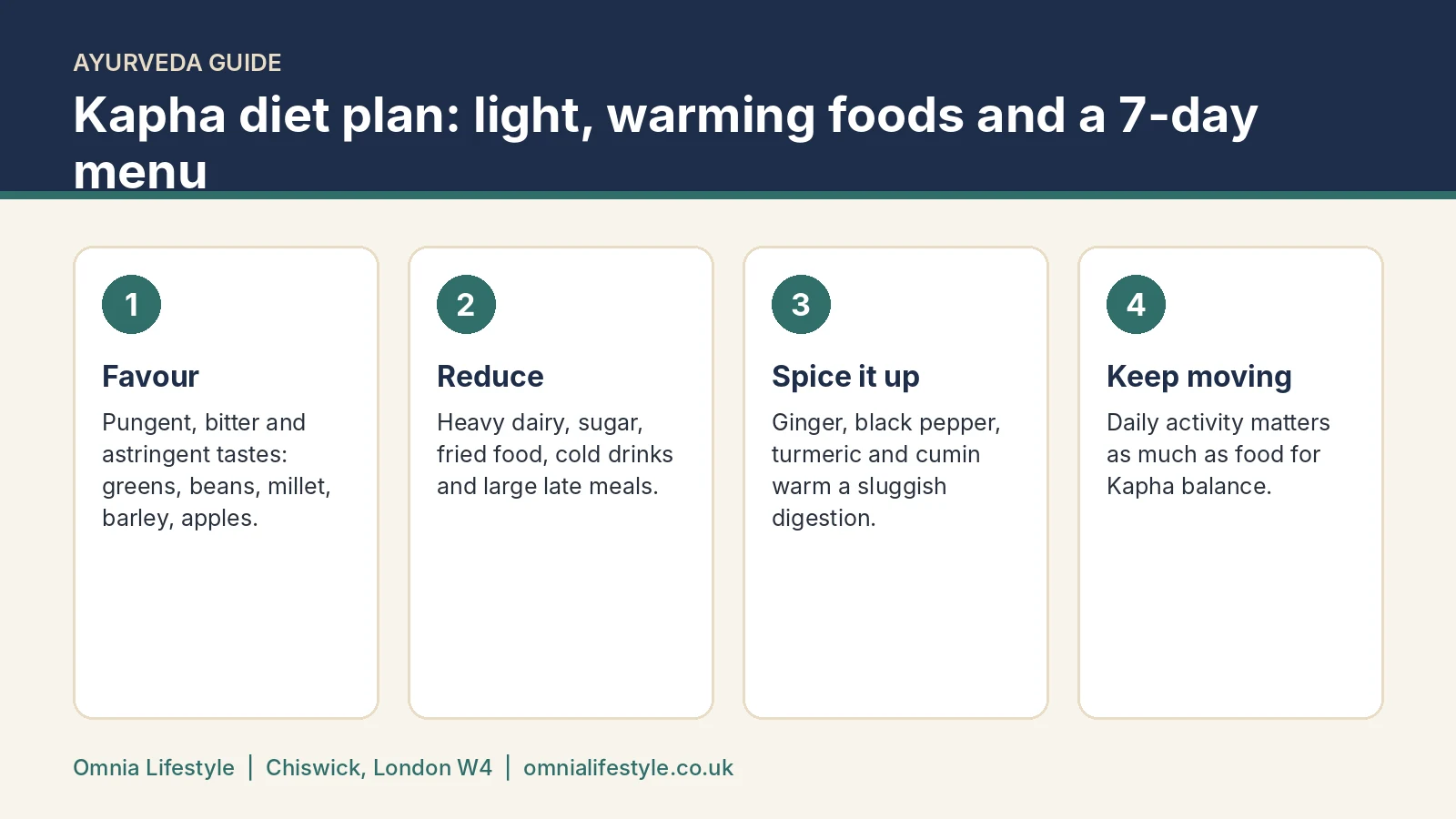
A Kapha diet plan is an Ayurvedic way of eating built around light, warm, dry and well-spiced food. In Ayurveda, Kapha is the dosha of earth and water. In balance it gives you stamina, steadiness and a calm, loyal nature. Out of balance it is linked with sluggish digestion, weight gain, congestion, low motivation and feeling heavy. A Kapha-balancing diet counters that heaviness with pungent, bitter and astringent tastes, warming spices and lighter meals.
This guide explains which foods suit Kapha, which to limit, and gives a Kapha food list, a seven-day meal plan, Indian recipe ideas and an honest look at the Kapha diet for weight loss.
What is Kapha dosha?
Ayurveda describes three doshas, Vata, Pitta and Kapha, that together shape your constitution. Kapha governs structure and stability: the body's tissues, lubrication of the joints and immunity. Its qualities are heavy, slow, cool, oily, smooth and stable. If you are not sure of your constitution, start with our guide What is your dosha?
Signs of Kapha imbalance
- Feeling heavy, slow or sluggish, especially in the morning
- Weight gain that is hard to shift
- Slow digestion and feeling full for a long time after meals
- Congestion, a blocked nose or excess mucus, often worse in spring
- Low motivation, oversleeping or feeling stuck
- Fluid retention or puffiness
These signs can also have medical causes, such as an underactive thyroid, so see your GP if they are new or persistent. See underactive thyroid symptoms.
Kapha diet principles
- Favour pungent, bitter and astringent tastes. These lighten and warm Kapha.
- Reduce sweet, sour and salty tastes. These add heaviness and fluid.
- Eat light, warm, dry foods rather than heavy, cold or oily ones.
- Eat only when hungry and avoid snacking between meals.
- Make dinner light and early. A large late meal sits heavily with Kapha.
- Use spices generously. Ginger, black pepper and turmeric kindle a slow digestion.
Kapha food list and chart
Foods to favour
- Grains: barley, millet, buckwheat, rye, quinoa, corn, oats in small amounts
- Vegetables: leafy greens, broccoli, cabbage, cauliflower, kale, spinach, peppers, onions, garlic, radish, celery, asparagus, green beans, sprouts
- Fruit: apples, pears, berries, pomegranate, cranberries, dried apricots in small amounts
- Protein: lentils, mung beans, chickpeas, black beans, white fish, chicken or turkey, eggs in moderation
- Dairy: small amounts of skimmed milk or goat's milk, buttermilk
- Oils: small amounts of mustard, sunflower or olive oil
- Herbs and spices: ginger, black pepper, turmeric, cumin, cinnamon, cloves, mustard seed, chilli in moderation, fenugreek
- Sweetener: a little raw honey, which Ayurveda considers suitable for Kapha
- Drinks: warm water, ginger tea, cinnamon tea, green tea
Foods to reduce
- Heavy dairy such as cheese, ice cream and full-fat yoghurt
- Sugar, sweets, cakes and white bread
- Fried, oily and heavy food
- Wheat and rice in large amounts
- Bananas, avocados, coconut and very sweet or sour fruit
- Nuts and seeds in large amounts
- Salty processed food
- Cold drinks and iced food
- Red meat and pork
Seven-day Kapha diet plan
- Day 1. Breakfast: stewed apple with cinnamon and ginger. Lunch: millet with spiced mixed vegetables and moong dal. Dinner: light vegetable and lentil soup with black pepper.
- Day 2. Breakfast: besan chilla, a gram flour pancake with onion and coriander. Lunch: barley salad with roasted peppers, chickpeas and lemon. Dinner: steamed white fish or tofu with broccoli and ginger.
- Day 3. Breakfast: ginger tea and a small bowl of buckwheat porridge with berries. Lunch: chicken or bean stir-fry with cabbage, peppers and garlic. Dinner: spiced cauliflower soup.
- Day 4. Breakfast: poached egg on rye toast with spinach. Lunch: vegetable millet upma with mustard seeds and curry leaves. Dinner: mung bean soup with turmeric and cumin.
- Day 5. Breakfast: baked pear with cloves. Lunch: kala chana, a black chickpea curry, with a small portion of quinoa and greens. Dinner: clear vegetable broth with sprouted mung beans.
- Day 6. Breakfast: warm water with ginger and a little honey, then a small bowl of oats made with water and cinnamon. Lunch: turkey or lentil and vegetable stew with barley. Dinner: stir-fried kale, mushrooms and asparagus with tofu.
- Day 7. Breakfast: spiced buttermilk and an apple. Lunch: vegetable khichdi made with millet or barley and moong dal, plenty of ginger and black pepper. Dinner: tomato, lentil and spinach soup.
If you are hungry between meals, choose an apple, a pear, roasted chickpeas or ginger tea.
Kapha diet recipes: Indian ideas
Moong dal soup with ginger
Simmer 100 g of split moong dal in 700 ml of water with half a teaspoon of turmeric and a thumb of grated ginger until soft. Temper a teaspoon of mustard oil with cumin seeds and a pinch of asafoetida, stir into the dal and finish with black pepper and lemon.
Vegetable millet upma
Toast 80 g of millet, then cook in water until fluffy. Separately, warm a little oil with mustard seeds, curry leaves and chopped onion, add diced carrot, peas and peppers, then fold in the millet with coriander and a squeeze of lemon.
Besan chilla
Whisk 60 g of gram flour with water into a pancake batter, add chopped onion, chilli, coriander, turmeric and ajwain, and cook thinly in a lightly oiled pan.
The Kapha diet for weight loss: an honest view
A Kapha-balancing diet naturally favours vegetables, pulses, lean protein and lighter portions, while reducing sugar, fried food and heavy dairy, so many people find they lose weight following it. However, there is no specific research showing a Kapha diet works better than other balanced, reduced-calorie diets. What matters most for weight loss is the overall amount you eat, regular activity, strength training to protect muscle, and sleep. Ayurveda agrees on the importance of movement for Kapha. See how to speed up your metabolism and what is basal metabolic rate.
Kapha season: late winter and spring
Kapha naturally rises in late winter and spring, when it is cold and damp, so many people feel heavier and more congested at this time of year. In Kapha season, eat lighter, warmer meals, use more spices, cut back on dairy and sweet foods, and keep active outdoors.
Daily routine for Kapha
- Wake early, ideally before 6am, as Ayurveda links oversleeping with Kapha
- Exercise every day, including something that raises your heart rate
- Try a brisk dry body brush before your shower
- Eat your main meal at lunchtime and keep dinner light
- Seek variety and new activities to counter feeling stuck
Who should take care
If you have diabetes, kidney disease or another medical condition, take regular medication or have a history of disordered eating, speak to your GP before changing your diet. Herbal remedies should only be taken after advice from a qualified practitioner.
Frequently asked questions
Should Kapha types avoid dairy completely?
Not necessarily. Small amounts of lighter dairy, such as buttermilk or skimmed milk with spices, are usually fine. Heavy cheese and ice cream are best limited.
Is honey good for Kapha?
Ayurveda considers small amounts of raw honey suitable for Kapha. It should not be heated or cooked, according to traditional guidance.
Can Kapha types eat rice?
Small portions are fine. Barley, millet and buckwheat are lighter alternatives.
How quickly will I notice a difference?
Many people feel lighter and more energetic within one to two weeks of eating lighter, warmer meals and moving more.
Ayurvedic diet advice in Chiswick
Our Ayurvedic doctors at Omnia Lifestyle offer consultations with pulse assessment and a personalised diet and daily routine, at 8 to 9 Bedford Corner, The Avenue, Chiswick W4 1LZ, close to Turnham Green station, on bus routes 94, E3 and 272. Limited parking is available on request when booking. An Ayurvedic consultation is £65.
See also the Vata diet plan and Pitta diet plan, explore Ayurveda in London and InBody body composition scans, or book a consultation.
This article is general information and not medical advice. Please speak to your GP before changing your diet if you have a medical condition.
Ready to book?
Ayurveda



.jpg)
.jpg)