


Book at our Chiswick clinic
Ayurveda
In Ayurveda, food is treated as one of the most important forms of medicine. The traditional view is simple: what you eat, how you eat and when you eat all shape your digestion, energy and long-term health. An Ayurvedic diet is less about a list of banned foods and more about choosing fresh, well-cooked meals that suit your body, the season and your appetite.
This guide explains the principles of the Ayurvedic diet, the six tastes, how eating changes for Vata, Pitta and Kapha, some simple Ayurvedic recipes, what the evidence says, and how diet fits alongside Ayurvedic treatment.
Quick answer
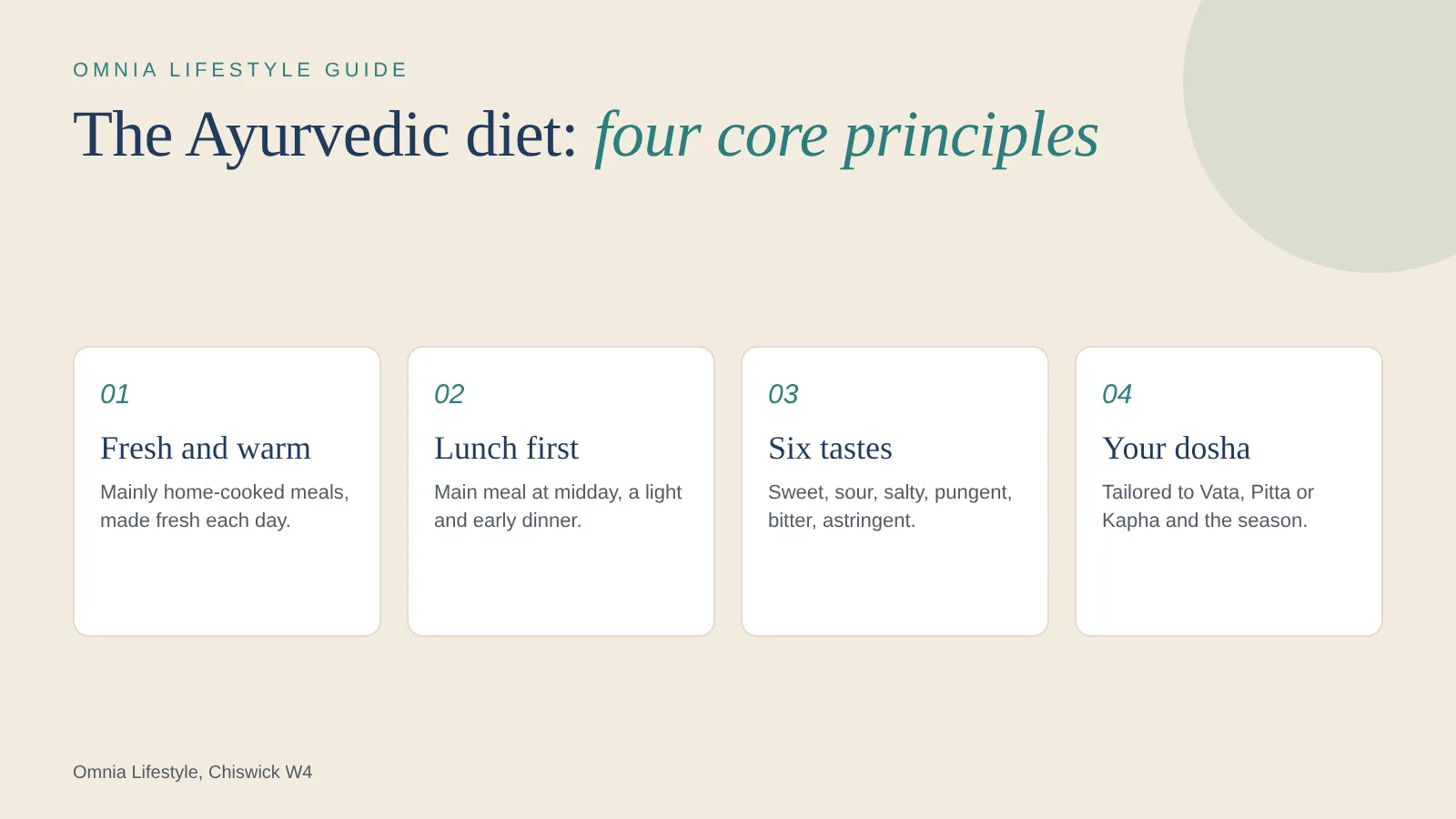
The Ayurvedic diet is a traditional way of eating from India that tailors food to your constitution, or dosha, and to the season. Its core principles are to eat mainly fresh, warm, home-cooked food, make lunch the main meal, include all six tastes, eat calmly and only when hungry, and support digestion with spices such as ginger, cumin and fennel. It is not a single fixed diet, and it is best personalised. Much of it overlaps with mainstream healthy eating advice.
What is the Ayurvedic diet?
Ayurveda is a system of medicine that developed in India over thousands of years. It describes three doshas, Vata, Pitta and Kapha, which combine in different proportions to form each person's constitution. If you are new to these ideas, start with our introduction to what Ayurveda is and our guide to finding your dosha.
Diet, called ahara in Sanskrit, is one of the three pillars of health in Ayurveda, alongside sleep and a balanced lifestyle. A central idea is agni, often translated as digestive fire. Ayurveda holds that when agni is strong, food is digested well and nourishes the body, and when it is weak, food is poorly digested. Much Ayurvedic diet advice is therefore about supporting digestion rather than counting calories.
The core principles of Ayurvedic nutrition
- Eat for your constitution: foods that suit one person may unsettle another, so advice depends on your dosha and current symptoms.
- Favour fresh, cooked food: freshly prepared meals are preferred over leftovers, ready meals and heavily processed food.
- Make lunch the main meal: digestion is considered strongest around midday, so the largest meal is eaten then and dinner is lighter and earlier.
- Eat when you are hungry, and not to excess: a traditional guide is to fill the stomach about half with food and a quarter with liquid, leaving space for digestion.
- Include all six tastes: a balanced meal contains a little of each taste, described below.
- Eat calmly: sit down, avoid screens, chew well and do not rush.
- Eat with the seasons: lighter, cooling food in summer and warmer, more nourishing food in autumn and winter.
- Use spices to support digestion: ginger, cumin, coriander, fennel, turmeric and black pepper are used in everyday cooking.
Ayurveda also has traditional rules on food combining, for example avoiding milk with sour fruit or fish. These come from tradition rather than modern research, so a practitioner will usually apply them selectively.
The six tastes in Ayurveda
Ayurveda groups foods by taste, or rasa, and each taste is said to affect the doshas differently.
- Sweet: grains, rice, milk, dates, sweet potato. Grounding and nourishing.
- Sour: yoghurt, lemon, tamarind, fermented foods. Stimulates appetite.
- Salty: salt, seaweed. Aids digestion in small amounts.
- Pungent: ginger, chilli, garlic, black pepper. Warming and stimulating.
- Bitter: leafy greens, turmeric, fenugreek. Light and cooling.
- Astringent: lentils, beans, pomegranate, green tea. Drying and firming.
Ayurvedic diet by dosha
Your practitioner will usually suggest emphasising foods that balance whichever dosha is most out of balance for you at the time.
- Vata (air and space): warm, moist, grounding food such as porridge, soups, stews, root vegetables and a little ghee. Fewer raw, cold and dry foods. See our Vata diet plan.
- Pitta (fire and water): cooling, fresh food such as cucumber, leafy greens, coconut, basmati rice and sweet fruit. Less chilli, alcohol, fried and very salty food. See our Pitta diet plan.
- Kapha (earth and water): light, warm, spiced food such as lentils, vegetables, barley and millet, with plenty of ginger and black pepper. Less heavy, fried, sweet and dairy-rich food. See our Kapha diet plan.
Each of those guides includes a food list and a seven-day meal plan.
Ayurvedic foods to keep in your kitchen
- Grains: basmati rice, oats, quinoa, barley, millet
- Pulses: split mung dal, red lentils, chickpeas
- Fats: ghee, sesame oil, olive oil, coconut oil
- Spices: fresh ginger, cumin, coriander seed, fennel seed, turmeric, cardamom, cinnamon, black pepper
- Vegetables: seasonal vegetables, especially squash, carrots, courgettes, greens and sweet potato
- Fruit: ripe seasonal fruit, often eaten on its own as a snack
Simple Ayurvedic recipes
Breakfast: spiced porridge
Simmer oats in milk or a plant milk with a pinch each of cinnamon and cardamom. Top with a stewed apple or pear and a few soaked almonds. Warm and easy to digest, it suits most people, especially in autumn and winter.
Lunch: kitchari
Kitchari is the classic Ayurvedic dish. Rinse one part split mung dal and one part basmati rice. Warm a spoonful of ghee, add cumin seeds, a little grated ginger and turmeric, then stir in the rice and dal with about four parts water. Simmer until soft, add chopped seasonal vegetables part way through, and finish with salt, coriander leaves and a squeeze of lemon.
Dinner: light vegetable and lentil soup
Soften onion, carrot and celery in a little oil with cumin and coriander, add red lentils, chopped squash and stock, and simmer for twenty to twenty-five minutes. Blend or leave chunky. A light, early dinner like this follows the Ayurvedic principle of eating less in the evening.
Drink: cumin, coriander and fennel tea
Simmer half a teaspoon each of cumin, coriander and fennel seeds in a large mug of water for five minutes, then strain. This traditional tea is sipped warm after meals. For more on Ayurvedic teas and herbs, see our guide to Ayurvedic herbs.
Most Ayurvedic recipes are naturally vegetarian, and many are easy to make vegan by using oil instead of ghee and plant milk instead of dairy.
Seasonal tips
- Spring: lighter meals, more greens and bitter vegetables, fewer heavy and sweet foods.
- Summer: cooling food such as cucumber, salads at lunchtime, coconut and sweet fruit, with less chilli.
- Autumn: warm soups, stews and root vegetables, with regular mealtimes.
- Winter: nourishing, warming dishes with more spice, ghee and cooked grains.
A sample day on an Ayurvedic diet
- On waking: a cup of warm water, perhaps with a slice of fresh ginger.
- Breakfast: spiced porridge or stewed fruit with yoghurt.
- Lunch, the main meal: kitchari or rice, dal and cooked vegetables, with a little chutney or yoghurt.
- Afternoon: fresh fruit or a handful of nuts, with herbal tea.
- Dinner, ideally before 7pm: a light soup or vegetable dish with bread or rice.
This links closely with the Ayurvedic daily routine. Our guide to an Ayurvedic daily routine shows how meals fit into the rest of the day.
What does the evidence say?
The dosha framework is a traditional system and has not been tested in the way modern diets are, so it is best seen as a practical guide rather than a proven medical treatment. There are few good-quality trials of Ayurvedic diets specifically. However, many of its principles match well-supported advice: eating mostly home-cooked food rich in vegetables, pulses and whole grains, eating less ultra-processed food, eating mindfully and keeping regular mealtimes. Read more about whether Ayurveda is scientifically proven.
Is an Ayurvedic diet safe? Who should check first
Eating more fresh, home-cooked food is safe for most people. Speak to your GP, specialist or dietitian before making major changes if you:
- Have diabetes, especially if you take insulin or tablets that can cause low blood sugar
- Have kidney disease, coeliac disease or another condition that needs a specific diet
- Take warfarin, as large changes in leafy green vegetables can affect it
- Are pregnant, breastfeeding, or planning a diet for a child
- Have a history of an eating disorder, as restrictive food rules can be unhelpful
Avoid long fasts or kitchari "cleanses" without guidance, and never stop prescribed medicines in favour of diet changes. If you notice unexplained weight loss, difficulty swallowing, blood in your stool or persistent changes in your bowel habit, see your GP.
Ayurvedic treatment and diet
In Ayurvedic treatment, diet is rarely used on its own. A practitioner combines food advice with daily routine, movement and, where suitable, therapies. Common types of Ayurvedic treatment include:
- Consultation: a detailed history, pulse assessment and a personalised plan for diet and routine.
- Abhyanga: a full-body warm oil massage. See our guide to Ayurvedic massage.
- Shirodhara: a steady stream of warm oil across the forehead, traditionally used for stress and sleep.
- Herbal guidance: traditional herbs used alongside diet, which should always be checked against any medicines you take.
For conditions such as diabetes, skin problems or fertility difficulties, Ayurveda can be used alongside your usual medical care but should not replace it.
How we help in Chiswick
At Omnia Lifestyle, Ayurveda is doctor-led. Our clinical lead Dr Palitha Serasinghe and Ayurveda doctor Dr Athira Anilkumar can assess your constitution and current symptoms and turn the general principles above into a plan that fits your health, tastes and routine.
- Ayurvedic consultation in Chiswick: 30 minutes £65, or 60 minutes £95.
- Veda Pulse assessment: 30 minutes, £50.
- Abhyanga oil massage: 60 minutes, £90.
See whether you will need to change your diet with Ayurveda and what happens at a first Ayurvedic consultation, or book a consultation.
Frequently asked questions
Is the Ayurvedic diet vegetarian?
Traditionally it is mainly vegetarian, but it does not have to be. Ayurveda includes guidance on eggs, fish and meat, and a practitioner will work with your preferences.
Can an Ayurvedic diet help with weight loss?
It can support steady weight management because it encourages regular, home-cooked meals, a lighter evening meal and less processed food. It is not a rapid weight loss plan.
Do I need to know my dosha to start?
No. The general principles, such as fresh cooked food, a main meal at lunchtime and calm eating, suit most people. Knowing your dosha helps you fine-tune the details.
Is coffee allowed on an Ayurvedic diet?
Ayurveda considers coffee stimulating and drying, so it is usually limited rather than banned. Many people swap an afternoon coffee for ginger or fennel tea.
What is kitchari?
Kitchari is a simple dish of rice and split mung dal cooked with mild spices and vegetables. It is easy to digest and is often used as a gentle, nourishing meal.
Personalised Ayurvedic diet advice at Omnia Lifestyle
A general guide is a good start, but the right Ayurvedic diet depends on you. Our Ayurvedic doctors see clients at Omnia Lifestyle, 8 to 9 Bedford Corner, The Avenue, Chiswick W4 1LZ, close to Turnham Green station, on bus routes 94, E3 and 272. Limited parking is available on request when booking.
This article is general information, not medical advice. Please speak to your GP before changing your diet if you have a medical condition.
Ready to book?
Ayurveda



.jpg)
.jpg)