


Book at our Chiswick clinic
Ayurveda
A Pitta diet plan is an Ayurvedic way of eating built around cooling, calming and moderately substantial food. In Ayurveda, Pitta is the dosha of fire and water. When it is in balance it gives you a strong digestion, sharp focus and drive. When it is out of balance it is linked with heat, acidity, irritability, inflammation and skin flare-ups. A Pitta-balancing diet counters that heat with sweet, bitter and astringent tastes, cooling foods and regular meals.
This guide explains which foods suit Pitta, which to limit, and gives a Pitta food list, a seven-day meal plan and simple recipe ideas you can follow at home.
What is Pitta dosha?
Ayurveda describes three doshas, Vata, Pitta and Kapha, that together shape your constitution. Pitta governs transformation: digestion, metabolism, body temperature and the sharpness of the mind. Its qualities are hot, sharp, light, oily and spreading. If you are not sure of your constitution, start with our guide What is your dosha?
Signs of Pitta imbalance
- Heartburn, acid reflux or a burning feeling in the stomach
- Strong, urgent hunger and irritability if meals are late
- Loose stools
- Feeling hot, sweating easily and disliking hot weather
- Red, sensitive or inflamed skin, rashes or acne
- Irritability, impatience, perfectionism or anger
- Bloodshot or tired eyes
These signs can also have medical causes, so see your GP if they are new, severe or persistent.
Pitta diet principles
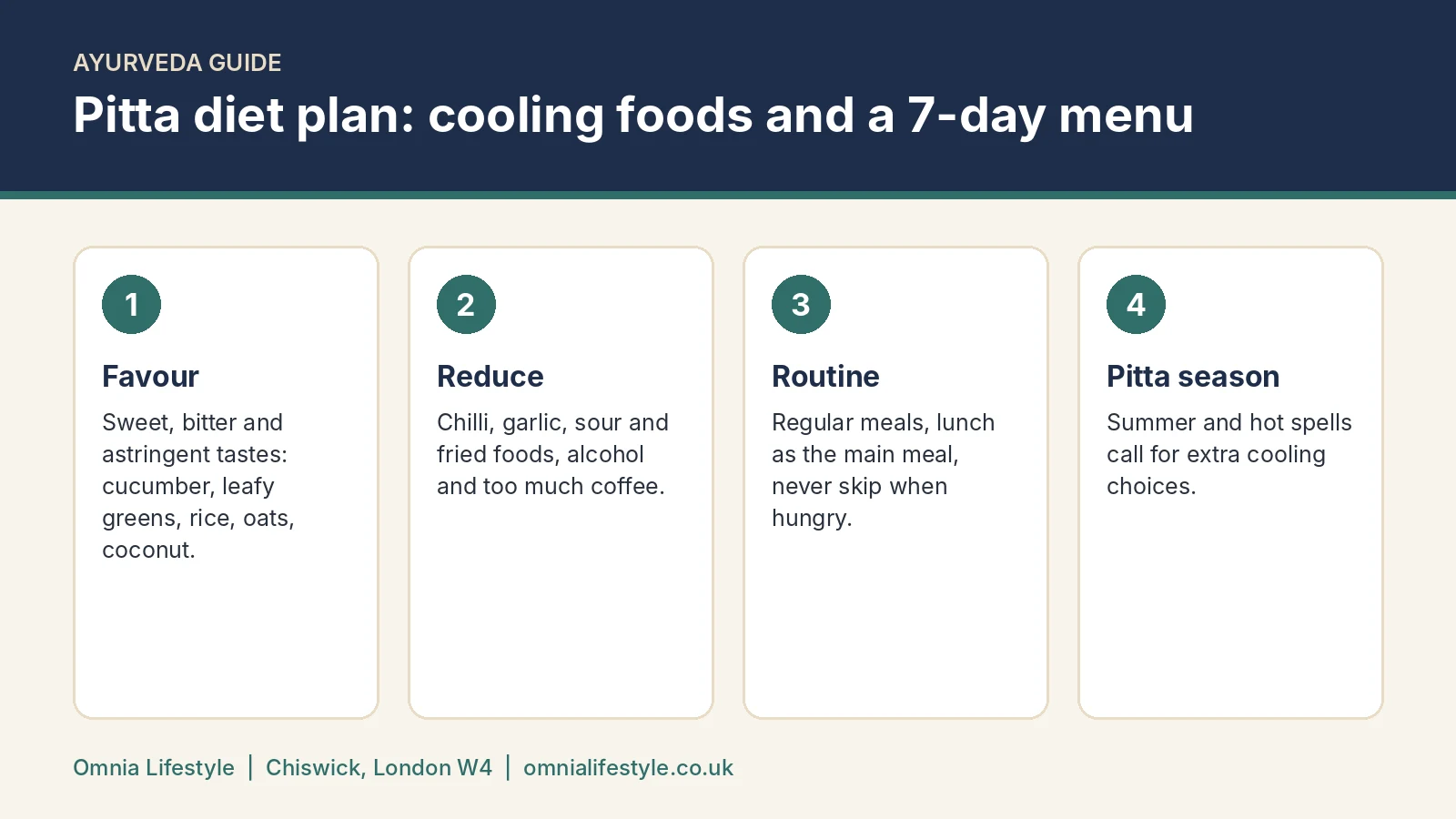
- Favour sweet, bitter and astringent tastes. These cool and settle Pitta.
- Reduce sour, salty and pungent tastes. These add heat.
- Choose cooling, fresh foods. Pitta tolerates raw salads better than Vata does, especially in summer.
- Never skip meals. Pitta digestion is strong, and missed meals quickly lead to irritability and acidity.
- Make lunch the main meal. Digestion is strongest around midday.
- Eat calmly. Avoid eating while angry, rushed or working.
Pitta food list and chart
Foods to favour
- Grains: basmati rice, oats, barley, wheat, quinoa, couscous
- Vegetables: cucumber, courgette, leafy greens, lettuce, broccoli, cauliflower, asparagus, sweet potato, green beans, peas, celery, fennel
- Fruit: sweet, ripe fruits such as melon, watermelon, pears, sweet apples, grapes, mango, figs, dates, pomegranate, coconut
- Protein: mung beans, chickpeas, lentils, tofu, paneer, eggs in moderation, white fish and chicken in moderation
- Dairy: milk, ghee, unsalted butter, fresh soft cheese, yoghurt diluted as lassi
- Oils: ghee, coconut oil, sunflower oil, olive oil
- Herbs and spices: coriander, fennel, cardamom, mint, turmeric, cumin in small amounts, fresh basil
- Drinks: water at room temperature, coconut water, mint or fennel tea, rose or chamomile tea
Foods to reduce
- Chilli, cayenne, raw garlic, raw onion and very hot spices
- Tomatoes, citrus and sour fruit in excess, vinegar and pickles
- Fried, oily and very salty food
- Red meat and seafood in large amounts
- Hard, salty and aged cheese, sour cream
- Alcohol, especially spirits and red wine
- Lots of coffee and energy drinks
- Fermented foods in large amounts
Coriander is one of the most valued Pitta-cooling herbs in Ayurveda. Read coriander in Ayurveda and modern science.
Seven-day Pitta diet plan
- Day 1. Breakfast: oat porridge with milk, chopped pear and cardamom. Lunch: basmati rice, mung dal with coriander, steamed courgette and cucumber raita. Dinner: vegetable and barley soup with fresh bread.
- Day 2. Breakfast: stewed apples with dates and a spoon of ghee. Lunch: quinoa bowl with chickpeas, leafy greens, cucumber and a mint yoghurt dressing. Dinner: steamed white fish or tofu with sweet potato and green beans.
- Day 3. Breakfast: melon and grapes, then a small bowl of oats. Lunch: coconut rice with mixed vegetables and coriander chutney. Dinner: kitchari made with rice, mung beans, turmeric and fennel.
- Day 4. Breakfast: barley porridge with figs. Lunch: wholewheat flatbread, paneer and pea curry made without chilli, and a green salad. Dinner: broccoli and asparagus soup with rice.
- Day 5. Breakfast: sweet lassi made with diluted yoghurt, mango and cardamom, plus toast with butter. Lunch: lentil and vegetable stew with basmati rice. Dinner: couscous with roasted courgette, chickpeas and fresh herbs.
- Day 6. Breakfast: soaked oats with coconut milk and pomegranate. Lunch: grilled chicken or tofu, rice and cucumber, fennel and lettuce salad. Dinner: mung bean soup with coriander and a spoon of ghee.
- Day 7. Breakfast: warm milk with turmeric and cardamom, and stewed pears. Lunch: vegetable biryani made with mild spices, with raita. Dinner: sweet potato and cauliflower soup with bread.
Snacks: sweet fruit, soaked almonds in small amounts, coconut, rice cakes or a glass of coconut water.
Simple Pitta diet recipes
Cooling mung dal
Rinse 100 g of split mung dal and simmer in 600 ml of water with half a teaspoon of turmeric until soft. Warm a teaspoon of ghee, add half a teaspoon of cumin seeds and a pinch of fennel, then stir into the dal. Finish with plenty of fresh coriander and serve with basmati rice.
Cucumber and mint raita
Grate half a cucumber, squeeze out the water, and mix with 150 g of plain yoghurt, chopped mint and a pinch of roasted cumin.
Fennel and coriander tea
Simmer a teaspoon each of fennel and coriander seeds in a cup of water for five minutes, strain and sip after meals.
Pitta season: eating in summer and hot weather
Pitta naturally rises in summer and during hot spells, so even people with other constitutions may notice more acidity, irritability or skin flare-ups. In Pitta season, eat more cooling foods, drink plenty of water, avoid exercising in the midday heat and take time in nature. Read Ayurvedic summer season rituals for more.
Daily routine for Pitta
- Eat at regular times and do not skip lunch
- Choose moderate rather than intensely competitive exercise, at cooler times of day
- Leave work on time and build in calm activities
- A cooling oil massage, such as with coconut oil, before a shower
- Go to bed before 11pm, as Ayurveda links late nights with rising Pitta
Who should take care
If you have a medical condition such as reflux, inflammatory bowel disease, diabetes or kidney disease, or take regular medication, speak to your GP before making big changes to your diet. Herbal remedies should only be taken after advice from a qualified practitioner, as some interact with medicines.
Frequently asked questions
Can Pitta types eat spicy food?
Mild spices such as cumin, coriander and fennel are fine. Chilli and very hot spices tend to aggravate Pitta and are best kept to small amounts.
Is coffee bad for Pitta?
Coffee is heating and acidic, so many Pitta types feel better with less. Herbal teas, such as mint or fennel, are good alternatives.
Are raw salads good for Pitta?
Yes, in moderation and especially at lunchtime in warm weather. Pitta digestion usually copes well with raw food.
Can I follow a Pitta diet if I am vegetarian?
Yes. Ayurveda traditionally favours vegetarian food for Pitta, with lentils, beans, dairy and grains providing protein.
Ayurvedic diet advice in Chiswick
Our Ayurvedic doctors at Omnia Lifestyle offer consultations with pulse assessment and a personalised diet and daily routine, at 8 to 9 Bedford Corner, The Avenue, Chiswick W4 1LZ, close to Turnham Green station, on bus routes 94, E3 and 272. Limited parking is available on request when booking. An Ayurvedic consultation is £65.
See also the Vata diet plan and Kapha diet plan, read what diet and lifestyle changes Ayurveda suggests, explore Ayurveda in London, or book a consultation.
This article is general information and not medical advice. Please speak to your GP before changing your diet if you have a medical condition.
Ready to book?
Ayurveda



.jpg)
.jpg)