



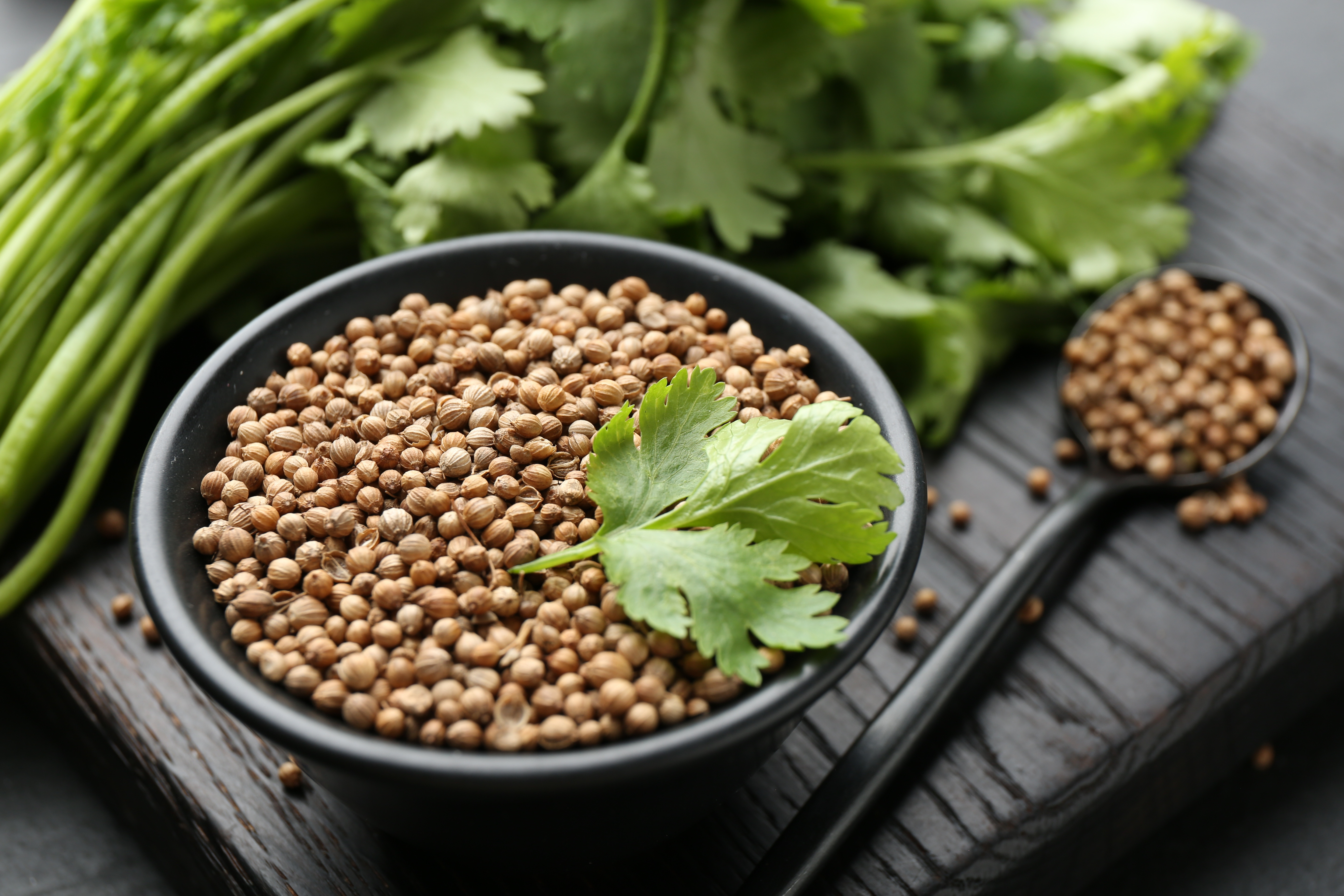


Coriander (Coriandrum sativum L.), known as Dhanyaka in Ayurveda, is a culinary and medicinal herb that has been used for thousands of years across South Asia, the Mediterranean, and the Middle East. Ayurvedic texts describe coriander as a cooling herb that supports digestion, metabolism, and urinary health. Modern scientific investigations have increasingly examined these traditional claims, identifying a range of bioactive compounds that may contribute to antioxidant, anti-inflammatory, antimicrobial, and metabolic health benefits (Laribi et al., 2015).
Coriander in Ayurvedic Medicine (Dhanyaka)
धन्याकं तुवरं स्निग्धमवृष्यं मूत्रलं लघु ।ज्वरघ्नं रोचनं ग्राही स्वादुपाकि त्रिदोषनुत् ॥तृष्णादाहवमीश्वासकासकार्श्यकृमिप्रणुत् ॥
Dhānyakaṃ tuvaraṃ snigdham avṛṣyaṃ mūtralaṃ laghu |Jvaraghnaṃ rocanaṃ grāhī svādupāki tridoṣanut ||Tṛṣṇā-dāha-vamī-śvāsa-kāsa-kārśya-kṛmi-praṇut ||
"Coriander is astringent, mildly unctuous, non-aphrodisiac, diuretic, and light to digest. It alleviates fever, stimulates appetite, has absorbent properties, undergoes a sweet post-digestive effect, and mitigates all three doṣas. It helps relieve thirst, burning sensations, vomiting, dyspnoea, cough, emaciation, and intestinal worms."
According to Ayurvedic principles, coriander possesses Madhura (sweet) and Kashaya (astringent) properties and is considered beneficial for balancing Pitta and Kapha doshas. Traditional Ayurvedic practitioners have used coriander to:
- Improve digestion and reduce bloating
- Relieve acidity and excess body heat
- Support urinary tract function
- Promote detoxification and metabolic balance
These applications are described in classical Ayurvedic literature and continue to be incorporated into contemporary Ayurvedic practice (Sharma and Dash, 2001).
Bioactive Components of Coriander
Modern phytochemical analyses have revealed that coriander contains numerous biologically active compounds, including:
- Linalool
- Geraniol
- Camphor
- Flavonoids
- Phenolic acids
- Coumarins
- Terpenoids
Linalool, the predominant constituent of coriander essential oil, has attracted particular scientific interest due to its antioxidant, antimicrobial, and neuroprotective properties (Mandal and Mandal, 2015).
Scientific Evidence Supporting the Health Benefits of Coriander
Antioxidant Activity of Coriander
Oxidative stress contributes to ageing and the development of chronic diseases. Several studies have demonstrated that coriander extracts exhibit significant antioxidant activity through the scavenging of free radicals and reduction of oxidative damage (Laribi et al., 2015; Mandal and Mandal, 2015).
The antioxidant potential observed in laboratory studies aligns with Ayurveda's traditional classification of coriander as a rejuvenating and balancing herb.
Anti-inflammatory Effects of Coriander
Inflammation underlies many chronic diseases, including cardiovascular disorders, diabetes, and neurodegenerative conditions. Experimental studies indicate that coriander extracts may suppress inflammatory mediators and reduce inflammatory responses in animal models (Laribi et al., 2015).
Coriander and Blood Glucose Regulation
Research has suggested that coriander may possess hypoglycaemic properties. Animal studies have demonstrated improvements in insulin secretion and glucose metabolism following coriander supplementation, indicating potential applications in metabolic health management (Asgarpanah and Kazemivash, 2012).
However, larger human clinical trials remain necessary before therapeutic recommendations can be established.
Coriander and Cardiovascular Health
Several investigations have reported favourable effects of coriander on lipid metabolism. Coriander supplementation has been associated with reductions in total cholesterol, low-density lipoprotein (LDL) cholesterol, and triglycerides while increasing high-density lipoprotein (HDL) cholesterol levels in experimental studies (Asgarpanah and Kazemivash, 2012).
These findings suggest a possible cardioprotective role for coriander.
Neuroprotective and Anti-Anxiety Effects of Coriander
Emerging research indicates that linalool may influence neurotransmitter pathways involved in anxiety, cognition, and neuroprotection. Animal studies have demonstrated anxiolytic and memory-enhancing effects, supporting further investigation into coriander's neurological benefits (Mandal and Mandal, 2015).
Antimicrobial Properties of Coriander
Numerous studies have demonstrated antibacterial and antifungal activity of coriander essential oils against pathogenic microorganisms. These antimicrobial properties may contribute to both food preservation and digestive health benefits traditionally attributed to coriander (Laribi et al., 2015).
Coriander Leaves and Seeds: Nutritional Differences
Both coriander leaves and seeds provide valuable nutrients, although their compositions differ.
Fresh coriander leaves are rich in:
- Vitamin K
- Vitamin A
- Folate
- Antioxidants
Coriander seeds contain higher concentrations of:
- Essential oils
- Dietary fibre
- Minerals such as calcium and iron
- Bioactive phytochemicals
In Ayurvedic formulations, seeds are commonly preferred for medicinal preparations, while leaves are widely used as a dietary supplement to enhance overall nutrition.
(Scandar S, Zadra C, Marcotullio MC. Coriander (Coriandrum sativum) Polyphenols and Their Nutraceutical Value against Obesity and Metabolic Syndrome. Molecules. 2023 May 19;28(10):4187. doi: 10.3390/molecules28104187. PMID: 37241925; PMCID: PMC10220854) https://pmc.ncbi.nlm.nih.gov/articles/PMC10220854
Conclusion
The convergence of Ayurvedic knowledge and modern scientific research highlights coriander as a herb with significant therapeutic potential. Traditional Ayurvedic medicine has long valued coriander for digestive support, cooling properties, and metabolic balance. Contemporary studies increasingly support these uses, demonstrating antioxidant, anti-inflammatory, antimicrobial, cardioprotective, and neuroprotective activities.
Although additional human clinical research is needed, current evidence suggests that coriander represents an excellent example of how traditional medicinal wisdom can inspire modern scientific discovery.
References
Asgarpanah, J. and Kazemivash, N. (2012) 'Phytochemistry, pharmacology and medicinal properties of Coriandrum sativum L.', Avicenna Journal of Phytomedicine, 2(1), pp. 22 to 31.
Laribi, B., Kouki, K., M'Hamdi, M. and Bettaieb, T. (2015) 'Coriander (Coriandrum sativum L.) and its bioactive constituents', Fitoterapia, 103, pp. 9 to 26.
Mandal, S. and Mandal, M. (2015) 'Coriander (Coriandrum sativum L.) essential oil: Chemistry and biological activity', Asian Pacific Journal of Tropical Biomedicine, 5(6), pp. 421 to 428.
Sharma, P.V. and Dash, B. (2001) Charaka Samhita: Text with English Translation. Varanasi: Chaukhambha Orientalia.
PubMed: Coriandrum sativum review (Laribi et al., 2015)NCBI: Phytochemistry and medicinal properties of Coriandrum sativumNCBI: Coriander essential oil and biological activity review
Ayurveda Consultant Physician
Dr Palitha Serasinghe, PhD in Medicine (Japan), DAMS (1st Class Hons), PGCert HE (UK), MIBiol (SL), FAMA (UK), MAPA (UK)
Postdoctoral Academic Research Commonwealth Research Fellow, King's College London. Former Academic Posts at Faculty of Indigenous Medicine, University of Colombo, Sri Lanka, College of Ayurveda UK and Middlesex University, London, UK.



.jpg)
.jpg)